


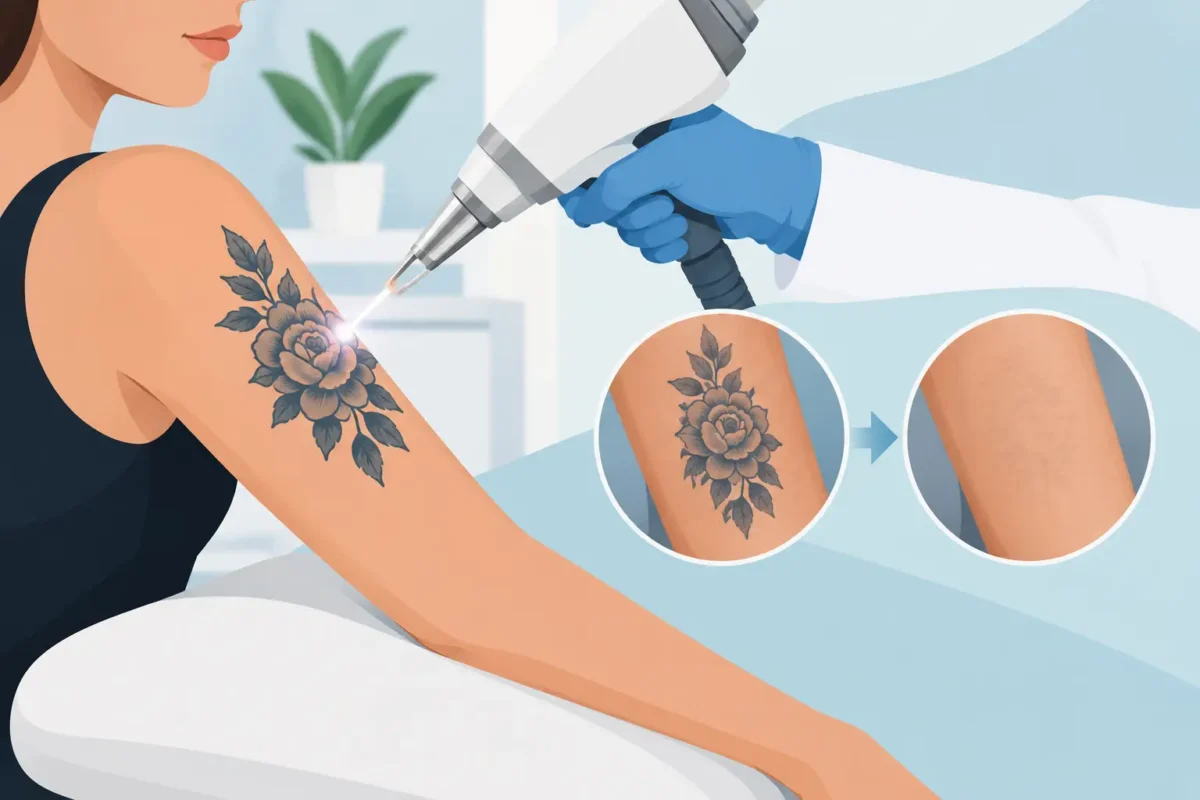
A tattoo can feel very permanent when it no longer reflects who you are. So, does laser tattoo removal work completely? Often, modern laser treatments can dramatically fade or fully clear a tattoo, but complete removal is not a guarantee for every design, ink color, skin type, or tattoo history.
The most accurate answer is: it depends on the tattoo and the treatment plan. Laser tattoo removal is a process, not a one-visit fix. A skilled provider evaluates the ink, your skin, and your goals before setting realistic expectations around fading, clearance, and the number of sessions required.
Does Laser Tattoo Removal Work Completely?
For many clients, laser tattoo removal can achieve excellent clearance, leaving little to no visible ink. Others may have a faint shadow, a trace of stubborn pigment, or a subtle change in skin texture or color after their final session. That does not mean treatment failed. It means tattoo removal has biological limits that deserve an honest conversation before treatment begins.
A laser does not simply erase ink from the skin. It delivers precise pulses of light energy that target tattoo pigment and break it into much smaller particles. Your immune system then gradually clears those particles over the weeks following treatment. This is why the tattoo continues to fade between appointments, and why spacing sessions correctly matters.
The goal may be complete clearance, substantial fading, or lightening a tattoo enough to support a cover-up. Each can be a successful outcome. The right goal depends on what you see when you look at the tattoo now and what you want to see in its place.
What Determines How Completely a Tattoo Can Be Removed?
No two tattoos behave exactly the same under laser treatment. Even two tattoos with similar colors can respond differently because of ink quality, placement, depth, and how the tattoo was originally applied.
Ink color makes a meaningful difference
Black ink is typically the most responsive to laser tattoo removal because it absorbs a broad range of laser wavelengths effectively. Dark blue and dark green may also respond well with the appropriate technology. Brighter colors can be more variable. Red, orange, yellow, light blue, and certain greens may need more sessions and can be more resistant to clearance.
White and flesh-toned inks require special caution. Some pigments may darken when treated because of their chemical makeup. An experienced practitioner should identify this risk during consultation and may recommend a test spot before treating the full tattoo.
Professional and amateur tattoos fade differently
Amateur tattoos are often placed less evenly and may sit more superficially in the skin. They can sometimes fade more quickly, especially when the ink is sparse. Professional tattoos tend to contain denser, more consistent pigment placed at a deliberate depth. They may require additional sessions, but professional ink can still respond exceptionally well with a well-planned treatment approach.
Cover-up tattoos often take longer because they contain multiple layers of ink. The original design may have been heavily saturated before new colors and details were added on top. The laser must work through that pigment gradually rather than trying to remove everything at once.
Location affects the pace of fading
Tattoos on areas with stronger circulation, such as the upper body, often clear more efficiently than tattoos on the hands, feet, ankles, or lower legs. This is not a hard rule, but it reflects the role your body plays in carrying fragmented ink particles away after each session.
A small black tattoo on the shoulder may respond very differently than a dense, multicolored tattoo on the foot. Placement is one of the reasons a personal assessment is more valuable than a one-size-fits-all estimate.
Your skin and immune response matter too
Laser settings must be chosen for both the tattoo and the skin. A knowledgeable provider balances effective pigment targeting with protecting surrounding skin. Your overall health, immune response, sun exposure, and ability to follow aftercare all influence the healing process and the visible result.
People with darker skin tones can absolutely be candidates for laser tattoo removal, but treatment requires thoughtful laser selection and conservative settings to reduce the chance of pigment changes. Safe, individualized care is more important than rushing through a treatment plan.
How Many Sessions Does Complete Tattoo Removal Take?
Most tattoos require multiple sessions. A common range is six to 12 treatments, although some clear in fewer sessions and complex tattoos may need more. Sessions are usually scheduled several weeks apart to allow your skin to recover and your immune system time to clear disrupted pigment.
It can be tempting to schedule treatments as closely together as possible, especially when you are eager to move on from a tattoo. More frequent treatment does not necessarily mean faster clearance. When the skin has not fully recovered, aggressive timing can raise the risk of irritation, scarring, or unwanted pigment changes without improving the outcome.
Progress is rarely perfectly linear. You may see dramatic fading after the first few sessions, followed by a slower phase as remaining pigment becomes more dispersed or resistant. That is normal. Your practitioner can reassess the tattoo as it changes and adjust the plan when appropriate.
What Can Remain After Treatment?
Even with advanced technology and excellent aftercare, a fully removed tattoo may not always leave skin that looks exactly as though it was never tattooed. Possible remaining signs include a light ink shadow, slight hypopigmentation, temporary or lasting darkening of the skin, or texture changes from the original tattooing process.
Scarring is not expected when laser tattoo removal is performed correctly and aftercare is followed, but it is a possible risk. Existing scar tissue within the tattoo can also become more noticeable as the ink fades. This is particularly relevant if the tattoo was applied deeply, healed poorly, or was previously treated with ineffective removal methods.
A qualified provider should discuss these possibilities clearly. Promises of guaranteed complete removal are not a sign of better technology or better care. They are a reason to ask more questions.
Why the Right Laser and Provider Matter
Tattoo removal technology has advanced significantly, but the device is only part of the equation. Different wavelengths are used to target different ink colors, and the energy level must be carefully matched to the tattoo and your skin type. Proper assessment, treatment technique, and ongoing adjustments shape both your results and your safety.
At Bloom Laser Clinic, tattoo removal is approached with the same clinical focus used across advanced skin treatments: evaluate carefully, treat precisely, and put skin health first. Your consultation should include a review of your medical history, tattoo colors, placement, age, prior treatments, skin tone, and desired outcome.
Ask to see what kind of result is realistic for your specific tattoo rather than relying on a photo of someone else’s treatment. A small, faded black tattoo and a dense, colorful sleeve should never be quoted or planned as though they are the same.
How to Support Better Results Between Sessions
Aftercare protects your skin while it heals. Keep the treated area clean, follow the instructions you are given about bandaging and moisturization, and avoid picking at scabs or blisters. Sun protection is especially important. Tanned or sunburned skin can delay treatment and increase the chance of pigment changes.
Avoid tattoo removal creams, acids, abrasion devices, and do-it-yourself methods. These approaches can damage the skin while doing little to remove pigment from the deeper layer where tattoo ink sits. The result may be irritation or scarring that makes later laser treatment more challenging.
If you are considering removal for a future cover-up, tell your provider from the beginning. You may not need to pursue total clearance. Strategic fading can create a cleaner canvas and may reduce the size, darkness, or complexity needed for the new design.
The best next step is a consultation that replaces guesswork with a plan tailored to your tattoo. Whether your goal is clear skin or simply a fresh start for a new design, realistic expectations and expert treatment can make the process feel far more manageable.