


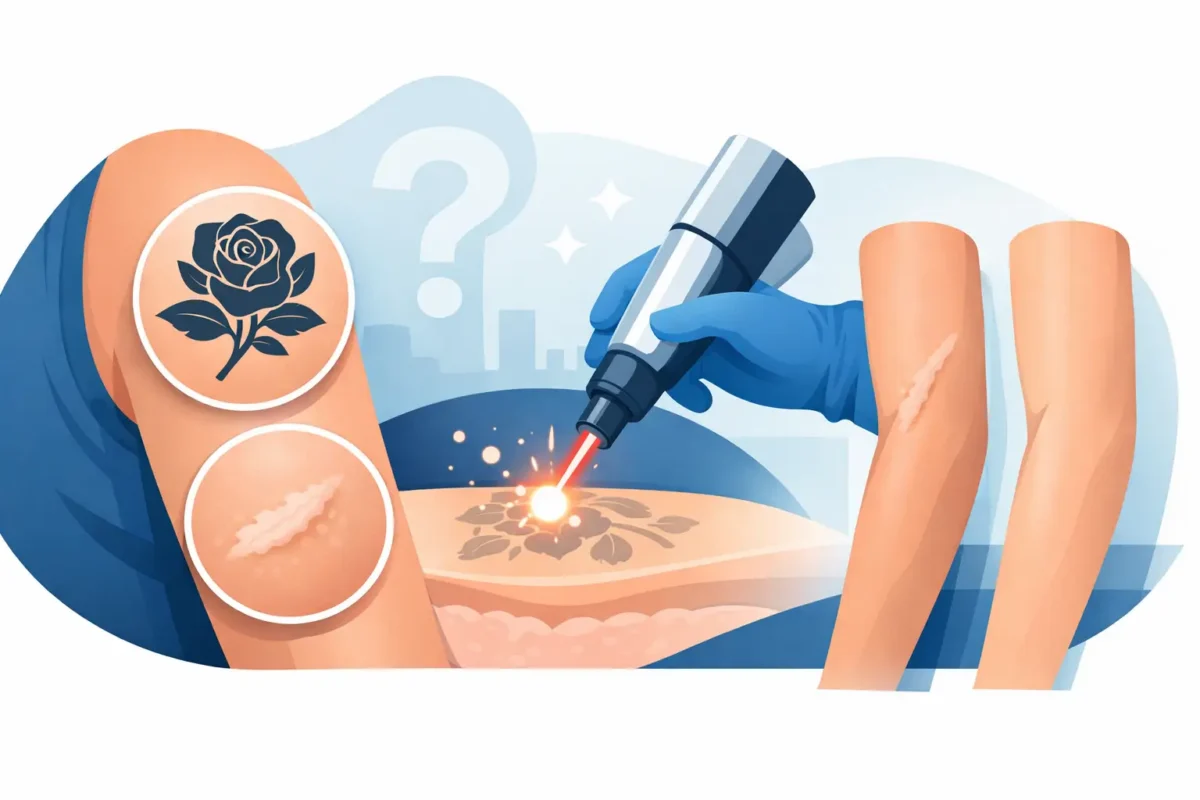
A faded tattoo is one thing. A permanent scar is another. If you are considering treatment, the question most people really want answered is simple: does tattoo removal leave scars?
The honest answer is usually no – when tattoo removal is performed properly, scarring is not expected. But it is not a zero-risk treatment either. Skin type, tattoo history, aftercare, and the technology being used all play a part in how your skin heals. That is why expert assessment matters just as much as the laser itself.
Does tattoo removal leave scars, or is that a myth?
Scarring after laser tattoo removal is possible, but it is uncommon when treatment is done by trained professionals using appropriate settings. Modern laser systems are designed to target tattoo pigment in the skin while limiting damage to surrounding tissue. The goal is clearance of ink, not injury to the skin.
A lot of the fear around scarring comes from older removal methods. Surgical excision, dermabrasion, and aggressive chemical techniques were far more likely to leave visible texture changes. Laser removal changed that. It remains the most effective non-surgical option for most unwanted tattoos because it focuses on breaking up ink particles so the body can gradually clear them.
That said, people sometimes confuse normal healing changes with scarring. Redness, frosting, mild swelling, pinpoint bleeding, flaking, and temporary pigment changes can all happen during the recovery process. These effects can look dramatic early on, especially after the first few sessions, but they are not the same thing as a permanent scar.
What actually causes scarring after tattoo removal?
In most cases, when scars do occur, the laser is only one part of the story. The bigger issue is usually excess trauma to the skin or poor healing afterward.
One common factor is pre-existing scar tissue. Some tattoos already sit on raised, uneven, or damaged skin before removal starts. This is more common with tattoos that were applied too deeply, amateur tattoos, or tattoos that healed badly in the first place. In those cases, removal may reveal texture that was already there rather than create a new scar.
Another factor is overtreatment. If too much heat is delivered to the skin, or sessions are done too close together, the risk of blistering and tissue injury rises. This is why personalized treatment planning matters. A provider should adjust settings based on your skin tone, the colors in the tattoo, the age and depth of the ink, and how your skin responded to previous sessions.
Aftercare also has a major effect. Picking at blisters, scratching peeling skin, exposing treated skin to too much sun, or using irritating products before the area has healed can all increase the risk of lasting marks. The laser session is only part of the process. Healing at home is where your skin either recovers well or gets pushed in the wrong direction.
Who is more likely to scar?
Some skin simply heals more aggressively than others. If you have a history of keloids or hypertrophic scars, this should be discussed before treatment starts. It does not always mean laser tattoo removal is off the table, but it does mean your provider needs to assess risk carefully and set realistic expectations.
People with darker skin tones also need thoughtful laser selection and settings. The issue is not that darker skin is more likely to scar by default. The concern is that melanin in the skin can compete with tattoo pigment for laser energy, which increases the chance of irritation or pigment disruption if treatment is not handled correctly. Skilled providers work around this with conservative, medically informed treatment plans.
Tattoo location matters too. Areas with thinner skin or reduced circulation, such as the hands, feet, ankles, and lower legs, can be slower to heal. Larger tattoos and heavily saturated professional tattoos may also require more sessions, which means more opportunities for the skin to become stressed if treatment is not paced properly.
What does normal healing look like?
This is where a lot of unnecessary anxiety comes from. After laser tattoo removal, the treated area may look white and frosty at first. Later, it can become red, swollen, warm, or slightly tender. Some clients develop small blisters or scabs. This can still be part of normal healing.
Over the following days, the area may dry out, peel, and look temporarily darker or uneven. That does not mean the skin is scarring. It means the body is reacting to treatment and beginning its repair process.
A true scar is usually a lasting texture change. It may feel raised, look shiny, seem indented, or remain visibly different from the surrounding skin long after healing should be complete. Temporary pinkness or discoloration is not automatically a scar. In many cases, skin continues to improve for weeks after each session.
How to lower the risk of scars
The safest approach starts before your first appointment. A proper consultation should review your medical history, skin type, tattoo age, color, placement, and any history of difficult healing. This is where realistic expectations are built. Not every tattoo clears at the same pace, and trying to rush the process is one of the easiest ways to create avoidable skin stress.
It also helps to choose a clinic that treats tattoo removal as a medical aesthetics procedure, not a quick cosmetic add-on. Experience matters. So does using advanced laser technology and settings tailored to the individual rather than a one-size-fits-all protocol.
After treatment, follow aftercare instructions closely. Keep the area clean and protected. Avoid friction. Do not pick blisters or scabs. Stay out of direct sun or use proper sun protection once the skin is intact. Give sessions enough spacing so your skin has time to recover fully. Great results often come from patience as much as technology.
Can tattoo removal leave scars if the tattoo is already scarred?
Yes, but this is where expectations need to be very clear. If the tattoo itself has existing scar tissue, laser treatment can remove ink while leaving the underlying texture behind. In other words, the scar may become more visible simply because the camouflage effect of the tattoo is gone.
This is especially relevant for raised linework, overworked shading, or tattoos that healed with thickened skin. In these situations, the right provider will explain the difference between ink removal and texture correction. They are not the same treatment goal.
For some clients, this conversation is actually reassuring. It reframes the concern. The issue is not that the laser is causing damage. It is that removal can reveal what has been there all along.
Is laser tattoo removal safer than other removal methods?
For most people, yes. Laser tattoo removal is generally considered the safest and most skin-conservative option available for fading or removing unwanted ink. It is non-surgical, highly targeted, and backed by years of use in clinical settings.
That does not mean every laser provider offers the same standard of care. The best outcomes come from a combination of strong technology, conservative technique, and careful follow-up. A results-focused clinic will not promise perfect clearance without risk. It will explain the variables honestly and treat your skin with the same attention it gives the tattoo.
That is often what clients want most – not hype, but confidence in the process.
When should you worry?
If you develop severe pain, spreading redness, pus, fever, or delayed healing that seems to worsen rather than improve, you should contact your provider promptly. Those signs can point to infection or an abnormal healing response. The sooner a problem is addressed, the better the chance of preventing lasting skin changes.
It is also worth checking in if a treated area remains raised, indented, or visibly different in texture months later. Sometimes what looks concerning early on settles beautifully with time. Sometimes it needs further evaluation. Either way, you deserve clear guidance.
At Bloom Laser Clinic, that blend of science-backed treatment and practical honesty is central to how skin care should feel – modern, informed, and built around visible results without unnecessary risk.
If you are asking whether tattoo removal is worth it, the better question may be whether your treatment plan respects both goals: removing the ink and protecting the skin underneath. The right provider will care about both, because clear skin should still look like healthy skin.