


That tattoo you once loved does not have to be permanent just because the ink is. A good guide to laser tattoo removal starts with the truth people actually want to hear – removal is possible, but it takes planning, patience, and the right technology in experienced hands.
For many people, the hardest part is not the treatment itself. It is the uncertainty. How much will it fade? How many sessions will it take? Will it scar? Will it hurt more than getting the tattoo? Those are fair questions, and the answers depend on the age of the tattoo, the colors used, where it sits on the body, and how your skin responds.
How laser tattoo removal works
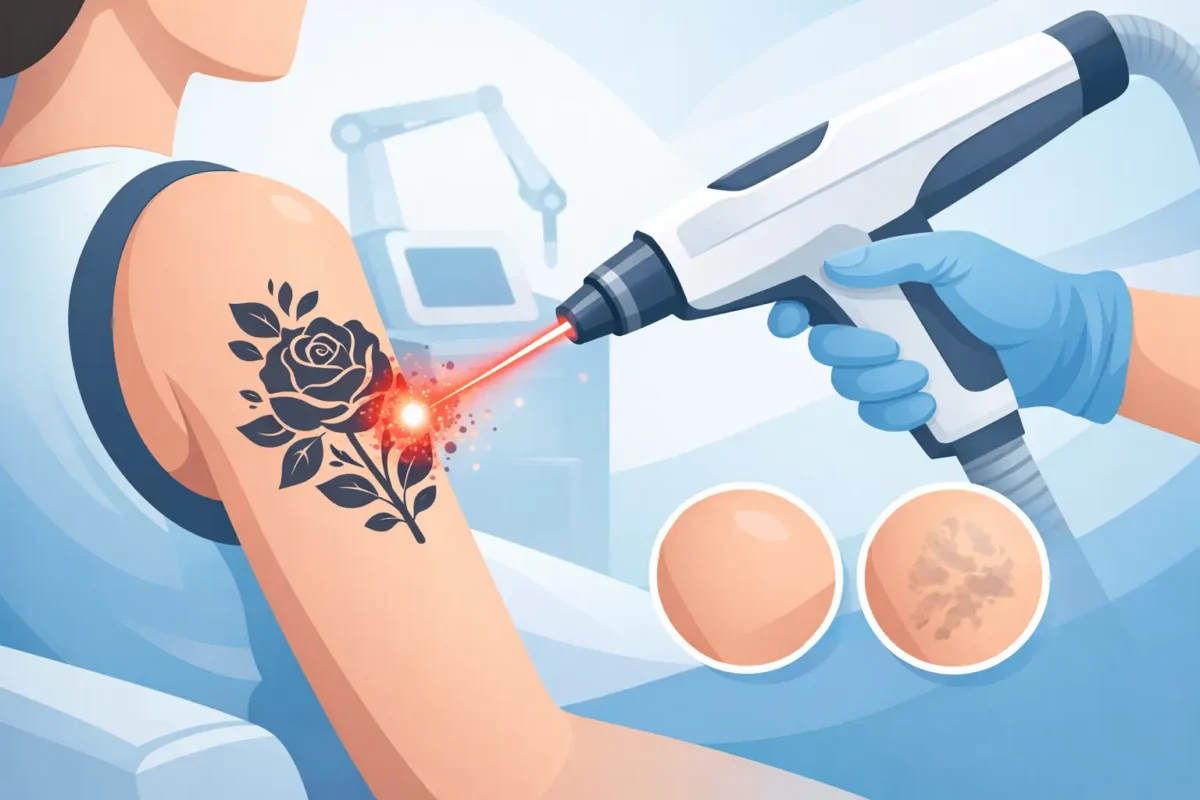
Laser tattoo removal works by sending short pulses of light energy into the skin. That energy targets tattoo pigment and breaks it into smaller particles. Your body then gradually clears those fragmented particles through its natural immune processes over the following weeks.
This is why removal is not instant. Even when a session goes well, the visible fading happens over time, not overnight. It also explains why spacing matters. Your body needs time between treatments to process the ink and let the skin recover.
Different wavelengths target different colors more effectively. Black ink usually responds the fastest because it absorbs laser energy well. Dark blue often fades well too. Green, turquoise, and some bright shades can be more stubborn. White, yellow, and certain cosmetic pigments may be especially difficult and sometimes do not clear completely.
What a guide to laser tattoo removal should tell you first
The biggest misconception is that every tattoo can be erased to perfectly untouched skin. Sometimes that happens. Sometimes the tattoo fades enough that it is no longer noticeable, or it becomes easy to cover with a new design. Sometimes a slight shadow remains.
The goal should be realistic improvement, guided by a proper assessment. Professional tattoos often sit deeper in the skin and use denser ink, so they may need more sessions than amateur tattoos. Newer tattoos can also be harder to treat than older ones because the pigment is still concentrated.
Skin tone matters too, not because laser removal is off limits, but because settings must be chosen carefully. In melanin-rich skin, the practitioner needs to protect the surrounding skin while still delivering enough energy to affect the ink. That is one reason medical oversight and experience matter so much.
How many sessions does laser tattoo removal take?
This is where the honest answer is: it depends. Most people need a series of treatments, often somewhere between 6 and 12 sessions, and sometimes more for large, colorful, layered, or heavily saturated tattoos.
Several factors influence the timeline. The tattoo’s color mix, depth, age, and location all matter. So does circulation. Tattoos on areas with stronger blood flow, such as the upper body, may fade faster than tattoos on the hands, feet, or lower legs. Smoking can slow the body’s clearing process as well.
Sessions are usually spaced several weeks apart, often around 6 to 8 weeks or longer depending on the skin response. More frequent treatment is not necessarily better. If the skin has not recovered and the body has not had time to clear pigment, rushing can increase irritation without improving results.
Does laser tattoo removal hurt?
Most patients say it is uncomfortable, but manageable. Many describe it as similar to hot elastic snaps against the skin. Some feel it is more intense than getting the tattoo, but much faster. The size and location of the tattoo make a difference, and so does your personal pain tolerance.
A reputable clinic will talk you through comfort options before treatment. Cooling, topical numbing in some cases, and efficient technique can make the process much easier. The good news is that sessions are often relatively quick, especially for small tattoos.
Right after treatment, the area may feel warm, tender, and slightly swollen, similar to a mild sunburn. That response is normal. The skin may also whiten or frost briefly during the session, which is a typical immediate reaction to laser energy.
What to expect after each session
Aftercare has a direct effect on healing. You want the skin clean, protected, and undisturbed. Mild redness, swelling, pinpoint bleeding, or blistering can happen, and these effects are not always a sign that something is wrong. They can be part of the normal healing response.
What matters is how you care for the area. Keep it dry and clean as advised by your provider, avoid picking or scratching, and protect it from sun exposure. Sun can increase the risk of pigment changes and complicate healing. If the treated area is exposed, sunscreen becomes essential once the skin has recovered enough for it.
Strenuous friction on the area can also be a problem. A tattoo on the ankle under a tight sock or a design on the shoulder rubbing under a sports bra may stay irritated longer if not protected properly. Good aftercare is simple, but it is not optional.
Risks, side effects, and trade-offs
Laser tattoo removal is widely performed and generally safe when done properly, but it is still a medical aesthetic treatment. Temporary side effects are common. These can include redness, swelling, blistering, scabbing, and sensitivity.
Less common but important risks include hyperpigmentation, hypopigmentation, texture change, infection, and scarring. The risk is usually higher when settings are too aggressive, when aftercare is poor, or when treatment is done by someone without appropriate experience.
There are also some specific scenarios that need extra caution. Certain cosmetic tattoos, especially older permanent makeup, can darken instead of lighten after laser exposure because of the pigments used. That does not mean they cannot be addressed, but it does mean testing and careful planning are important.
This is where a consultation earns its value. You are not just paying for the laser. You are paying for judgment, skin assessment, proper treatment intervals, and a plan tailored to your skin and your ink.
Who is a good candidate?
If you are healthy, have realistic expectations, and want to fade or remove unwanted ink safely, you may be a strong candidate. A consultation is especially helpful if you have darker skin, a history of abnormal scarring, active skin irritation in the area, or a tattoo with unusual colors.
Pregnancy, certain medications, active infections, fresh tans, and some medical conditions may affect timing or eligibility. None of that means removal is impossible. It simply means treatment should be approached thoughtfully.
For clients in Nova Scotia, Prince Edward Island, or New Brunswick, choosing an established clinic with advanced laser experience can make the process feel far less overwhelming. Confidence starts with clear answers and a treatment plan that respects both results and skin health.
How to choose the right clinic
The best guide to laser tattoo removal would be incomplete without this part. The device matters, but the person using it matters just as much.
Look for a clinic that explains what type of laser is being used, why it is appropriate for your tattoo, and what kind of outcome is realistic. You should never feel rushed into treatment without understanding the expected number of sessions, likely fading pattern, aftercare, and cost structure.
Photos can help, but not all before-and-after images tell the full story. Ask whether the examples shown are from similar tattoos, similar skin tones, and similar color combinations. A small black tattoo on the forearm is not a fair comparison for a bright multicolor sleeve or a dense cover-up.
You also want honesty. A strong clinic will not promise one-session miracles. It will explain the trade-offs, set expectations clearly, and prioritize safe progress over aggressive treatment.
Cost and value
Pricing varies based on tattoo size, complexity, and number of sessions needed. The cheapest treatment is not always the best value if it leads to slower progress, unnecessary side effects, or poor technique. On the other hand, high price alone does not guarantee expertise.
What you want is a clinic that balances technology, practitioner skill, and a clear treatment plan. Laser tattoo removal is a process, and the right provider helps you move through it with confidence instead of guesswork.
If you are considering treatment, think beyond the question of whether the tattoo can be removed. Ask how you want to feel when this process is over. For some, that means complete clearance. For others, it means enough fading to make room for something new. Either way, the right plan can turn regret into progress – one session at a time.