


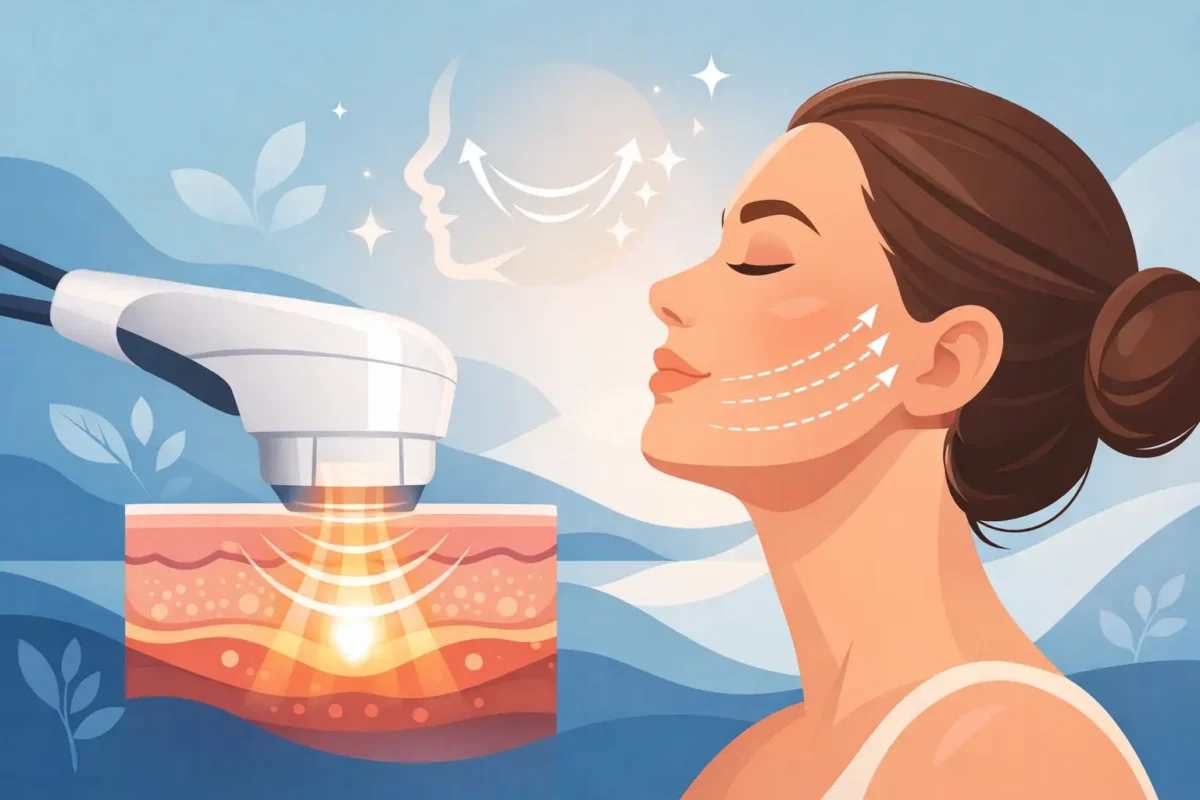
Loose jawlines rarely show up all at once. More often, it starts with a softer profile in photos, a little heaviness around the cheeks, or skin that no longer snaps back the way it used to. That is usually when people begin asking how HIFU lifts sagging skin – and whether it can create a real difference without surgery. The short answer is yes, for the right person. HIFU works by targeting deeper structural layers under the skin with focused ultrasound energy, creating a lifting and tightening response that builds gradually.
How HIFU lifts sagging skin
HIFU stands for high-intensity focused ultrasound. Unlike treatments that work mainly on the skin surface, HIFU is designed to reach deeper layers where structural support begins to weaken with age. That matters because sagging is not just a surface issue. It is tied to collagen loss, tissue laxity, and a gradual decline in the skin’s internal support system.
During treatment, focused ultrasound energy is delivered at precise depths beneath the skin. This creates controlled thermal points in the tissue without cutting or damaging the surface. Those tiny zones of heat trigger the body’s natural repair process, which includes new collagen production. Over time, that remodeling helps the skin look firmer, more lifted, and more defined.
The reason HIFU gets so much attention for lower face and neck concerns is simple. It can reach tissue planes that many non-invasive treatments cannot. That gives it a different role than a light resurfacing treatment or a facial focused mainly on texture and glow.
Why sagging happens in the first place
Skin laxity is rarely caused by one factor alone. Aging plays the biggest role, but sun exposure, genetics, weight changes, and lifestyle habits all affect how quickly firmness starts to fade. Collagen and elastin naturally decline over time, and facial fat pads can shift downward. The result is a softer jawline, mild jowling, heavier nasolabial folds, and loose skin under the chin.
This is where expectations matter. HIFU can improve mild to moderate sagging very well, but it does not replace surgery when skin laxity is advanced. If someone has significant excess skin or wants a dramatic lift, a non-surgical treatment may not deliver enough change on its own. For many patients, though, the appeal is exactly that middle ground – visible improvement without incisions, general anesthesia, or a long recovery.
What happens under the skin during treatment
HIFU works through heat, but not in the way people often imagine. The energy is focused beneath the surface into small treatment points, where tissue reaches a temperature that stimulates contraction and collagen renewal. That immediate tissue response can create a subtle early tightening effect, but the more meaningful lifting develops over the following weeks and months as fresh collagen forms.
Think of it as encouraging the skin to rebuild support from within. The treatment does not fill, freeze, or remove tissue. It prompts a regenerative response. That is why results look more natural than abrupt. You still look like yourself, just firmer and more defined.
Different depths can be used depending on the treatment area. The brow, cheeks, jawline, and neck all have different structural needs, so a proper plan matters. In a clinical setting, customization is one of the reasons outcomes are more consistent. The treatment is not just about applying energy everywhere. It is about placing it where lifting support is needed most.
What kind of lifting can you realistically expect?
For the right candidate, HIFU can create a noticeable improvement in skin firmness, contour, and definition. Common benefits include a more sculpted jawline, tighter-looking skin under the chin, subtle cheek lifting, and smoother crepey skin on the neck or upper chest. Some people also see a mild brow lift, which can make the upper face appear more refreshed.
What HIFU does best is refinement. It is especially useful when you feel like your face looks slightly tired, heavier, or less defined than it used to, but you are not ready for surgical intervention. It can sharpen features that have started to blur.
Results are usually gradual. Some patients notice early tightening within days or weeks, but the fuller effect tends to develop over two to three months, sometimes longer. Because the skin is building collagen, patience is part of the process. If you want instant volume or immediate dramatic change, another treatment or combination approach may be more suitable.
Who is a good candidate for HIFU?
HIFU tends to work best for adults with mild to moderate skin laxity. In practical terms, that usually means you have begun to see sagging but still have enough skin elasticity to respond well to collagen stimulation. Many patients in their thirties, forties, fifties, and even beyond can be good candidates, depending on skin quality and treatment goals.
It can be a smart option if you want visible rejuvenation without surgery, need little to no downtime, and prefer a treatment that supports natural-looking results. It is also appealing for people who are maintenance-minded and want to address early laxity before it becomes more advanced.
That said, not everyone is ideal for HIFU. Very loose skin, heavy jowling, or significant volume loss may call for a different strategy. Sometimes sagging is actually a combination of laxity and volume depletion. In those cases, lifting alone may not fully address the concern. A thoughtful consultation can help separate what is causing the change and what treatment plan makes the most sense.
How HIFU compares with other non-surgical options
Patients often ask how HIFU differs from radiofrequency, injectables, or laser treatments. The answer depends on the treatment goal.
If the main concern is skin texture, pigment, acne marks, or surface rejuvenation, a laser-based approach may be more appropriate. If volume loss is the issue, fillers may restore contour more effectively. If muscle movement is creating lines, neuromodulators can help soften expression wrinkles. HIFU has a more specific strength: lifting and tightening deeper support structures in a non-invasive way.
That does not mean it is always better. It means it solves a particular problem. In many modern aesthetic plans, HIFU is not competing with every other treatment. It is complementing them. A patient might use HIFU for lower face firmness, laser treatments for tone and texture, and injectables for volume or dynamic lines. When treatment planning is done well, each modality has a clear purpose.
What treatment feels like and what recovery looks like
HIFU is generally well tolerated, but it is not usually described as a spa treatment. You may feel quick bursts of heat or tingling as the ultrasound energy is delivered. Some areas, especially along the jawline or over bony points, can feel more intense than others. Comfort levels vary by person, treatment depth, and technique.
One reason HIFU remains popular is the minimal downtime. Most people return to normal activities right away. Mild redness, tenderness, swelling, or temporary sensitivity can happen, but these effects are usually short-lived. Because the surface of the skin remains intact, there is no peeling or open wound care.
This fits well for busy adults who want meaningful treatment without stepping away from work, family, or social routines. That balance of convenience and clinical performance is a major part of the appeal.
How long results last
Results from HIFU are not permanent, because the aging process continues. Still, the collagen response can last for months, and many patients enjoy improvement for up to a year or longer depending on age, skin condition, and lifestyle factors. Some choose maintenance treatments to keep firmness more consistent over time.
Sun protection, good skin care, and overall skin health matter here. A treatment can stimulate collagen, but it cannot fully outwork ongoing collagen breakdown from unprotected UV exposure or smoking. The best results usually come from pairing in-clinic technology with smart long-term skin habits.
Why provider skill matters
Because HIFU works at precise depths, treatment quality is closely tied to assessment and technique. The device matters, but so does the person using it. Energy placement, treatment pattern, and patient selection all influence the final result.
That is one reason many clients prefer a clinic environment that combines advanced technology with experienced practitioners and medically informed care. At Bloom Laser Clinic, that philosophy is part of the treatment experience: modern, non-surgical options guided by clinical judgment and focused on visible, confidence-building results.
If you are considering HIFU, the most useful question is not whether it works in general. It is whether your skin, goals, and level of laxity make you a strong candidate for it right now. When the match is right, HIFU can be an excellent way to restore definition, support collagen, and help your skin look more lifted without changing what makes your face yours. Sometimes the best aesthetic result is not looking done at all – just looking fresher, firmer, and more like yourself again.