


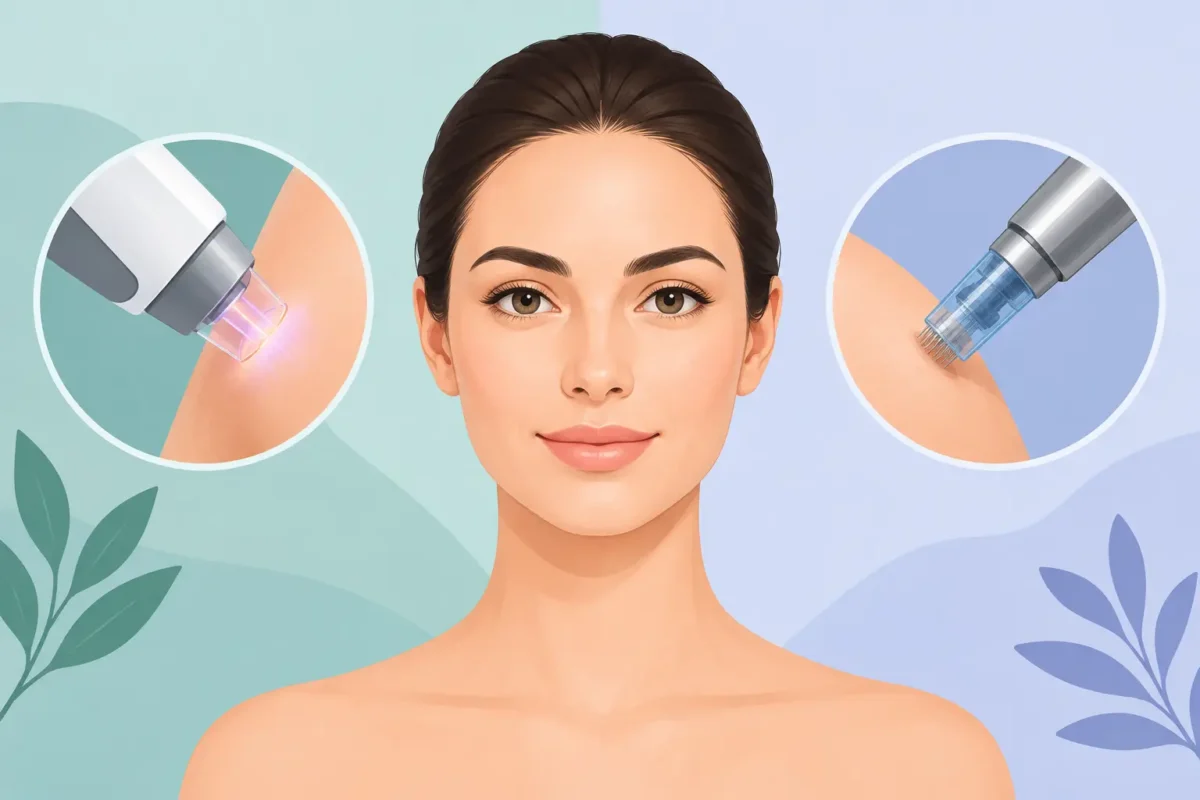
A dark spot that lingers long after summer, makeup settling into enlarged pores, or acne scars that catch the light can make a simple skincare routine feel insufficient. When comparing Spectra Peel vs microneedling, the right choice comes down to what is happening beneath the surface of your skin and how much downtime fits your life.
Both treatments support smoother, more refined-looking skin without surgery. They work very differently, however. A Spectra Peel uses laser energy to address pigment, oil, congestion, and overall radiance, while microneedling creates controlled microchannels to stimulate collagen remodeling. Neither is automatically “better.” The treatment that delivers the most visible improvement is the one matched to your skin concern, skin tone, and goals.
Spectra Peel vs Microneedling: The Core Difference
A Spectra Peel is a laser facial performed with advanced Q-switched laser technology. Often associated with the Hollywood Peel, it typically begins with a thin carbon lotion applied to the skin. The laser targets the carbon particles and the skin’s surface, lifting away debris, excess oil, and superficial buildup while delivering energy deeper into the skin.
The result is a treatment that can leave skin looking cleaner, brighter, and more even. With a customized approach, Spectra laser treatments can also support concerns such as sun damage, uneven pigmentation, melasma, acne activity, enlarged pores, and dull texture.
Microneedling uses a device with fine, sterile needles to create precise micro-injuries in the skin. This process activates the body’s wound-healing response, encouraging collagen and elastin production over time. It is especially valued for improving the appearance of textural acne scars, fine lines, crepey texture, and enlarged pores.
In simple terms, Spectra Peel is often chosen for color, clarity, and a fresh glow. Microneedling is often chosen for texture and collagen renewal. Many clients have a mix of concerns, which is why a professional consultation matters more than choosing based on a single before-and-after photo.
When a Spectra Peel May Be the Better Choice
A Spectra Peel is an excellent option when your primary goal is a clearer, brighter complexion with little to no social downtime. The treatment is generally comfortable, quick, and well suited to clients who want a polished look before an event or who prefer gradual skin maintenance.
It may be a strong fit if you are concerned about uneven tone, visible sun spots, surface pigmentation, congestion, oily skin, or frequent breakouts. Because laser settings can be tailored, it can also be part of a thoughtful treatment plan for melasma and post-acne discoloration. Melasma requires special care, though. Heat and overly aggressive treatment can make this condition worse, so treatment parameters and timing should always be guided by an experienced provider.
After a Spectra Peel, many people notice an immediate glow and smoother feel. Some redness or mild dryness can occur, but most clients return to regular activities right away. Meaningful improvement in pigment and acne-related concerns typically comes from a series of treatments, along with consistent sun protection and medical-grade skincare where appropriate.
What Spectra Peel does not do as well
Laser peels can improve the appearance of pores and surface texture, but they are not usually the first choice for deep rolling acne scars or pronounced indentations. Those concerns often need a collagen-stimulating treatment such as microneedling, sometimes alongside other modalities recommended by your provider.
When Microneedling May Be the Better Choice
Microneedling is often the more targeted option when skin texture is your main frustration. If acne scars, fine lines, roughness, or loss of firmness are more noticeable than discoloration, collagen induction can create meaningful gradual improvement.
Rather than removing pigment or exfoliating the surface in the way a laser peel can, microneedling encourages the skin to rebuild itself. New collagen develops slowly, so results are not instant. Most clients begin to see changes after several weeks, with continued improvement as collagen remodeling progresses.
There is usually more visible recovery than with a Spectra Peel. Skin often looks red or feels warm for one to three days, similar to a moderate sunburn. Mild swelling, tightness, and flaking can follow. Makeup, exercise, active skincare ingredients, and sun exposure may need to be paused briefly to protect healing skin.
For acne scars, a series of microneedling sessions is commonly recommended. The exact number depends on scar type, depth, skin condition, and your desired level of improvement. Deep scars may require a more comprehensive plan, and realistic expectations are essential. Non-surgical treatments can soften scars and improve texture, but they do not erase every mark completely.
Who should postpone microneedling
Microneedling is not appropriate over active cystic acne, open wounds, infections, or irritated skin. Clients with a history of keloid scarring, certain medical conditions, or medications that affect healing should disclose this during consultation. Pregnancy, recent isotretinoin use, and a tendency toward post-inflammatory hyperpigmentation also deserve individualized clinical guidance.
Downtime, Comfort, and Treatment Experience
For clients who need a low-disruption treatment, Spectra Peel usually has the advantage. It is often described as a warm, light snapping sensation, and a typical appointment may fit comfortably into a busy schedule. Skin can look brighter immediately, although pigment correction and acne improvement develop over a treatment series.
Microneedling is more involved. A topical numbing cream is often used to improve comfort, and the treatment itself can feel like controlled pressure or vibration. Redness afterward is expected, and planning treatment a few days before a major event is wise.
The trade-off is straightforward: Spectra Peel generally offers a faster return to your routine and can be ideal for maintaining clear, luminous skin. Microneedling requires more recovery but may deliver more significant change for scars and texture over time.
Can You Combine Spectra Peel and Microneedling?
For the right candidate, these treatments can complement each other beautifully. A client may use Spectra laser treatments to address discoloration, active acne, oiliness, and overall brightness, then incorporate microneedling to focus on scar texture and collagen support.
They should not simply be stacked together without a plan. Skin needs adequate time to recover, and the sequence depends on your sensitivity, pigment history, current skincare routine, and treatment intensity. This is particularly important for deeper skin tones and anyone prone to hyperpigmentation. Experienced clinical assessment helps reduce unnecessary irritation while keeping progress on track.
At Bloom Laser Clinic, treatment recommendations are based on the condition of your skin rather than a one-size-fits-all menu. That means considering your goals, lifestyle, history of acne or melasma, and the amount of downtime you are comfortable with before building a plan.
How to Choose the Right Treatment for Your Skin
If you want brighter tone, reduced congestion, a refined-looking pore appearance, and minimal downtime, Spectra Peel may be the natural starting point. If your goal is to soften acne scars, improve uneven texture, or support firmer skin through collagen stimulation, microneedling may offer more of what you need.
If both pigment and scarring concern you, do not assume you have to choose only one forever. Your skin can benefit from different treatments at different stages. Clearing active breakouts and discoloration first may create a better foundation before focusing on scars and texture.
The most helpful next step is a personalized consultation with a qualified aesthetic provider who can assess your skin in person. Bring photos of your skin at its worst, be honest about your skincare products and medical history, and share what “visible results” means to you. A smart treatment plan should feel clear, achievable, and designed to help you feel beautiful in your own skin.