


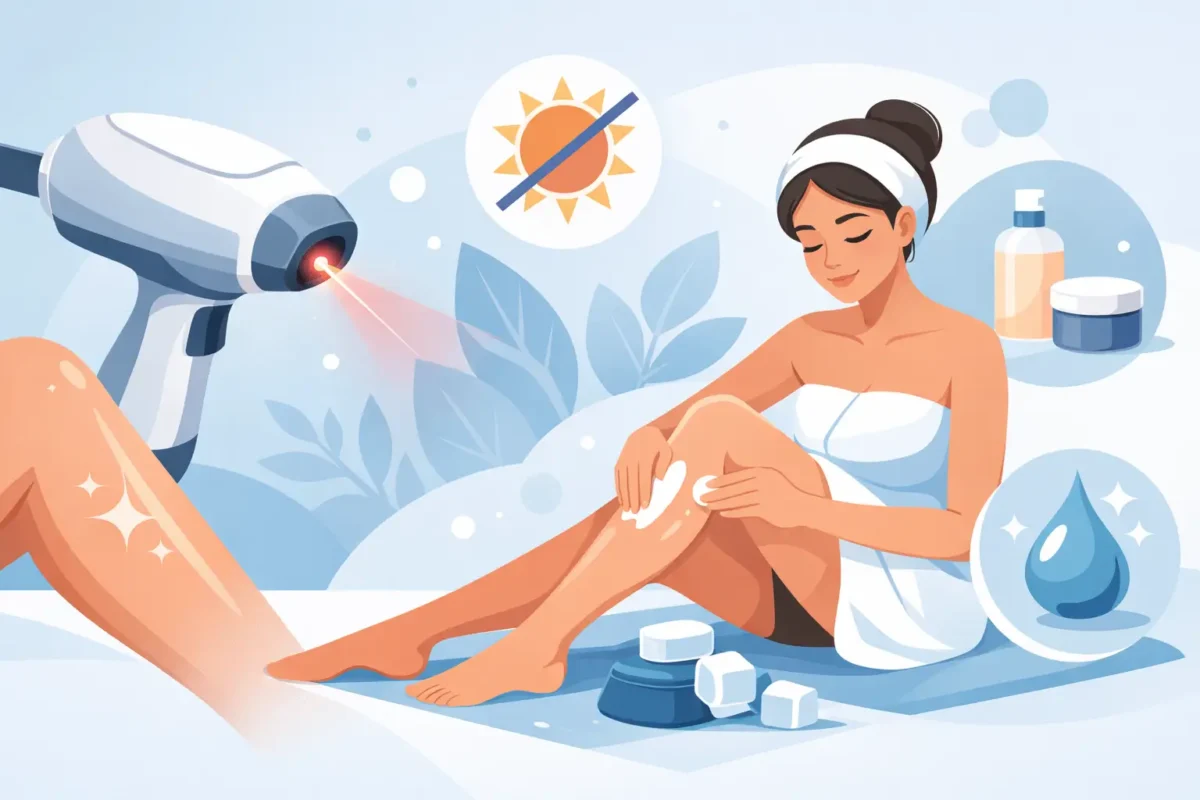
That slight warmth you feel after laser hair removal is usually a good sign – your treatment did its job. What happens next matters just as much. A smart laser hair removal aftercare guide helps calm the skin, lowers the chance of irritation, and supports the smooth, even results you booked the treatment for in the first place.
Laser hair removal is a clinical treatment, but the aftercare does not need to feel complicated. Most people can return to normal routines quickly, as long as they respect the fact that the skin has just been exposed to heat. Think of the next 24 to 72 hours as a short recovery window. During that time, your skin is more reactive to friction, heat, sweat, and sun, even if it looks only mildly pink.
Why aftercare affects your results
Laser hair removal works by targeting pigment in the hair follicle with controlled light energy. That heat disrupts the follicle so it grows back more slowly, more sparsely, or eventually not at all. The skin around the follicle can also hold some temporary heat, which is why mild redness or a bump-like reaction is common right after treatment.
Aftercare is not just about comfort. It also helps you avoid setbacks. Too much heat, aggressive skincare, or sun exposure can leave the area more inflamed than it needs to be. That can make the recovery period longer and, in some cases, increase the risk of post-treatment pigmentation changes, especially in clients with more melanin-rich skin or anyone treating tanned skin.
There is also a practical side to it. If the skin becomes irritated, clients are more likely to delay future sessions. Consistency is what gives laser hair removal its best long-term payoff, so protecting the skin between appointments supports the bigger treatment plan.
Laser hair removal aftercare guide: the first 24 hours
The first day is all about reducing heat and avoiding anything that rubs, stings, or overstimulates the area. Mild redness, sensitivity, and perifollicular edema – those tiny raised bumps around hair follicles – are common and usually temporary.
A cool compress can help if the area feels warm. Keep it gentle. You want cooling, not ice burn. Wear loose clothing if your body was treated, especially after underarm, bikini, or leg sessions where friction can make the skin feel more reactive.
Cleansing should stay simple. Use lukewarm water, not hot, and skip heavily fragranced body washes, exfoliating acids, retinoids, or scrubs on the treated area. This is not the day for a strong active skincare routine. A bland, soothing moisturizer is usually a better choice.
It is also smart to avoid workouts, saunas, steam rooms, and hot baths on treatment day. Sweat and heat can intensify redness and discomfort. If your schedule only allowed a lunchtime appointment before a spin class, it is better to sit that one out.
What to avoid for the next few days
Most aftercare advice sounds strict, but the logic is simple. Laser-treated skin prefers calm conditions while it settles.
Sun exposure is one of the biggest issues. Freshly treated skin can be more vulnerable, and UV exposure can increase the chance of hyperpigmentation. If the treated area is exposed, use a broad-spectrum sunscreen and reapply as directed. Better yet, avoid direct sun when possible, especially right after treatment.
You should also hold off on waxing, threading, or tweezing between sessions. Laser targets the follicle, so the follicle needs to be there. Shaving is usually fine when your provider says the skin is ready, but hair removal methods that pull from the root work against the treatment plan.
Exfoliation can wait a bit too. Whether it is a gritty scrub, glycolic acid pad, or body peel, anything that accelerates skin turnover too aggressively can make the area feel more irritated. If your skin tends to be sensitive, a longer pause may be wise.
Pools and hot tubs are more of an it-depends situation. Some people do fine, but chlorinated water and heat can sting freshly treated skin. If the area still looks pink or feels tender, waiting is the safer call.
What is normal after laser hair removal
A lot of clients worry that they are having a bad reaction when they are actually seeing a very standard response. Mild redness, swelling around follicles, warmth, and temporary sensitivity are common. These effects often fade within hours, though some areas can stay reactive for a day or two.
You may also notice what looks like hair regrowth over the next one to three weeks. In many cases, this is treated hair shedding from the follicle rather than true new growth. It can be tempting to scrub the area to speed things up, but patience is better than overworking the skin. Once the area is comfortable again, gentle exfoliation may help the shedding process along, if your provider has cleared it.
Some body areas naturally respond a little differently. The bikini line and underarms can feel more sensitive because of friction and sweat. The face may show redness more visibly, even if the treatment was well tolerated. Legs sometimes seem less dramatic right away, but the shedding phase can feel more noticeable.
When to call your provider
Most laser hair removal recovery is straightforward, but there is a difference between normal irritation and something that needs attention. If you develop blistering, significant swelling, increasing pain, crusting, or pigment changes that concern you, contact your clinic. If redness keeps getting worse instead of better, that is also worth a check-in.
This is one reason treatment at an experienced, medically informed clinic matters. Good aftercare starts before you leave the room, with realistic expectations and clear instructions based on your skin type, treatment area, and response. At Bloom Laser Clinic, that clinical approach is part of what helps advanced aesthetic treatments feel approachable and safe.
Skincare and shaving between sessions
A good laser hair removal aftercare guide should also cover the in-between period, because your skin habits between appointments can affect the overall experience.
Once the initial sensitivity settles, you can usually return to your regular skincare routine gradually. If you use retinoids, exfoliating acids, benzoyl peroxide, or prescription actives, reintroduce them carefully, especially on facial treatment areas. Not everyone needs the same timeline. A person with resilient skin may bounce back quickly, while someone prone to dryness or post-inflammatory pigmentation should be more conservative.
Shaving is generally the preferred method between sessions because it removes surface hair without disturbing the follicle. Just make sure the skin is no longer irritated. Use a clean razor and a gentle shaving product if needed. Dry shaving over a recently treated area is an easy way to create unnecessary irritation.
Small habits that support better long-term results
Laser hair removal is a series, not a one-time event. The hair growth cycle is the reason multiple sessions are needed, and each session builds on the previous one. That means aftercare is part of a bigger rhythm rather than a one-day checklist.
Try to keep appointments on schedule. Avoid tanning before and during your treatment series. Tell your provider about any new medications, skin changes, or recent sun exposure before each session. Even details that seem minor can affect how your treatment should be timed or adjusted.
It also helps to pay attention to patterns. If one area tends to stay red longer, or if your skin feels extra sensitive after certain skincare products, mention it. Good providers use that feedback to personalize your settings and aftercare recommendations.
The biggest mistake people make
The most common mistake is treating laser hair removal like a beauty treatment with no recovery window. It may be non-surgical and quick, but it still creates controlled heat in the skin. Going straight from your appointment to a beach afternoon, a hot yoga class, or an aggressive exfoliating shower routine is where avoidable irritation usually starts.
The good news is that aftercare is simple when you keep the goal in mind. Cool the skin, protect it from heat and sun, avoid irritation, and let the follicles do their work. Smooth results are not just about the laser itself. They also come from giving your skin the calm, supportive recovery it needs after every session.
A little patience after treatment often makes the whole process feel easier, and better yet, it helps your skin look as confident as you feel.