


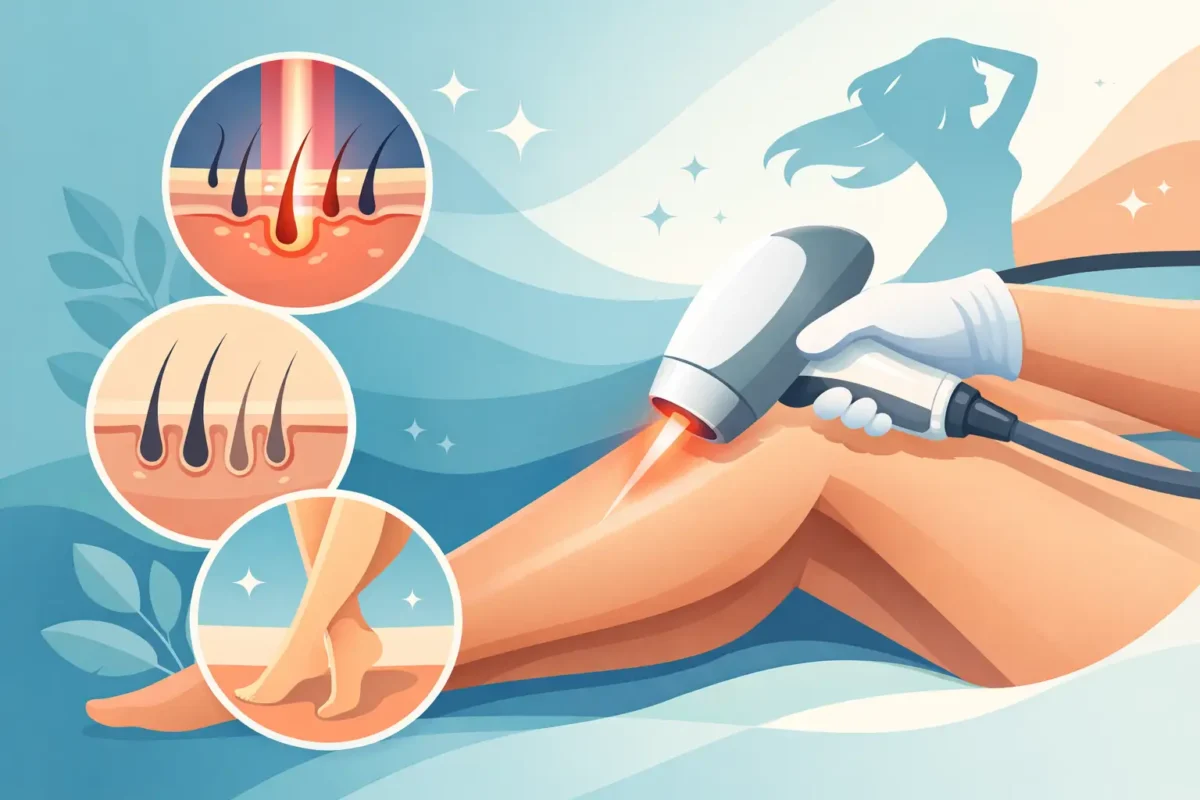
You notice it in the small routines first – shaving before work, checking for stubble before dinner, planning vacations around waxing appointments. That is why laser hair removal permanent hair reduction appeals to so many people. It is not really about one appointment. It is about cutting down the constant cycle of hair removal and replacing it with a longer-term, more predictable result.
For most clients, the goal is not a world without a single hair forever. The real goal is fewer hairs, finer regrowth, smoother skin, and much less maintenance. When laser treatment is done with the right technology, the right settings, and a treatment plan built around your skin and hair type, those results are absolutely realistic.
What permanent hair reduction actually means
This is the part many people want clarified before they book. In clinical terms, laser hair removal is described as permanent hair reduction, not permanent hair removal. That distinction matters.
The laser targets pigment in the hair follicle and uses heat to damage the follicle enough to reduce its ability to grow hair. Over a series of treatments, many follicles stop producing hair altogether, while others may produce lighter, softer, slower-growing hair. So the outcome is usually a major reduction in growth rather than a guarantee that every follicle is inactive for life.
That does not make the treatment less worthwhile. In fact, for most people, a dramatic reduction is exactly what changes their routine. If you move from daily shaving to occasional touch-ups, that is a meaningful result. If ingrown hairs become less frequent and your skin feels calmer, that is often just as valuable as the reduction itself.
How laser hair removal permanent hair reduction works
Hair grows in cycles, and laser treatment only works effectively on follicles that are in the active growth phase. Since not every hair is in that phase at the same time, one session cannot treat every follicle successfully. This is why treatment is spaced out over multiple visits.
The laser energy is attracted to melanin in the hair shaft. Dark, coarse hair tends to respond best because it gives the laser a clearer target. Once the follicle absorbs enough heat, its future growth is impaired. Over time, this leads to less density, less thickness, and slower regrowth.
The quality of the device and the skill of the provider make a real difference here. Settings must be chosen carefully based on skin tone, hair thickness, treatment area, and sensitivity. A medical aesthetics clinic with strong laser experience is not just offering a machine. It is offering judgment, safety, and a better chance of visible improvement.
What kind of results should you expect?
Most people start noticing changes after the first few sessions. Hair may grow in patchier, finer, and slower. Areas that used to feel rough a day after shaving may stay smoother much longer. As treatments continue, many clients see a substantial reduction in overall hair growth.
Results vary by person and by body area. Underarms, bikini, and lower legs often respond very well. Facial hair can improve significantly too, but hormones can make that area more unpredictable. Some clients will need maintenance sessions over time, especially for hormonally influenced areas or if new follicles become active later.
This is where realistic expectations matter. Laser is highly effective, but it is not a one-size-fits-all promise. Hair color, skin tone, hormones, genetics, and consistency with your appointments all influence the outcome.
Why some areas respond faster than others
Coarser hair usually responds more efficiently than fine hair because the laser can target it more easily. Areas with dense, dark growth often show clearer early improvement. Finer facial hair or lighter hair can be more stubborn.
Hormonal factors also play a role. If you have PCOS or other hormone-related hair growth, you can still be an excellent candidate, but you may need a more customized schedule and occasional maintenance. That is not a failure of treatment. It is simply how the body works.
Who is a good candidate?
The best candidate is someone with unwanted hair who wants a long-term reduction and understands that a series of treatments is necessary. Many people who are tired of shaving irritation, razor bumps, waxing discomfort, or constant upkeep are strong candidates.
Hair and skin contrast can affect treatment strategy. Traditionally, dark hair has been the easiest to treat because it contains more pigment. Skin tone matters too, since the device must distinguish between pigment in the hair and pigment in the skin. Modern technologies have expanded treatment options for a wider range of skin tones, but proper assessment is still essential.
Gray, white, red, and very light blonde hair are usually less responsive because there is not enough pigment for the laser to target effectively. If someone promises the same outcome for every hair color and every skin type, that is a reason to ask more questions.
What a treatment plan usually looks like
Most treatment plans involve a series of sessions spaced several weeks apart. The spacing depends on the area being treated and the hair growth cycle in that area. Smaller areas can often be treated quickly, while larger areas naturally take more time.
Consistency matters more than people think. If sessions are delayed too often, you may miss the ideal treatment window for actively growing hairs. A properly timed plan gives you the best chance at steady reduction.
Before treatment, you are usually asked to shave the area and avoid waxing, plucking, or threading for a period of time. That is because the follicle needs to remain intact beneath the skin for the laser to target it. Sun exposure may also need to be limited before and after treatment, especially if the skin is tanned or more reactive.
Does it hurt?
Most clients describe laser hair removal as very manageable. Sensations vary by area and by device, but people often compare it to a quick snap against the skin with warmth. Some areas are more sensitive than others, but treatment is typically much faster than people expect.
The benefit of modern systems is that many include cooling features that improve comfort. For clients used to waxing, laser often feels easier to tolerate. And unlike waxing, the discomfort usually gets easier as hair becomes finer and less dense over time.
Safety matters as much as the result
Laser hair removal is a treatment that should feel straightforward, but it should never feel casual. Safe, effective treatment starts with a proper consultation. Your provider should ask about medications, skin sensitivity, tanning history, and any medical factors that could affect your treatment.
A clinical setting is especially valuable because laser settings are not guesswork. They should be selected with care to protect the skin while still delivering enough energy to create change in the follicle. This balance is where experience matters.
For clients in Nova Scotia and the surrounding region, choosing a clinic that combines advanced technology with practitioner expertise can make the difference between average improvement and truly satisfying results. The right environment should leave you feeling informed, comfortable, and confident in the plan.
The biggest myths about permanent hair reduction
One common myth is that laser gives instant permanent results after one session. It does not. Hair reduction happens gradually over a series of treatments because the laser can only affect hairs in the right phase of growth.
Another myth is that more power always means better results. It does not. Aggressive settings that are not appropriate for your skin can increase risk without improving your outcome. Good laser treatment is precise, not reckless.
There is also a misconception that if some hair comes back, the treatment did not work. In reality, maintenance can be a normal part of long-term management. Bodies change. Hormones shift. New follicles can become active. Lasting reduction is still a very worthwhile success.
Is laser hair removal worth it?
If you are looking for a single treatment that erases hair forever with no future maintenance, laser may not match that expectation. If you want a science-backed way to reduce hair growth significantly, simplify your routine, and enjoy smoother skin with far less upkeep, it often delivers exactly what people are hoping for.
The value is not just in fewer hairs. It is in time saved, irritation reduced, confidence improved, and the relief of not thinking about hair removal every day. At a clinic like Bloom Laser Clinic, that is the bigger promise behind treatment – expert care, visible change, and a smarter path to feeling comfortable in your skin.
The best next step is not guessing whether you are a candidate. It is having your skin, hair, and goals assessed properly, because the most beautiful results usually start with a plan that is honest, personalized, and built to work with your body.