


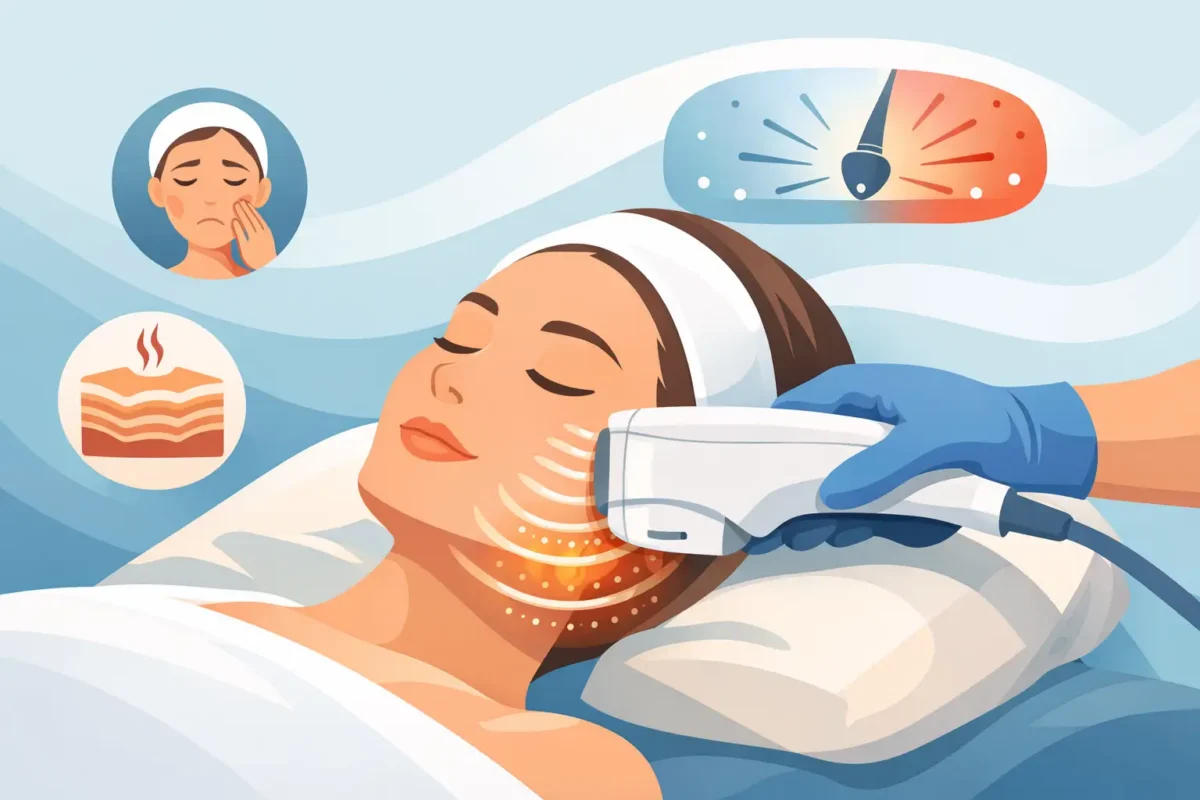
The question “does HIFU hurt” is usually the first one clients ask after seeing the promise of firmer, lifted-looking skin without surgery. It is a fair question. HIFU is an energy-based treatment, so you will feel it. For most people, though, the sensation is brief and manageable rather than sharply painful, and it happens in small pulses instead of lasting throughout the appointment.
HIFU, or high-intensity focused ultrasound, delivers focused ultrasound energy beneath the surface of the skin. This creates controlled points of heat at targeted depths, supporting the body’s natural collagen response over time. The goal is skin that looks tighter, smoother, and more refreshed, with no surgical incisions or lengthy downtime.
Does HIFU Hurt During Treatment?
Most clients describe HIFU as a quick prickling, warmth, or tiny electrical sensation beneath the skin. Others compare it to a brief snap or a deep pulse. The feeling lasts only while each pulse is delivered, then stops immediately. It should not feel like constant burning or intolerable pain.
The experience varies from person to person because skin sensitivity, treatment area, energy settings, and the condition of the skin all matter. A client treating mild laxity along the jawline may find the session very comfortable, while someone receiving more intensive treatment around the lower face or under the chin may notice stronger pulses.
The good news is that HIFU is not a one-setting-fits-all procedure. An experienced practitioner adjusts the treatment approach for your goals, anatomy, and comfort level. Clear communication matters. If a pulse feels too intense, say so right away. Your provider can pause, reassess, or modify the settings as appropriate.
Areas That May Feel More Sensitive
Bony areas of the face can feel more noticeable because there is less soft tissue between the skin and the underlying bone. The jawline, chin, forehead, and cheekbones are common examples. The area under the chin can also be sensitive for some clients.
In contrast, broader areas with more tissue, such as portions of the cheeks or neck, may feel like a deeper warmth or mild pressure. Sensation is not a reliable measure of how well HIFU is working. A stronger feeling does not automatically mean better results, which is why thoughtful settings and proper technique are so valuable.
Why HIFU Feels Different for Everyone
Pain tolerance is only part of the picture. Your individual skin and treatment plan have a real effect on what HIFU feels like. If you are tired, anxious, dehydrated, or approaching your menstrual cycle, you may be more sensitive than usual. Some medications and supplements can also affect comfort or bruising risk, so your provider should review your health history before treatment.
The purpose of treatment matters, too. HIFU can be used to support lifting and tightening in areas such as the brow, cheeks, jawline, neck, and décolletage. A more comprehensive plan often involves more treatment passes or areas, which can make the session feel more intense simply because it is longer.
There is a trade-off worth understanding. Non-invasive treatments ask the body to gradually build collagen rather than producing the immediate structural change of surgery. That means results develop over weeks to months, but it also means no incisions, no general anesthesia, and typically very little interruption to your routine.
How to Make Your HIFU Appointment More Comfortable
Comfort begins before the first pulse. Arrive well-hydrated, eat normally unless you have been given different instructions, and avoid booking a session when you are already feeling unwell or unusually run down. Let your practitioner know about any recent cosmetic treatments, active skin irritation, dental work, medications, or changes in your health.
During the appointment, slow breathing can help more than clients expect. HIFU sensations are fast, and knowing when a treatment pass is coming can make them easier to manage. Many people find that the anticipation is more challenging than the treatment itself. Once they understand the rhythm, they relax.
A qualified provider will also use appropriate settings and carefully assess the treatment area rather than chasing maximum intensity. At Bloom Laser Clinic, this personalized, clinically informed approach is part of making advanced skin science feel approachable. The right treatment plan should balance visible improvement with a positive, well-supported experience.
Can Numbing Cream Be Used for HIFU?
This depends on the provider’s protocol, the treatment area, and your personal sensitivity. Some clients do well without numbing because the pulses are so brief. Others may benefit from comfort measures recommended by their practitioner. Ask about this during your consultation rather than applying numbing products on your own before an appointment.
It is also wise to avoid assuming that a treatment should be painful to be effective. HIFU is a precise procedure. Your provider’s knowledge of facial anatomy, device settings, and safe treatment technique is far more meaningful than pushing through discomfort.
What Does Your Skin Feel Like After HIFU?
Immediately afterward, your skin may look mildly flushed or feel warm, similar to the sensation after a workout or spending a little too long in the sun. This usually settles quickly. Some clients notice tenderness when touching the treated area, particularly along the jawline or beneath the chin, for a few days.
You may also experience temporary tingling, slight swelling, or sensitivity. These effects are generally mild and short-lived. Because HIFU does not break the skin’s surface, most people return to work, social plans, and normal daily activities right away.
Treat your skin gently after your appointment. Use a mild skincare routine, wear sunscreen, stay hydrated, and follow the specific aftercare instructions you receive. Avoid adding strong exfoliants or unapproved treatments immediately afterward if your skin feels tender. If you experience significant pain, persistent swelling, blistering, or any symptom that concerns you, contact your treatment provider promptly.
Is HIFU Right if You Have a Low Pain Tolerance?
Possibly. A low pain tolerance does not automatically rule out HIFU. It simply makes a thorough consultation more important. Be direct about your concerns, past experiences with cosmetic treatments, and the level of improvement you hope to achieve. Your provider can help you decide whether HIFU, a different skin-tightening option, or a more gradual treatment plan makes the most sense.
HIFU is often best suited to clients with mild to moderate skin laxity who want a non-surgical option and are comfortable waiting for collagen remodeling to develop. It may not be the ideal choice for everyone, especially when there is significant loose skin or a need for more dramatic correction. Honest recommendations protect both your comfort and your results.
When You Will See Results
Some clients notice an early, subtle tightening effect, but collagen rebuilding takes time. Most visible improvement develops gradually over the following two to three months, with continued refinement possible afterward. This is part of HIFU’s appeal: the change can look natural because it emerges progressively rather than overnight.
The answer to whether HIFU hurts is not simply yes or no. You may feel brief, focused pulses, especially in sensitive facial areas, but the treatment is designed to be tolerable and tailored to you. A thoughtful consultation gives you the chance to ask questions, understand the expected sensation, and choose a skin-rejuvenation plan that helps you feel confident before, during, and after your visit.