


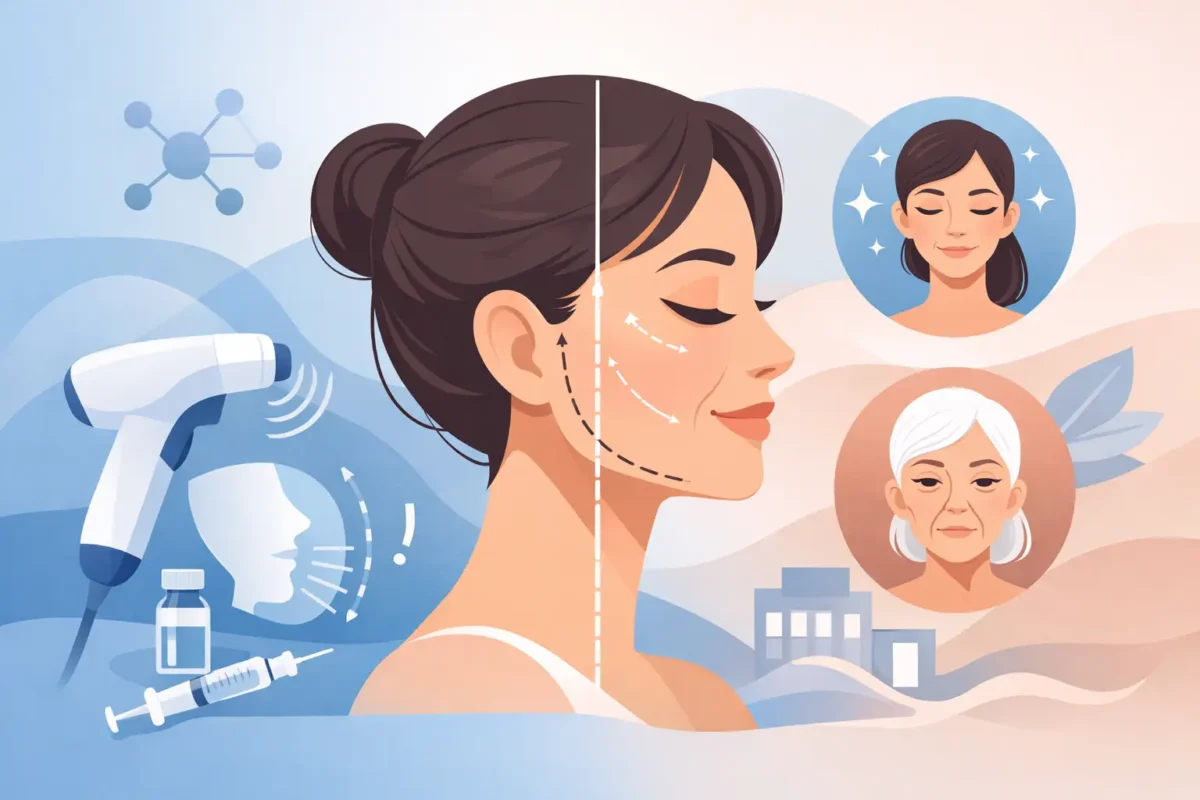
That distinction matters. A non-surgical facelift is not one single treatment, and it is not a copy of a surgical facelift. It is a category of treatments designed to lift, tighten, smooth, and refresh the face without incisions or lengthy downtime. For many people, that is exactly the appeal. They want visible improvement that fits real life.
Is non surgical facelift effective for real skin concerns?
Yes, non-surgical facelift treatments can be effective when the goal is mild to moderate tightening, subtle lifting, improved skin texture, and better facial definition. They are especially popular for early signs of aging such as skin laxity around the jawline, mild sagging in the cheeks, fine lines, crepey skin, and loss of firmness.
What they do best is stimulate your skin’s own repair response. Treatments such as HIFU and other energy-based technologies work below the surface to encourage collagen remodeling. That means results build gradually as your skin becomes firmer and more structured over time.
For clients who want to look more rested, more defined, and more youthful without looking dramatically altered, this can be a very strong option. It is modern facial rejuvenation with less interruption to your routine.
What a non-surgical facelift can actually improve
The most effective non-surgical facial lifting plans usually focus on a combination of concerns rather than one dramatic change. Depending on the treatment used, you may see improvement in skin tightness, jawline softness, cheek laxity, fine lines, enlarged pores, uneven texture, and overall skin quality.
This is why the best results often look natural. Instead of changing your face, the treatment supports better structure, smoother skin, and a more refreshed appearance. People may notice you look brighter or younger without being able to pinpoint exactly why.
It can also be helpful for clients who are not ready for injectables or surgery but still want a result they can see in the mirror. In that stage, non-invasive technology often fills the gap beautifully.
Where these treatments tend to work best
Results are often most noticeable in areas where mild laxity is starting to show. The brow area, lower cheeks, jawline, neck, and under-chin region are common targets. Some treatments also support skin texture and radiance across the full face, which adds to the lifted look.
That said, treatment response is personal. Your age, skin thickness, collagen levels, degree of sagging, and treatment history all affect the final outcome.
What non-surgical facelift treatments are most effective?
The answer depends on what is causing the aging changes you see. If the issue is laxity, energy-based tightening treatments are often the most relevant. HIFU is a strong example because it delivers focused ultrasound energy into deeper layers of tissue, helping trigger collagen production where support is needed.
If the issue is more about skin dullness, rough texture, pore visibility, or superficial aging, laser-based rejuvenation may be part of the plan. In many cases, the most effective non-surgical facelift is not one treatment but a customized combination. Tightening technology improves support, while resurfacing or skin renewal treatments improve the quality of the skin on top.
That is where clinical assessment matters. Two people can both say they want a facelift effect, but one may need lifting and contour support while the other needs texture correction and brightness. The best treatment plan matches the biology, not just the buzzword.
Is non surgical facelift effective compared with surgery?
This is where honesty is essential. Non-surgical facelift treatments are effective, but they are not equal to surgery for significant sagging, heavy jowls, or substantial loose skin. A surgical facelift physically repositions and removes tissue. Non-surgical treatments stimulate and refine. Those are different levels of intervention.
If someone has advanced skin laxity and wants a dramatic repositioning of the lower face and neck, surgery will usually produce stronger and longer-lasting results. But many clients are not looking for that. They want prevention, maintenance, or improvement that feels natural and manageable.
For that group, non-surgical options can be an excellent choice. They involve less downtime, lower upfront cost, less risk, and a more gradual transformation. That trade-off is often worth it.
The benefit of subtle, buildable results
One reason clients love non-invasive facial rejuvenation is that results tend to appear progressively. Instead of a sudden change, the face looks fresher over the following weeks and months. For professionals, parents, and anyone who does not want visible recovery, that can feel far more comfortable.
There is also a maintenance advantage. Because these treatments can be repeated, many clients use them as part of a long-term skin strategy. Think of it as supporting the skin before aging changes become harder to address.
How long do non-surgical facelift results last?
Longevity depends on the treatment, your skin, and how your body produces collagen. In general, tightening results can last several months to over a year, especially with good skincare and a maintenance plan. Some people respond quickly and hold results well. Others need a series or more frequent follow-up.
Lifestyle makes a difference too. Sun exposure, smoking, stress, weight fluctuation, and natural aging all affect how long your results remain visible. That does not mean treatment failed. It means your skin continues to change, and maintenance is part of staying ahead of that process.
This is another reason expectations matter. A non-surgical facelift is often best viewed as a smart, ongoing investment in skin quality and facial support rather than a one-time permanent fix.
Who is the best candidate?
The ideal candidate usually has mild to moderate laxity and wants visible improvement without surgery. You may be a strong candidate if your skin is starting to feel less firm, your jawline is less defined than it used to be, or your face looks tired even when you are well rested.
These treatments also appeal to people who want clinically guided results without a dramatic change. If you value technology, safety, and a more natural-looking outcome, non-invasive lifting can be a very good fit.
People with severe sagging or very advanced volume loss may still benefit from non-surgical treatments, but they should understand the limits. A skilled provider will tell you when a treatment is likely to help, when it will only modestly improve things, and when another option may make more sense.
What makes the biggest difference in results?
The technology matters, but so does the provider. Effective treatment depends on proper assessment, accurate settings, thoughtful planning, and a clear understanding of facial anatomy. This is not a one-size-fits-all service.
Good results also come from treating the right problem. If the concern is skin laxity, the plan should focus on tightening. If the concern is pigmentation, redness, acne scarring, or texture, those issues need their own strategy. Trying to solve every facial concern with one device usually leads to disappointment.
At a clinic level, the best outcomes come from combining science with customization. That is the heart of smart skin care. At Bloom Laser Clinic, that approach aligns with what many clients want most: visible change, credible guidance, and treatments that fit into real life.
The bottom line on effectiveness
So, is non surgical facelift effective? Yes, when you define effective the right way. It can tighten mildly lax skin, improve contour, support collagen, refresh overall appearance, and help you look more lifted without surgery. What it cannot do is replicate the dramatic tissue repositioning of a surgical facelift.
For many clients, that is not a drawback. It is the reason they choose it. They want confidence, not overcorrection. They want results they can see, feel, and maintain. And they want a treatment path that respects both their appearance and their schedule.
If you are considering a non-surgical facelift, the smartest next step is not chasing the trendiest name. It is getting a professional assessment that looks at your skin honestly and builds a plan around what will truly move the needle for you.