


A faded acne scar can feel far more noticeable than it looks in a photo. So can enlarged pores, fine lines around the mouth, or sun damage that makeup no longer covers as smoothly. When clients compare laser resurfacing versus microneedling, the real question is rarely which treatment is better. It is which approach can create the most meaningful improvement for their skin concern, complexion, schedule, and comfort with downtime.
Both treatments encourage the skin to repair and renew itself. They are non-surgical options for improving texture and tone, but they work differently, produce different levels of intensity, and are not interchangeable. A thoughtful assessment is the best place to begin.
Laser Resurfacing Versus Microneedling: The Core Difference
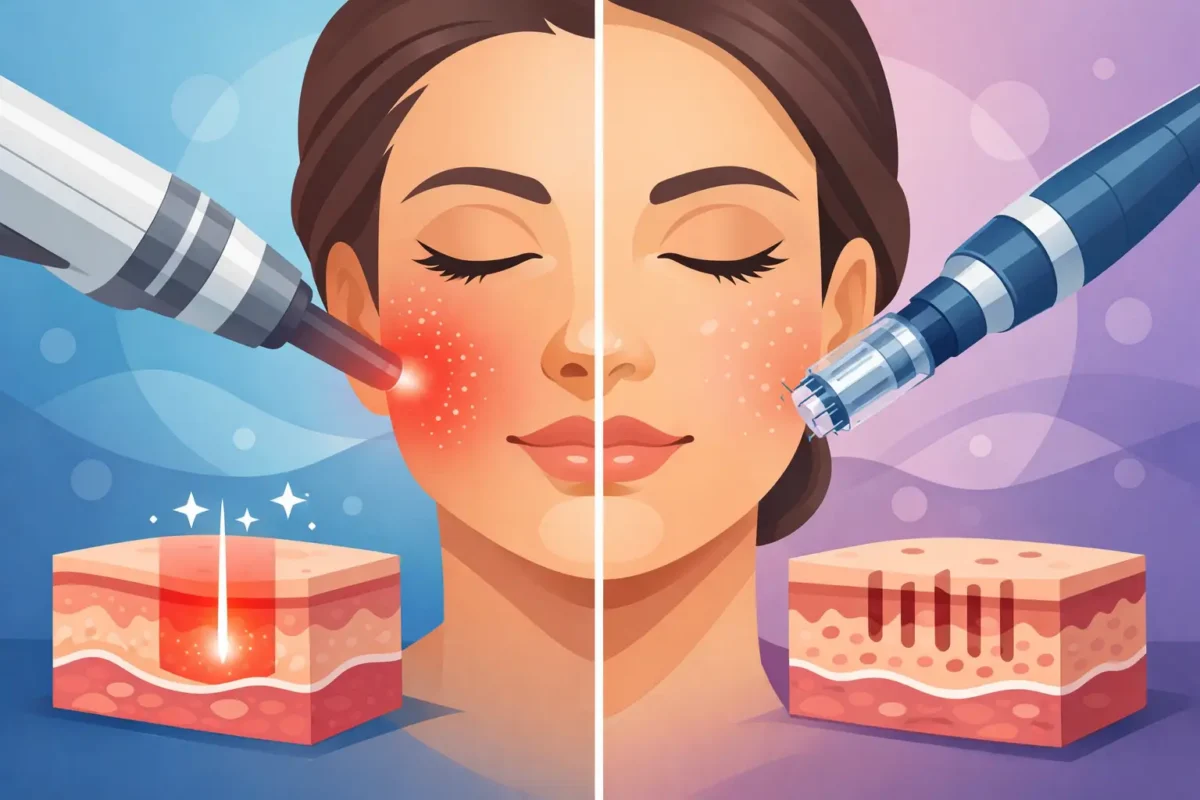
Microneedling uses a medical-grade device with very fine needles to create controlled microchannels in the skin. This process activates the body’s wound-healing response and supports new collagen and elastin production. Over a series of treatments, skin may look smoother, firmer, and more even in texture.
Laser resurfacing uses focused light energy to treat targeted layers of skin. Depending on the laser and settings selected, it can heat the deeper skin structure, remove damaged surface cells, or do both. That precision makes laser treatment especially useful when concerns extend beyond general texture to include visible sun damage, discoloration, stubborn acne scarring, and deeper lines.
Think of microneedling as a gradual collagen-building treatment with minimal interruption to your routine. Laser resurfacing can be a more customized, higher-impact option, particularly when there is more extensive damage to address. The right choice depends on the condition being treated, not simply on which procedure is trending.
What Microneedling Can Treat Well
Microneedling is often an excellent option for clients who want to improve early signs of aging, uneven texture, visible pores, and mild to moderate acne scars. Because the treatment stimulates repair without using heat to remove the skin’s surface, it can be a comfortable entry point for those new to clinical skin rejuvenation.
Most clients notice temporary redness and mild sensitivity afterward, similar to a sunburn. This usually settles within one to three days, although skin should be treated gently while it recovers. A consistent home-care routine, sun protection, and properly timed treatment sessions all influence the final result.
Collagen remodeling takes time. While skin may appear brighter fairly soon after a session, the most meaningful change develops gradually over several weeks. A series is commonly recommended because each treatment builds on the last. This makes microneedling a good fit for someone comfortable with a progressive treatment plan rather than a single dramatic intervention.
Microneedling may also be considered for a wider range of skin tones when it is performed appropriately. Still, every complexion deserves an individualized evaluation. Active acne, infection, certain inflammatory skin conditions, a history of problematic scarring, pregnancy considerations, and some medications can affect whether treatment should be postponed or modified.
When Laser Resurfacing May Be the Better Choice
Laser resurfacing is often selected when a client wants more correction for visible photoaging or specific pigment concerns. It can be especially valuable for rough texture, fine lines, acne scars, sun spots, dullness, and uneven tone. The technology and treatment settings matter greatly, because lasers are not one category of treatment.
Non-ablative lasers heat tissue below the surface while leaving more of the outer skin intact. They tend to have less downtime and are often performed as a series. Ablative resurfacing treatments remove a controlled portion of the surface layer and may offer more dramatic renewal, but they require a longer and more involved recovery period.
A laser peel can also be tailored for clients who want a refreshed, clearer appearance with manageable downtime. For example, certain laser-based treatments can support a smoother-looking complexion while addressing the appearance of pigment and congestion. The ideal device, energy level, and number of sessions should always be chosen by a qualified practitioner after reviewing your skin type, history, and goals.
Laser treatment is powerful, but more intensity is not automatically more appropriate. Some skin tones and pigment conditions carry a higher risk of post-inflammatory hyperpigmentation with certain laser settings. That does not mean laser resurfacing is off the table. It means treatment selection, pre-treatment preparation, and experienced clinical judgment are essential.
Results, Downtime, and Comfort Compared
The most practical difference between these treatments is often recovery. Microneedling typically causes short-lived redness, tightness, and mild swelling. Many clients are comfortable returning to everyday activities quickly, though they may choose to avoid makeup, strenuous exercise, heat exposure, and active skincare ingredients for a short period.
Laser resurfacing can range from very little visible downtime to several days or longer, depending on the type of laser and depth of treatment. Skin may feel warm, look red, and later become dry or flaky as it renews. With more intensive resurfacing, diligent aftercare is part of the treatment itself. That includes avoiding sun exposure, using recommended products, and allowing the skin to heal without picking or exfoliating.
Comfort levels vary as well. Topical numbing is often used for microneedling and many laser procedures. Some clients describe microneedling as a brief scratching or vibrating sensation. Laser treatment can feel like quick pulses of heat or a warm snap against the skin. A reputable clinic will explain what to expect, discuss comfort options, and make sure you know how to care for your skin after your appointment.
Results also follow different timelines. Microneedling rewards consistency, with collagen improvement becoming more visible over time. Laser results may include an earlier improvement in surface clarity and radiance, while deeper collagen changes continue developing in the weeks that follow. Neither treatment stops the aging process, but both can help skin look healthier and more refined when paired with ongoing sun protection and quality skincare.
How to Choose Based on Your Main Concern
If your priority is mild texture, enlarged pores, or early acne scarring with minimal downtime, microneedling may be a strong starting point. It is also appealing for clients who want a gradual, natural-looking improvement and are willing to complete a recommended series.
If you are more concerned about sun damage, visible discoloration, pronounced roughness, deeper lines, or scars that have not responded to gentler approaches, laser resurfacing may offer greater correction. The trade-off may be added recovery time, a more detailed aftercare plan, and a treatment schedule that must be coordinated around social events or travel.
For some clients, the best plan is not an either-or decision. A practitioner may recommend spacing different treatments across the year to address separate concerns safely. For instance, a laser-focused plan may target pigment and surface renewal, while microneedling supports ongoing collagen stimulation and texture refinement later on. Treatments should not be layered casually or too closely together simply to speed up results.
A Consultation Should Be Specific, Not Generic
Before choosing a procedure, your consultation should cover more than a quick look at your skin. Share your experience with pigmentation, cold sores, acne, eczema, melasma, keloid scarring, recent tanning, medications, and previous aesthetic treatments. Bring up your actual priorities too: whether you need to be camera-ready for an event, how much downtime you can manage, and whether you prefer a series of lighter treatments or a more intensive approach.
At Bloom Laser Clinic, treatment planning is centered on clinically informed recommendations and visible, realistic improvement. The goal is not to sell the strongest treatment. It is to select technology and settings that respect your skin while moving you toward a clearer, smoother, more confident appearance.
Beautiful results begin with the right match between treatment and skin. If you are deciding between laser resurfacing and microneedling, choose a professional assessment that considers your complexion, lifestyle, and the change you want to see in the mirror.