


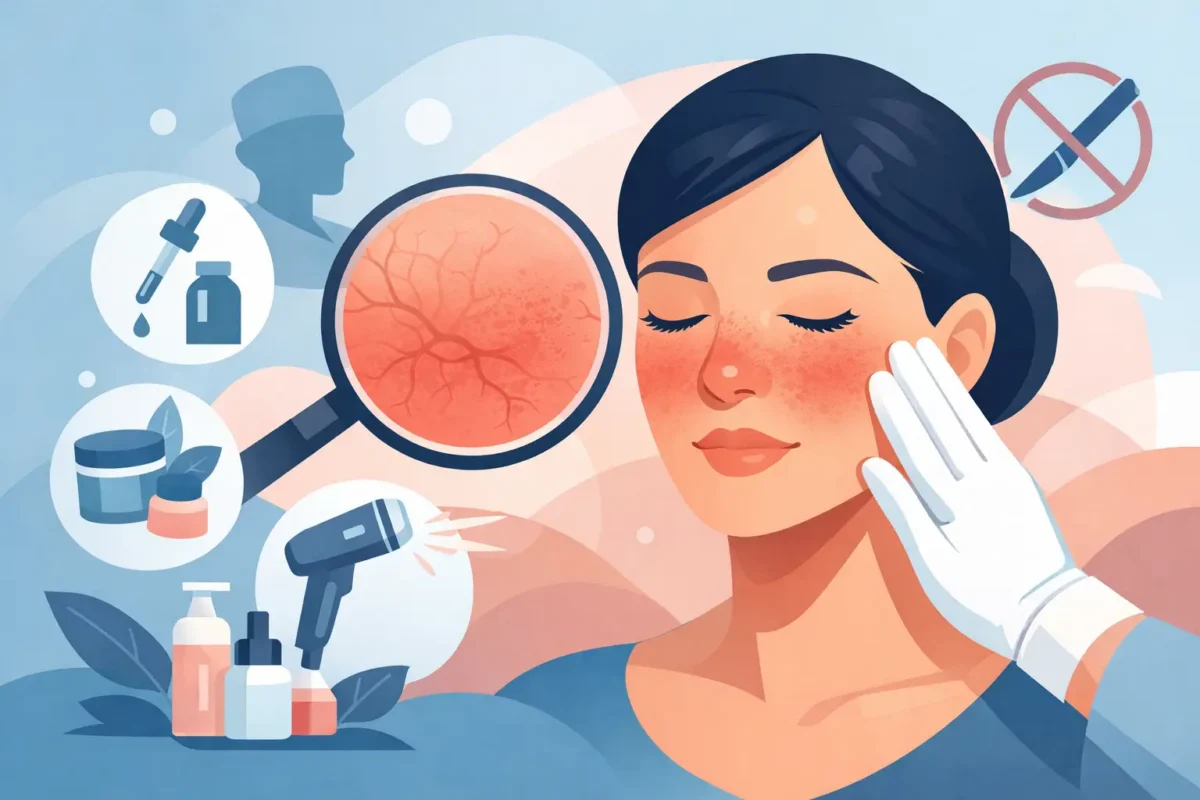
A flushed complexion after a workout is one thing. Persistent redness across the cheeks, nose, chin, or forehead is another. When it lingers, becomes more visible in photographs, or arrives with burning and sensitivity, it can affect how confident you feel in your skin. The right way to treat facial redness starts with identifying what is creating it, then choosing care that calms the skin rather than overwhelming it.
Facial redness is not one single concern, and there is no one-size-fits-all treatment. For some people, it is caused by reactive skin and a weakened moisture barrier. For others, rosacea, sun damage, acne inflammation, or visible facial vessels play a larger role. A professional assessment can separate temporary irritation from concerns that may benefit from targeted medical aesthetic treatment.
Why Facial Redness Can Be So Persistent
The face has a dense network of tiny blood vessels close to the surface of the skin. When those vessels widen, become damaged, or remain visible, the result can be diffuse redness, frequent flushing, or fine red lines often called broken capillaries or spider veins.
Rosacea is a common contributor. It may appear as ongoing redness in the center of the face, episodes of flushing, visible vessels, bumps that resemble acne, or stinging when skincare products are applied. Rosacea can vary significantly from person to person, which is why copying someone else’s routine or treatment plan may not produce the result you want.
Redness may also follow acne breakouts, aggressive exfoliation, overuse of retinoids or acids, sun exposure, contact irritation, or a reaction to a new product. Even climate changes, hot showers, alcohol, spicy foods, emotional stress, and intense exercise can trigger flushing in susceptible skin. The goal is not to avoid every trigger forever. It is to understand your pattern and support your skin with an approach that makes sense for it.
How to Treat Facial Redness at Home First
When redness is mild or newly noticeable, simplify before you add more products. A crowded routine can make sensitive skin more reactive, especially when it includes scrubs, strong exfoliating acids, fragranced products, or multiple active ingredients used at once.
Choose a gentle cleanser that does not leave your skin tight, followed by a fragrance-free moisturizer that supports the skin barrier. Look for formulas with soothing, barrier-focused ingredients such as ceramides, glycerin, or hyaluronic acid. Daily broad-spectrum sunscreen is equally essential. UV exposure can worsen inflammation, visible vessels, and uneven color over time, even on cloudy days.
Be thoughtful with popular active ingredients. Retinoids, vitamin C, and chemical exfoliants can be valuable for the right skin concern, but they may cause redness if introduced too quickly or used too often. Start slowly, use a small amount, and pause if you notice persistent burning, peeling, or worsening sensitivity. More intensity does not always mean better results.
It can also help to keep a simple record of flare-ups. Note what you ate, drank, applied to your skin, and did before redness appeared. This is particularly useful for people who suspect rosacea or frequent flushing. Patterns can be surprisingly clear after a few weeks.
When Visible Vessels Need More Than Skincare
Skincare can improve comfort and reduce irritation, but it cannot always remove visible facial vessels. If fine red lines remain across the nose or cheeks, or if redness has become a lasting feature rather than an occasional flare-up, laser-based treatment may be a more direct option.
Laser and light technologies work by targeting the color within visible blood vessels. The body then gradually clears the treated vessel, helping reduce its appearance over time. The appropriate technology, settings, and treatment plan depend on your skin tone, sensitivity, the size and depth of the vessels, and whether diffuse redness or distinct vessels are the main concern.
This is where a consultation matters. An experienced practitioner can evaluate whether laser treatment is appropriate, explain what degree of improvement is realistic, and identify whether a medical evaluation should come first. Redness caused by a skin condition, allergy, or infection should not be treated as a purely cosmetic issue without proper assessment.
At Bloom Laser Clinic, facial vein and rosacea-focused laser options are selected with an individualized approach. Treatment is non-surgical, but it is still clinical care. A thorough conversation about your health history, current medications, past procedures, and skincare routine helps create a safer, more effective plan.
What to Expect From Redness-Reduction Treatments
A treatment for facial redness should never feel like a rushed appointment. Before laser or light-based care, your practitioner may review your skin history, examine the affected areas, and discuss triggers that could continue to cause flare-ups after treatment. They may also recommend avoiding sun exposure, self-tanner, certain active skincare products, or other treatments for a period before your appointment.
During treatment, most clients describe brief warmth or a snapping sensation as energy is delivered to the targeted areas. Comfort levels depend on the technology and the sensitivity of your skin. Some redness or mild swelling afterward can be expected, particularly in areas with delicate vessels. This usually settles as the skin recovers, though downtime and aftercare vary.
Results are gradual, not instant. Some vessels may fade quickly, while broader redness often improves over a series of treatments. The number of sessions depends on the severity of redness, how your skin responds, and whether ongoing rosacea triggers are present. Maintenance treatments may be useful for some clients because new vessels can develop with sun exposure, aging, and genetic predisposition.
The trade-off is worth understanding: stronger treatment is not automatically the smartest choice. Sensitive or reactive skin often responds best to a conservative plan that balances visible improvement with skin comfort. Honest expectations and carefully chosen settings matter more than chasing an overly aggressive result.
Habits That Help Protect Your Results
Professional treatment can reduce visible redness, but daily habits help preserve a more even-looking complexion. Consistent sunscreen use is the foundation. Choose a formula you will genuinely wear every day, and reapply when you spend extended time outdoors.
Keep heat exposure in perspective as well. You may not need to give up hot coffee or exercise, but if either reliably triggers dramatic flushing, consider small adjustments. Let hot drinks cool slightly, keep workouts well ventilated, and use a cool compress after activity when needed. Avoid rubbing the face with a towel or applying skincare immediately after a very hot shower.
A gentle routine remains useful after treatment. If your skin feels dry or sensitive, focus on cleansing, moisturizing, and sun protection before returning to more active products. Your practitioner can advise when it is appropriate to restart exfoliants, retinoids, or other targeted skincare.
When to See a Medical Professional
Do not assume every red patch is rosacea or sun damage. Seek medical guidance if redness appears suddenly, spreads quickly, is painful, involves swelling around the eyes or lips, develops with fever, or comes with a widespread rash. You should also speak with a physician or dermatologist if you have persistent bumps, eye irritation, crusting, bleeding, or a mole or lesion that changes in appearance.
For cosmetic redness that is stable but bothersome, a professional skin consultation can bring clarity. The most rewarding results often come from combining everyday barrier care, sun protection, trigger awareness, and technology selected for your specific concern.
Your skin does not need to look filtered to look healthy. With the right plan, facial redness can become less distracting, your complexion can look more balanced, and you can feel comfortable stepping forward with confidence.