


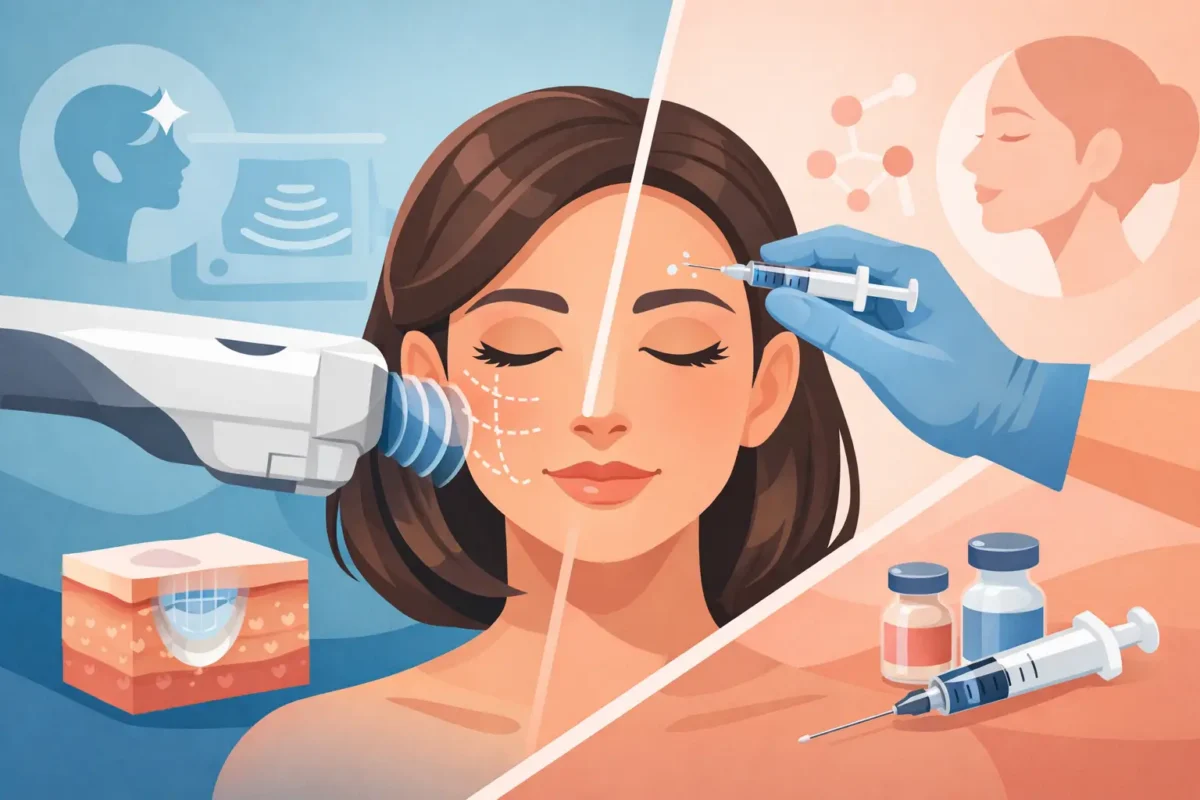
A line between the brows can make you look worried when you feel perfectly relaxed. A softer jawline or looser skin beneath the chin can make your reflection feel less like you. HIFU versus Botox is not a contest with one universal winner. They address different parts of facial aging, and the right choice depends on what you see, what you want to change, and how quickly you want to see it.
Both treatments can create a fresher, more rested appearance without surgery. But Botox relaxes selected facial muscles, while HIFU uses focused ultrasound energy to support firmer-looking skin over time. Understanding that distinction is the first step toward choosing a treatment that looks natural and feels right for you.
HIFU versus Botox: the key difference
Botox is a neuromodulator. When carefully injected into targeted muscles, it temporarily reduces the muscle movement that contributes to expression lines. It is most often used for horizontal forehead lines, frown lines between the eyebrows, and crow’s feet around the eyes. By limiting repetitive contractions, Botox helps the skin appear smoother when the face is at rest and in motion.
HIFU, short for high-intensity focused ultrasound, is a non-invasive skin-tightening treatment. It delivers ultrasound energy to selected layers beneath the skin’s surface, where it creates controlled thermal points intended to stimulate the body’s natural collagen response. Rather than relaxing a muscle, HIFU is designed to improve the look of mild to moderate laxity and facial definition gradually.
Think of Botox as a treatment for movement-driven wrinkles and HIFU as a treatment for skin support and contour. They can overlap in a complete facial rejuvenation plan, but they are not interchangeable.
When Botox may be the better fit
Botox is often the clearest choice when your main concern appears with facial expression. If lines deepen when you raise your eyebrows, squint, or frown, muscle movement is likely a major factor. Reducing that movement can make those lines less noticeable and may help keep them from becoming more deeply etched over time.
Results typically begin to appear within several days, with the full effect often visible at around two weeks. Most people enjoy results for roughly three to four months, although the timeline varies by treatment area, dose, muscle strength, and individual metabolism.
A skilled injector matters. The goal is not to erase expression or create a frozen appearance. Conservative, precise placement can soften lines while preserving the natural movement that makes your face look like you. Botox also requires maintenance appointments if you want to sustain the result.
Botox may be less effective when the concern is primarily skin looseness, a heavier lower face, loss of jawline definition, or crepey texture. It can soften wrinkles caused by expression, but it does not lift loose tissue or replace lost volume.
When HIFU may be the better fit
HIFU can be a strong option for clients noticing early changes in facial firmness. Common concerns include a less-defined jawline, mild jowling, skin laxity beneath the chin, drooping along the cheeks, or a brow area that looks less lifted than it once did. It may also be used on areas of the neck where skin has begun to lose its taut appearance.
The appeal of HIFU is its gradual approach. There are no injections, and most clients return to normal activities shortly after treatment. Some temporary redness, tenderness, tingling, or mild swelling can occur, but these effects usually settle quickly. Your provider should explain what is normal for the treatment area and when to contact the clinic.
HIFU does not produce an overnight transformation. Collagen remodeling takes time, so visible improvement often develops over two to three months and can continue to evolve for longer. Some clients are happy with one session, while others benefit from a customized series or periodic maintenance, depending on their skin quality, age, and goals.
It is best suited to mild or moderate laxity. If the skin is significantly loose or there is substantial volume loss, a non-surgical treatment may offer a modest improvement rather than a surgical-level lift. Honest expectations are part of good aesthetic care.
Results, comfort, and downtime
For speed, Botox usually wins. It can be an excellent choice before a special event when booked with enough lead time for the result to settle. HIFU rewards patience. Its outcome is more gradual, which many clients appreciate because the change can look subtle and naturally progressive.
Treatment comfort is personal. Botox involves a series of very small injections and is usually quick. HIFU can create brief sensations of heat, pressure, or tiny pulses beneath the skin as energy is delivered. Providers can adjust the approach based on the area being treated and your comfort level.
Neither treatment typically requires social downtime. With Botox, it is generally wise to avoid rubbing the treated area and to follow your injector’s aftercare instructions. With HIFU, the skin may feel tender for a short period, but makeup and normal routines are often possible soon after treatment. Your practitioner will provide recommendations specific to your treatment plan.
Can HIFU and Botox be used together?
Yes. In fact, combining treatments can make sense when your concerns involve both dynamic wrinkles and skin laxity. Botox can soften frown lines and crow’s feet, while HIFU may support a firmer-looking lower face, jawline, or neck. Because they work through different mechanisms, each can address a separate part of the picture.
The timing should be individualized. A qualified provider may recommend spacing treatments in a particular order based on the areas involved, your skin condition, and whether other services, such as dermal filler, laser treatments, or skin care, are part of your plan. More treatment is not automatically better. The most flattering results are often created through thoughtful restraint.
Safety starts with a proper consultation
Botox and HIFU are medical aesthetic treatments, not one-size-fits-all beauty services. A consultation should cover your medical history, medications, previous cosmetic treatments, skin concerns, and desired outcome. It should also include a clear conversation about expected results, limitations, risks, and aftercare.
Botox may not be appropriate for people who are pregnant or breastfeeding, have certain neuromuscular conditions, have an active infection at the injection site, or have a known sensitivity to ingredients in the product. HIFU may need to be postponed or avoided in the presence of certain implants or devices in the treatment area, active skin conditions, open wounds, or other contraindications. Your provider can determine suitability and recommend alternatives when needed.
Be cautious of treatment decisions based only on a price promotion or a single photo. Technique, device quality, facial assessment, and the experience of the provider all influence safety and outcome. Natural-looking rejuvenation begins with a plan designed for your actual anatomy, not a trend.
How to choose between HIFU and Botox
Start by identifying the concern that bothers you most. If it is a line that appears when you animate your face, Botox may be the most direct answer. If it is a gradual loss of firmness around the cheeks, jawline, chin, or neck, HIFU may better match your goal. If you recognize both concerns, a combination approach may offer more balanced improvement.
It also helps to consider your preferred timeline. Choose Botox when you want a relatively fast change in expression lines and are comfortable with maintenance every few months. Choose HIFU when you prefer a non-injectable treatment and are willing to wait for collagen-supported results to develop. Neither choice is about chasing a different face. The best treatment helps you look rested, refined, and confidently yourself.
A personalized consultation at Bloom Laser Clinic can clarify what your skin needs now and what will make sense over time. Bring a photo of yourself from a few years ago if it helps you describe the changes you have noticed. The right plan is not about choosing the most popular treatment. It is about choosing the one that supports the version of you you want to see in the mirror.