


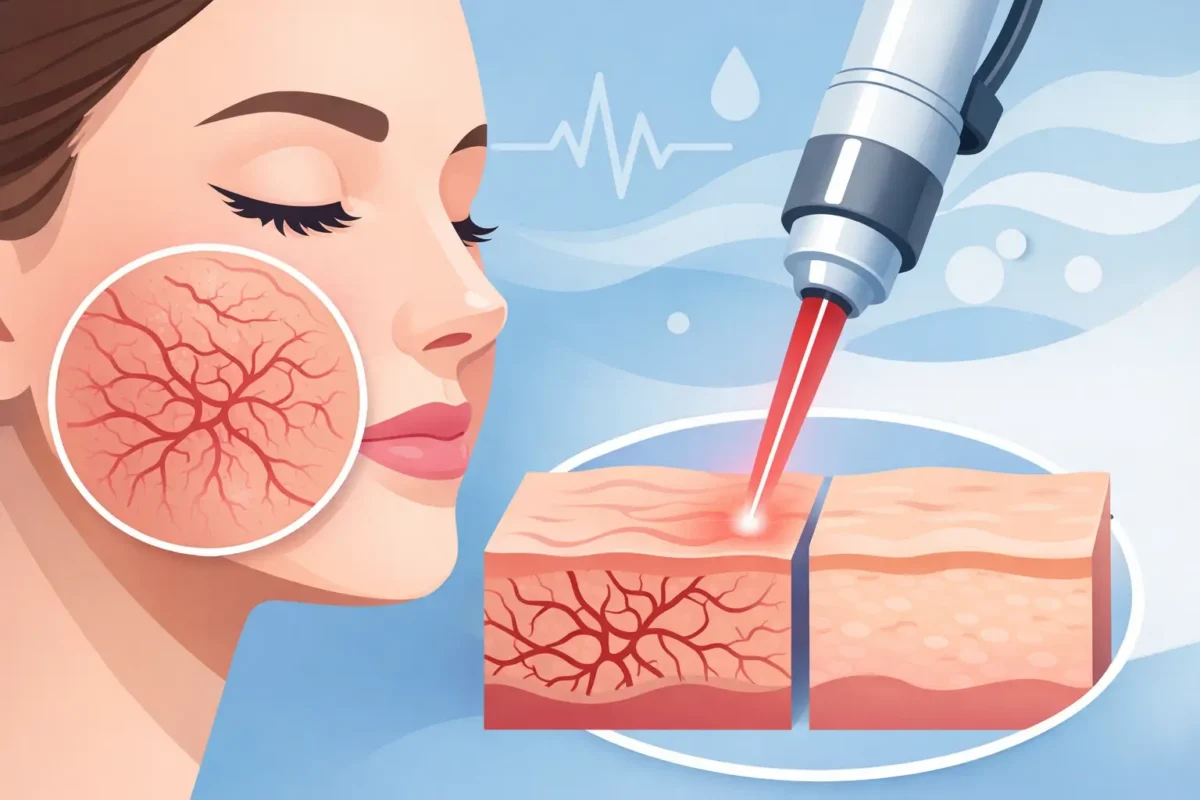
Those fine red, purple, or blue lines around the nose, cheeks, and chin can be surprisingly difficult to conceal. If you are asking, can laser help broken capillaries, the short answer is often yes. Professional vascular laser treatments can visibly reduce many superficial facial vessels without surgery, helping skin look clearer and more even.
The right answer depends on what is causing the visible vessels, how deep they sit in the skin, their color and size, and your skin type. A thoughtful consultation is the first step toward choosing a treatment that supports both your results and your skin health.
What are broken capillaries?
“Broken capillaries” is the everyday term for tiny visible blood vessels near the skin’s surface. The clinical term is often telangiectasia. They may appear as individual thread-like lines, small clusters, or a diffuse flush of redness, particularly on the central face.
Despite the name, these vessels are not usually physically broken. They are dilated vessels that have become visible through the skin. They are common and generally harmless, but they can be a frustrating cosmetic concern when they make skin appear persistently red or uneven.
Visible capillaries can develop for several reasons. Genetics, fair or thin skin, cumulative sun exposure, temperature extremes, aging, hormonal changes, alcohol, and frequent facial flushing can all play a role. They are also often associated with rosacea. In some cases, repeated irritation from aggressive exfoliation, topical steroids, or picking at the skin may worsen the appearance of redness and vessels.
Can laser help broken capillaries on the face?
Laser treatment can be highly effective for visible facial capillaries because it is designed to target pigment within blood. The laser energy is absorbed by hemoglobin in the vessel, creating controlled heat that causes the vessel to close. Over time, the body naturally clears the treated vessel.
The surrounding skin is protected because the practitioner selects settings intended to target the vessel rather than broadly heat the entire area. This is why device selection, skin assessment, and experienced treatment technique matter. A vessel that is tiny and red may respond differently than one that is larger, darker, or deeper beneath the skin.
Many clients see improvement after one appointment, but a series of treatments may be recommended for more extensive redness or multiple vessels. Treatment plans are individualized. Some capillaries fade quickly, while others need additional sessions or are better treated with a different wavelength or approach.
Laser treatment does not permanently prevent new visible vessels from forming. It treats the vessels present at the time of treatment. If you are prone to redness, rosacea, or sun damage, maintenance treatments and a consistent skin-protection routine may help preserve a clearer-looking complexion.
Laser versus IPL for facial redness
Both vascular lasers and intense pulsed light, often called IPL, may be used to improve facial redness. They are not interchangeable in every situation.
A vascular laser uses a focused wavelength to target blood vessels. It can be an excellent choice for distinct capillaries around the nose or individual red facial veins. IPL uses broad-spectrum light and may be helpful when visible vessels occur alongside sun spots, uneven tone, or more diffuse redness.
The best option depends on your skin, the pattern of redness, and the treatment goal. During a professional assessment, your provider can determine whether laser, IPL, a combined plan, or another treatment is most appropriate. For clients with rosacea-prone skin, careful settings and a gradual approach are especially valuable.
What happens during a capillary laser treatment?
A facial vein treatment is typically brief. Your skin is cleansed, and protective eyewear is worn throughout the appointment. Depending on the device and area being treated, a cooling method may be used to improve comfort and protect the skin.
Most people describe the feeling as a quick snap of warmth, similar to a small rubber band against the skin. The sensation is usually short-lived, particularly when treating only a few vessels. Topical numbing is not always necessary, although comfort options can be discussed during your consultation.
Immediately afterward, the area may look pink or feel warm. Some vessels can appear darker, more noticeable, or slightly swollen before they begin to fade. This can be a normal part of the treatment response. A qualified provider will explain what is expected for the specific technology used and what changes should prompt a call to the clinic.
Results, recovery, and realistic expectations
Recovery is generally minimal, which makes laser treatment appealing for people who want visible skin improvement without surgery or significant downtime. Mild redness and swelling can last from a few hours to a few days. With certain vascular treatments, temporary bruising or purple discoloration may occur, especially when larger vessels are treated.
Treated capillaries may fade over the following days or weeks rather than disappearing the moment you leave the treatment room. It is best to allow adequate time for healing before judging the final result. Avoiding excessive heat, vigorous exercise, hot baths, saunas, and alcohol for the period recommended by your provider can help calm post-treatment redness.
Sun protection is essential before and after treatment. Use a broad-spectrum sunscreen daily, limit direct sun exposure, and avoid tanning. Sun exposure can increase sensitivity and contribute to uneven pigmentation, particularly after any light- or laser-based procedure.
For the best outcome, pause irritating active ingredients such as retinoids, exfoliating acids, and scrubs if your provider advises it. Keep your routine gentle while your skin settles. A mild cleanser, simple moisturizer, and sunscreen are often all that is needed immediately after treatment.
Who is a good candidate for treatment?
Adults with visible facial veins, persistent redness, or small clusters of superficial capillaries may be candidates for laser treatment. A consultation is particularly useful if the redness affects confidence, makes makeup difficult to apply, or continues to return despite careful skincare.
Not everyone should be treated right away. Active skin infections, open wounds, recent tanning, certain medications, pregnancy-related treatment considerations, and a history of abnormal scarring may affect timing or suitability. People with deeper skin tones can absolutely benefit from laser care, but they need a provider who understands how to select appropriate technology and settings to minimize pigment-related risks.
If redness is sudden, painful, accompanied by a rash, bleeding, or other unexplained symptoms, seek medical advice rather than treating it as a cosmetic concern. Similarly, rosacea often benefits from a broader plan that may include medical management, trigger awareness, gentle skincare, and laser or light treatments as appropriate.
How to protect your results
You cannot control every cause of visible capillaries, especially genetics and natural skin aging. You can, however, reduce common triggers that contribute to flushing and new vessel visibility. Daily sunscreen, gentle skincare, and protection from harsh cold or wind are practical starting points.
Pay attention to what makes your skin flush. For some people, it is spicy food, hot drinks, alcohol, stress, or rapid shifts in temperature. This does not mean you need to eliminate every trigger forever. It means recognizing patterns and making choices that help your skin stay calm.
At Bloom Laser Clinic, treatment planning is centered on the concern you see in the mirror and the skin health needed to support a natural-looking result. The goal is not to change your face. It is to reduce distracting visible vessels so your complexion can look more balanced, refreshed, and like you.
Clearer-looking skin is often achieved through small, precise changes rather than a dramatic intervention. A professional consultation can help you understand whether laser is the right next step for your broken capillaries and create a plan that feels realistic, comfortable, and confidence-building.