


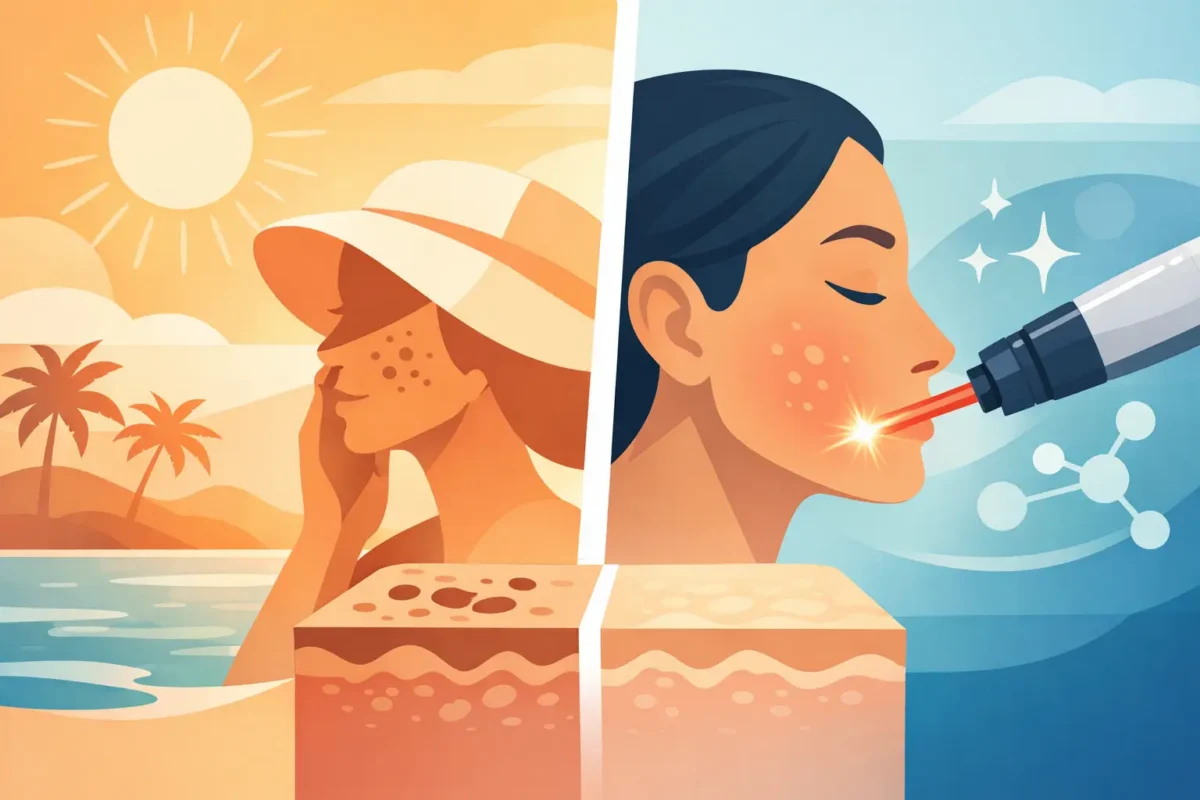
Sun damage rarely shows up all at once. It builds quietly – a little extra brown pigment after summer, redness that stops fading, rough texture that makeup no longer smooths over. If you have started wondering how laser treats sun damage, the short answer is that laser energy targets the visible signs of UV exposure in different ways, depending on what your skin is showing and what kind of result you want.
That matters because “sun damage” is not one single issue. For some people, it means freckles and dark spots that have become more pronounced over time. For others, it means broken capillaries, uneven tone, crepey texture, enlarged pores, or a dull surface that makes skin look older than it feels. The science of smart skin starts with treating the right problem with the right technology.
How laser treats sun damage in the skin
Laser treatment works by delivering controlled energy into the skin. That energy can target pigment, blood vessels, or water in the skin tissue, depending on the device and settings used. Once the target absorbs the energy, the body starts a repair response. Pigmented cells break apart and rise to the surface. Redness linked to small visible vessels can fade. Collagen remodeling helps improve tone and texture over time.
This is why laser treatment can do more than simply brighten the skin. In many cases, it addresses both the color changes and the surface changes that come with years of sun exposure. The result is not just lighter spots, but skin that looks smoother, clearer, and more refreshed.
The exact approach depends on what kind of damage is present. Brown spots and uneven pigmentation are treated differently than redness or rough texture. A good consultation should look at all of it together, because sun damage often appears in layers.
What types of sun damage can laser improve?
The most common concern is excess pigment. This includes sun spots, age spots, freckles that have darkened, and patchy discoloration left behind after repeated UV exposure. Lasers and laser-like light technologies can selectively target melanin so the excess pigment gradually flakes away or fades after treatment.
Redness is another major category. If sun exposure has left you with broken capillaries across the cheeks or nose, or a generally flushed appearance, vascular lasers may help reduce the visible blood vessels responsible for that color.
Texture changes often need a different strategy. Years of sun can weaken collagen, leaving skin rougher, thinner, and less even. In these cases, resurfacing treatments or collagen-stimulating laser options may be a better fit than pigment-focused devices alone.
Fine lines caused by photoaging can also improve, but expectations matter. Laser can soften early lines and improve overall skin quality. Deep static wrinkles usually need a combination approach rather than one standalone treatment.
Not every laser treats sun damage the same way
This is where real expertise matters. “Laser” is often used as a catch-all term, but different technologies do very different jobs.
Pigment-focused lasers are designed to seek out melanin. They are often chosen for sun spots and uneven tone. These treatments can be very effective when discoloration is clearly defined and superficial, but they need to be selected carefully for your skin type and history.
Non-ablative resurfacing lasers work below the surface to stimulate collagen with less downtime than more aggressive resurfacing. They are often used when sun damage shows up as dullness, mild wrinkling, and uneven texture.
Ablative resurfacing lasers remove controlled layers of skin. They can deliver stronger results for advanced photoaging, but they also come with more recovery and are not right for everyone.
Some clients are better candidates for laser peels or combination treatments that blend gentle resurfacing with pigment correction. In a physician-led aesthetic setting, the goal is not to use the strongest treatment possible. It is to match the treatment to the skin in front of you.
What treatment feels like and what happens after
Most sun damage laser treatments are tolerable, especially when performed with the right settings and comfort measures. Clients often describe the sensation as a warm snap against the skin. The exact feeling depends on the treatment depth and the area being treated.
Afterward, your skin may look pink or slightly swollen for a short period. Pigmented spots often get darker before they get lighter. That part surprises people, but it is a normal stage of the process. As the skin renews itself, the damaged pigment gradually sheds.
Recovery can range from very minimal to more noticeable, depending on the technology. Some treatments allow you to return to normal activities quickly, while others involve several days of redness, dryness, or peeling. If you want visible improvement but cannot step away from work or social plans, that should be part of the conversation before treatment starts.
How many sessions do you need?
Sometimes a single treatment makes a clear difference. More often, a series produces the best result.
That is because sun damage develops over years, not overnight. A cluster of dark spots may respond quickly, while diffuse pigmentation and textural change usually improve in stages. Many clients need multiple sessions spaced out over several weeks to get a more even, polished result.
Maintenance matters too. If your skin is prone to pigmentation, or if you continue getting regular UV exposure, new discoloration can return. Laser can correct existing damage, but it cannot make your skin immune to the sun.
Who is a good candidate?
Many adults with visible sun damage are good candidates for laser treatment, especially if they want improvement without surgery. The best candidates are usually those with realistic expectations, a willingness to protect their results, and a treatment plan tailored to their skin type.
The “it depends” part comes down to the details. Skin tone matters because some lasers carry a higher risk of post-inflammatory pigmentation in deeper skin tones. A history of melasma matters because heat-based treatments can sometimes worsen it if the wrong approach is used. Active tanning, certain medications, recent exfoliating procedures, or skin infections may also affect timing.
This is one reason an experienced clinic will not treat everyone the same way. Good outcomes come from proper assessment, not from using a one-size-fits-all device.
How laser treats sun damage versus peels and facials
Clients often ask whether laser is really necessary if they are already using brightening skincare, facials, or chemical peels. Sometimes those options are enough for mild surface dullness. But when damage is more established, laser typically reaches concerns that topical products cannot fully shift.
Skincare can support pigment control, improve cell turnover, and help maintain results. Peels can brighten and smooth the surface. Laser goes further when there is targeted pigment, visible vessels, or deeper collagen damage. It is not always an either-or choice. Some of the best outcomes come from combining in-clinic treatment with strong home care.
If your main issue is one or two isolated spots, laser may be the most direct route. If your skin is reactive, your pigmentation is complex, or your barrier is compromised, a slower plan might be smarter. Results-focused care is not about rushing. It is about choosing the treatment your skin can respond to well.
Getting better results from your investment
Preparation and aftercare make a real difference. Avoiding sun before and after treatment is essential, because recently tanned skin is harder to treat safely and new UV exposure can interfere with healing. Daily sunscreen is not optional if you want your results to last.
It also helps to be honest about your routine. If you spend weekends outdoors, forget SPF, or use active skincare inconsistently, your provider needs to know. The best treatment plan is the one that fits real life, not the ideal version of it.
At a clinic like Bloom Laser Clinic, where advanced skin treatments are part of a broader non-surgical approach to rejuvenation, this kind of planning is what turns good technology into visible change. The device matters, but the assessment, settings, timing, and follow-up matter just as much.
What kind of results should you expect?
Most people notice brighter, clearer skin first. Brown spots become less noticeable, overall tone looks more even, and the skin surface can appear smoother and more refined. Over time, collagen-focused treatments may also improve firmness and soften the weathered look that often comes with chronic sun exposure.
What laser does not do is erase every sign of aging or replace healthy skin habits. It improves what sun has changed, often very effectively, but it works best as part of a bigger plan that includes maintenance and prevention.
If sun damage has made your skin look tired, uneven, or older than you feel, laser can be a smart next step. The right treatment does more than remove spots – it helps your skin look like itself again, only clearer, fresher, and more confident.