


Pigmentation rarely shows up all at once. It builds quietly – a patch of melasma after summer, lingering acne marks that do not fade, sun spots that seem darker every year. If you are looking for a guide to pigmentation laser treatment, the real question is not just whether lasers work. It is which kind of pigmentation you have, how your skin responds, and what results are realistic for your complexion and lifestyle.
Laser treatment can be one of the most effective options for visible discoloration, but it is not a one-size-fits-all solution. The best outcomes come from matching the right technology to the right concern and treating the skin with a plan, not guesswork.
What pigmentation laser treatment actually treats
Pigmentation is a broad term. It includes sun damage, age spots, freckles, post-inflammatory hyperpigmentation from acne or injury, and melasma. These can look similar in the mirror, but they do not behave the same way under laser energy.
Sun spots and superficial brown patches often respond well because the pigment sits closer to the skin surface and is more defined. Post-acne marks can also improve, although they sometimes need a combination approach if redness or textural scarring is involved. Melasma is more complex. It is influenced by hormones, heat, inflammation, and UV exposure, which means even a well-performed treatment can trigger recurrence if the skin is not managed carefully.
That is why a proper assessment matters. Good laser care starts with identifying the type and depth of pigmentation, your skin tone, your recent sun exposure, and whether your skin has a history of sensitivity or rebound darkening.
A guide to pigmentation laser treatment options
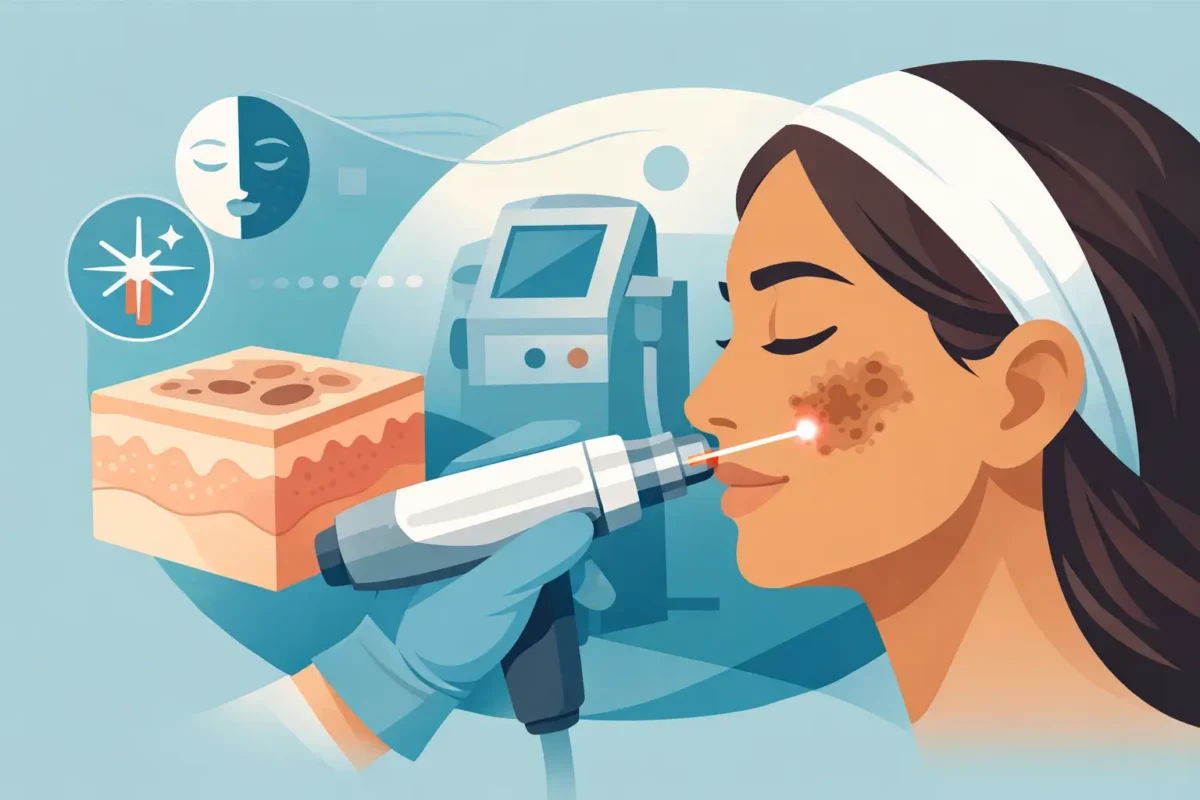
Most pigmentation lasers work by targeting excess melanin in the skin. The laser energy breaks up concentrated pigment so the body can gradually clear it away. Some devices focus more aggressively on discrete spots, while others treat broader uneven tone with a gentler overall approach.
Q-switched and picosecond-style lasers are commonly used for pigment concerns because they can deliver energy in very short pulses, helping break apart pigment without heating surrounding tissue as much as older technologies. Other systems may be used depending on whether the goal is correcting brown discoloration, improving dullness, or treating mixed concerns like acne marks and enlarged pores.
Not every patient needs the strongest treatment. In many cases, a series of lighter sessions is the smarter path, especially for medium to deeper skin tones or for pigment that is easily aggravated. A results-focused clinic will usually build treatment around safety first, then intensity second.
Who is a good candidate
The best candidate is someone with a clear diagnosis, realistic expectations, and a commitment to aftercare. If your pigmentation is tied to sun damage or post-inflammatory marks, laser treatment may offer noticeable improvement. If you have melasma, you may still be a candidate, but your provider should discuss maintenance, recurrence, and whether a more conservative protocol makes sense.
Skin tone matters too. Darker skin can absolutely be treated, but it needs extra caution because the laser can sometimes stimulate more pigmentation if the settings are wrong or the skin is inflamed. This is where experience matters. Physician-led clinics and trained laser practitioners tend to approach treatment with more precision because they understand both the technology and the biology underneath it.
You may not be an ideal candidate if you have a fresh tan, active skin infection, uncontrolled melasma triggers, or a habit of inconsistent sun protection. In those cases, delaying treatment is often the better decision.
What happens before your appointment
A good consultation should feel specific. You should be asked when the pigmentation appeared, whether it changes with seasons or hormones, what skincare products you use, and whether you have had previous lasers, peels, or reactions.
Photos are often taken to track progress, because changes in pigmentation can be gradual and easy to underestimate. You may also be advised to pause certain active ingredients before treatment, especially retinoids, exfoliating acids, or anything that has left your skin irritated.
Sun avoidance before treatment is not optional. Laser and fresh UV exposure are a poor combination. Skin that is tanned or recently sun-exposed is more reactive and harder to treat safely.
What treatment feels like
Most pigmentation laser sessions are quick. The sensation depends on the device and intensity, but many people describe it as a warm snapping feeling against the skin. Some areas are easier than others. The forehead and upper lip can feel sharper, while cheeks are often more tolerable.
Cooling methods may be used to improve comfort. For lighter sessions, numbing is not always necessary. For stronger spot treatment, your provider may recommend it.
Immediately after treatment, the skin may look pink or feel warm, similar to a mild sunburn. Pigmented spots often darken before they lighten. This can be alarming if you are not expecting it, but it is a normal part of the process in many cases.
Downtime and healing
Downtime depends on the type of laser and how aggressively the skin is treated. Some patients return to normal activities the same day with only mild redness. Others may have several days of visible darkening, dryness, and a rough sandpaper texture as the pigment lifts.
This stage requires patience. Picking, scrubbing, or overusing active skincare can interfere with healing and raise the risk of irritation. Gentle cleansing, hydration, and sun protection are the core of aftercare.
If your treatment is aimed at broader discoloration rather than isolated spots, improvement may appear more gradually over several sessions. Spot-specific pigment can sometimes respond faster, but even then, complete clearance is not guaranteed after one visit.
How many sessions you may need
This is where expectations need to stay grounded. Some superficial spots improve quickly. More stubborn pigmentation usually needs a series. Melasma often needs ongoing management rather than a single fix.
A realistic plan might involve three to six sessions spaced several weeks apart, followed by maintenance if your skin is prone to recurring pigment. That does not mean treatment is failing. It means pigmentation behaves like a chronic skin issue for many people, especially when hormones, inflammation, or UV exposure are involved.
A strong provider will tell you what percentage of improvement is likely, not promise flawless skin. Visible progress is the goal. Perfection is not a medical standard.
Risks and trade-offs to know about
Any honest guide to pigmentation laser treatment should include the fact that lasers can help pigment and, in the wrong setting, worsen it. The main concerns are post-inflammatory hyperpigmentation, temporary redness, sensitivity, and uneven response.
This does not mean lasers are unsafe. It means treatment needs to be selected carefully. More aggressive is not always better, especially for skin that is reactive or naturally richer in melanin. There is also the trade-off of maintenance. Even a great result can fade or relapse if daily sunscreen is inconsistent or the underlying trigger remains active.
For some patients, combining laser with medical-grade skincare gives the best outcome. Brightening agents, barrier support, and strict UV protection often make laser results more stable and more refined over time.
Aftercare that protects your results
The most important product after treatment is sunscreen. If that sounds basic, it is because the basics are what protect your investment. Broad-spectrum SPF, hats, avoiding direct sun, and minimizing heat exposure in the early healing phase all matter.
Your provider may also recommend a simplified routine for several days. Think gentle cleanser, bland moisturizer, and no harsh actives until the skin settles. Once healing is complete, targeted brightening ingredients may be reintroduced to support the laser work.
Heat can be a hidden trigger, especially for melasma-prone skin. Hot yoga, steam rooms, and very hot showers may not be ideal right after treatment. The skin needs calm conditions to recover well.
Choosing the right clinic
Technology matters, but judgment matters more. A beautiful machine in inexperienced hands is not the same as a thoughtful treatment plan delivered by a medically informed team. Look for a clinic that explains why a certain laser is being recommended, what alternatives exist, and what limitations apply to your skin type and pigment pattern.
If you are in Nova Scotia, New Brunswick, or Prince Edward Island, it is worth choosing a provider with experience treating a range of pigment conditions rather than one that treats every brown mark as the same issue. Clinics like Bloom Laser Clinic build trust by focusing on visible results without overselling what laser can realistically do.
Pigmentation treatment works best when it respects both science and skin behavior. The smartest plan is not always the fastest one. It is the one that clears what can be cleared, protects what needs protecting, and leaves your skin looking more even, healthy, and confidently yours.