


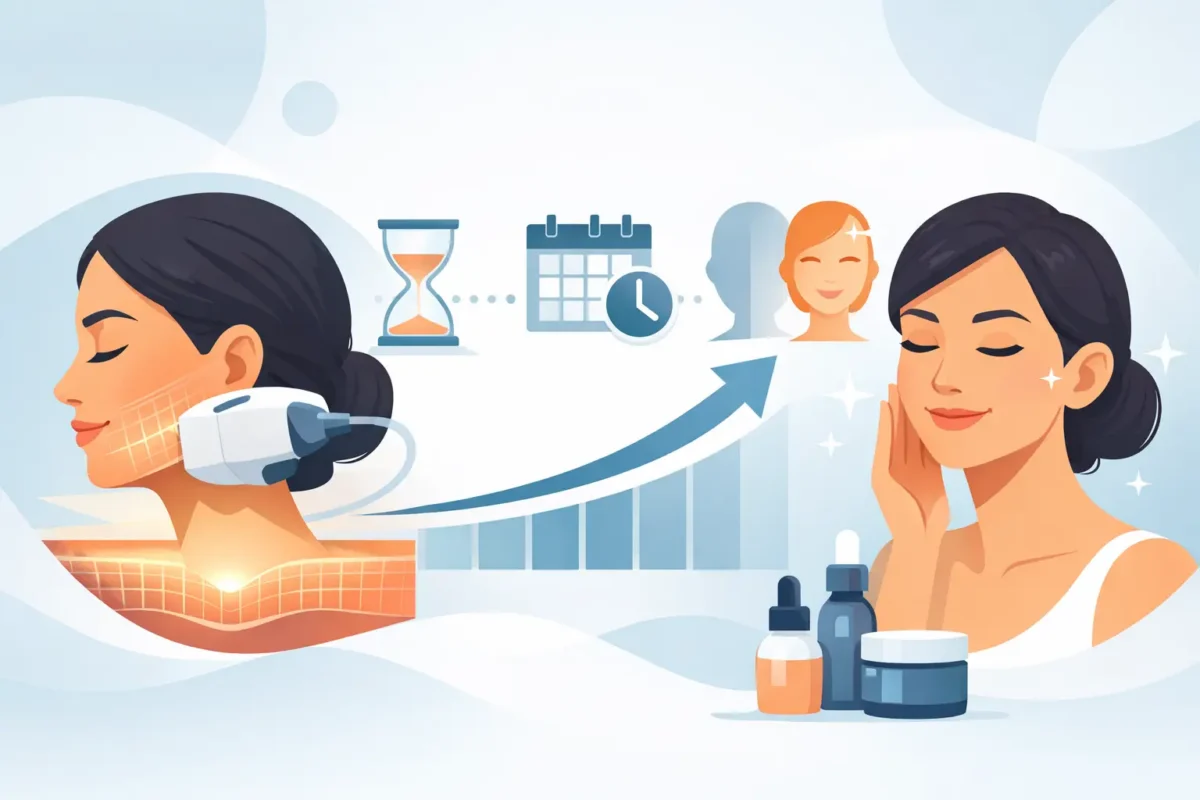
The mirror will not look dramatically different the morning after HIFU, and that is exactly what makes a realistic guide to HIFU treatment timeline so valuable. This non-surgical skin-tightening treatment works by encouraging your skin’s natural collagen response, which takes time. Rather than creating an instant, overdone change, HIFU is designed to reveal gradual, natural-looking definition and firmness.
For clients who want a refreshed jawline, a lifted-looking brow area, smoother neck, or firmer facial contours without surgery, understanding the process can make the experience feel much more reassuring. Here is what to expect from consultation through your longer-term results.
What HIFU Does Beneath the Skin
HIFU stands for high-intensity focused ultrasound. It uses focused ultrasound energy to target specific depths beneath the surface of the skin. The energy creates controlled thermal points in the deeper tissue, including layers associated with the skin’s support structure, while leaving the surface largely undisturbed.
Your body responds by beginning a collagen remodeling process. Collagen is one of the proteins that helps skin look firm, smooth, and supported. Because rebuilding collagen is gradual, HIFU results develop over weeks and months rather than appearing all at once.
This distinction matters. HIFU can improve mild to moderate laxity and enhance natural facial contour, but it is not a replacement for a surgical facelift when there is significant loose skin. A professional assessment is the best way to determine whether HIFU, another skin-rejuvenation treatment, or a customized combination approach is likely to meet your goals.
Before Treatment: Your HIFU Timeline Starts With a Consultation
A thoughtful consultation sets the foundation for a successful treatment plan. Your practitioner will assess your skin quality, degree of laxity, facial structure, and the areas you would like to improve. Common treatment areas include the brow, cheeks, jawline, under-chin area, and neck.
Be open about your medical history, previous aesthetic treatments, medications, and any active skin concerns. HIFU may need to be postponed if you have an active infection, open wounds, or certain medical conditions. Pregnancy and some implanted medical devices may also affect treatment eligibility.
In the days before your appointment, keep your skin routine gentle and arrive with clean skin whenever possible. Your practitioner may give you specific pre-treatment instructions based on the areas being treated and your individual needs. Avoid scheduling HIFU immediately before a major event if you are concerned about temporary redness or tenderness, even though many clients return to normal activities quickly.
Treatment Day: What the Appointment Feels Like
Your HIFU appointment begins with cleansing the treatment area and applying ultrasound gel. Your practitioner places the handpiece against the skin and delivers focused energy in a precise pattern tailored to your treatment plan.
Most people describe the sensation as brief warmth, tingling, or tiny pulses beneath the skin. Sensitivity can vary by area. The jawline, under-chin region, and areas close to bone may feel more intense than fuller parts of the face. Your practitioner can adjust the approach while keeping treatment focused and effective.
Appointment time depends on the size and number of areas being treated. A focused brow or lower-face session may be relatively quick, while a full face and neck treatment naturally takes longer. There is usually no significant downtime, which is one reason HIFU appeals to people seeking clinically informed rejuvenation that fits into a busy schedule.
The First 24 to 72 Hours: Mild, Short-Lived Effects
Immediately after treatment, you may notice mild redness, warmth, or slight swelling. These effects often fade within hours, though some people experience temporary tenderness or sensitivity for a few days. The treated area can feel tight or lightly sore, especially when touched.
Occasionally, clients report tingling, numbness, or minor bruising. These effects are typically temporary, but you should contact your clinic if you have concerns, persistent discomfort, or symptoms that feel unusual. Following the aftercare guidance given by your practitioner is always the right course.
You can generally return to work, errands, and social plans right away. Keep your aftercare simple: use gentle skincare, wear broad-spectrum sunscreen, stay hydrated, and avoid harsh exfoliation or aggressive facial treatments until your practitioner says your skin is ready. Protecting your skin from sun exposure supports healthy-looking results from every skin-rejuvenation investment.
Weeks 1 to 4: Early Changes May Begin
Some clients see a subtle initial tightening effect shortly after HIFU. This can happen as tissue responds to the treatment, but it is not the final result. During the first month, your skin is beginning the more meaningful work of collagen stimulation and remodeling.
At this stage, changes can be delicate. You may notice that your skin looks a little fresher, your jawline appears slightly more defined, or makeup sits more smoothly. Others may not see a clear difference yet. Both experiences can be completely normal.
This is not the time to judge the outcome too quickly. Taking standardized photos before treatment and again at planned intervals can be more useful than checking the mirror every day. Similar lighting, angle, and facial expression make gradual progress easier to recognize.
Weeks 6 to 12: The Most Noticeable Part of the HIFU Treatment Timeline
For many clients, visible improvement becomes more apparent between six and twelve weeks. New collagen formation and tissue remodeling can create a firmer, more lifted-looking appearance over time. The lower face may appear more refined, the neck may look smoother, and areas of mild laxity can look better supported.
Results differ because skin age, baseline laxity, treatment area, lifestyle, genetics, and individual collagen response all play a role. HIFU is especially well suited to clients who want improvement that looks like a more rested, confident version of themselves, not a sudden change that announces they had a procedure.
If you are preparing for a wedding, vacation, or milestone event, consider planning HIFU at least two to three months in advance. That allows time for the collagen response to develop naturally and gives your practitioner room to recommend any complementary treatments, if appropriate.
Three to Six Months: When Results Can Continue to Mature
Collagen remodeling does not stop at the 12-week mark. Many people continue to see their HIFU results develop over three to six months. Skin may feel more resilient and look more toned as the deeper support response matures.
This gradual progression is one of HIFU’s strengths. It supports a natural-looking transformation without incisions, general anesthesia, or extended recovery. However, gradual does not mean guaranteed or identical for everyone. The final outcome depends on your starting point and how your skin responds to treatment.
Your provider may recommend one treatment session or a series, depending on your goals and the technology used. Clients with more noticeable laxity may benefit from a personalized plan that combines HIFU with other non-surgical options aimed at skin texture, pigmentation, volume, or muscle-related lines.
How Long Do HIFU Results Last?
HIFU results often last around 12 to 18 months, although the timeline varies. Your skin continues to age naturally, sun exposure can affect collagen, and changes in weight or health can influence facial appearance. Maintenance treatments may help you continue supporting firmer-looking skin over time.
The best way to protect your investment is not complicated. Consistent sunscreen, a thoughtful skincare routine, adequate hydration, and avoiding smoking all support skin health. Maintaining a stable weight may also help preserve the contour improvements you see around the jawline and lower face.
When to Book a Follow-Up
A follow-up appointment gives you and your practitioner an opportunity to assess progress at the right point in your collagen timeline. It is also a chance to discuss whether your original goals were met or whether another treatment could complement your results.
At Bloom Laser Clinic, treatment planning centers on visible, natural-looking improvement and clear expectations. HIFU is not about chasing a different face. It is about using smart skin science to help your own features look firmer, refreshed, and beautifully supported over time.
If you are considering HIFU, give the process the patience it deserves. The most rewarding change is often the one that arrives gradually, feels like you, and helps you feel more confident every time you look in the mirror.