


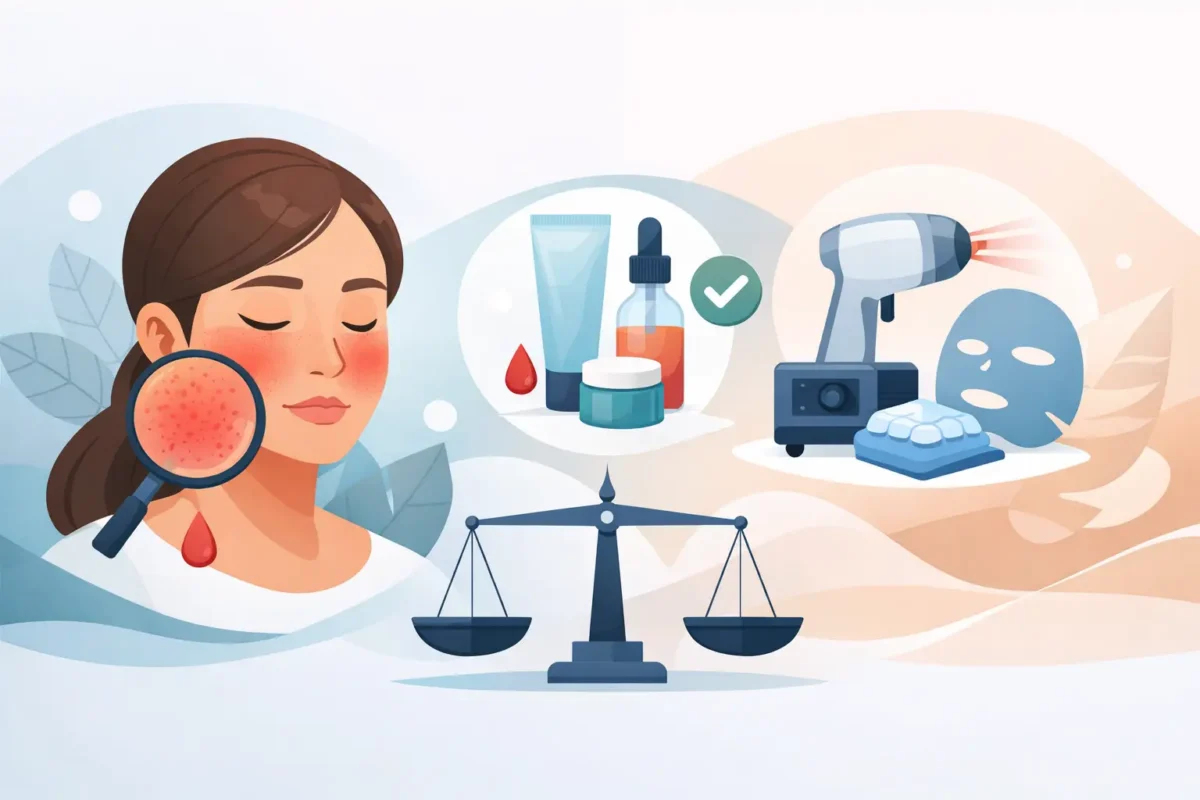
Redness can make skin feel unpredictable. One day it is a faint flush across the cheeks; the next, it is visible broken vessels, heat, sensitivity, or makeup that no longer sits the way it used to. A thoughtful facial redness treatment comparison starts by separating temporary irritation from redness caused by rosacea, sun damage, visible facial veins, or an impaired skin barrier. The right solution depends on what is creating the color beneath the surface.
For many people, redness is not a concern to cover up forever. With the right clinical assessment and a plan suited to your skin, it can often be reduced visibly and managed more confidently.
Why facial redness needs an individualized approach
“Redness” is a broad description, not a diagnosis. A pink cast after a workout is different from persistent redness around the nose and cheeks. Tiny red capillaries respond differently than inflammation-related flushing, and dry, reactive skin requires a different strategy than redness paired with acne.
Rosacea is one common cause. It can involve persistent central facial redness, flushing, visible blood vessels, sensitivity, bumps, or eye irritation. Sun exposure can also leave behind small dilated vessels, particularly around the nose and cheeks. In other cases, harsh exfoliants, overuse of active ingredients, weather changes, allergies, eczema, or an untreated medical condition may be contributing.
This is why the best first step is not choosing the strongest treatment. It is identifying whether the priority is calming inflammation, strengthening the skin barrier, reducing visible vessels, or addressing several concerns together. A qualified practitioner can help determine when an aesthetic treatment is appropriate and when medical evaluation should come first.
Facial redness treatment comparison: what each option does
Gentle skincare and lifestyle adjustments
For mild redness, sensitivity, or a compromised barrier, consistent skincare is often the foundation of every good plan. A gentle cleanser, fragrance-free moisturizer, broad-spectrum sunscreen, and carefully selected calming ingredients can reduce the triggers that keep skin looking reactive.
This approach is affordable, non-invasive, and essential for maintaining results from in-clinic treatments. It is also gradual. Skincare will not remove established facial veins, and it may not adequately control moderate rosacea on its own. If a product stings or leaves skin hotter and redder, it is usually a sign to simplify rather than add more actives.
Common lifestyle triggers matter too. Heat, alcohol, spicy foods, stress, intense exercise, and cold wind can provoke flushing in some people. Keeping track of patterns for a few weeks can reveal useful clues without forcing you to eliminate every enjoyable part of your routine.
Prescription and medical rosacea care
When redness is accompanied by acne-like bumps, burning, significant discomfort, or frequent flushing, medical treatment may be the most appropriate starting point. A physician or dermatologist may recommend topical therapies, oral medications, or other approaches to manage inflammation and symptoms.
Medical care addresses the underlying disease process more directly than cosmetic treatment alone. However, it may not fully remove visible capillaries that have already developed. Many clients benefit from a combined approach: medical management to keep rosacea stable, followed by a carefully timed light or laser treatment for residual redness and facial veins.
Any sudden, severe, painful, or rapidly changing facial redness deserves medical attention before an aesthetic procedure. The same applies to eye symptoms, swelling, rashes that spread, or redness following a new medication.
IPL photofacials
Intense pulsed light, commonly called IPL, uses broad-spectrum light to target pigment and blood vessels in the skin. It can be a strong option for diffuse redness, sun damage, uneven tone, and some visible vessels. Because it treats a larger area at once, IPL is often appealing for clients whose redness is spread across the cheeks, nose, chin, or chest.
The trade-off is that IPL is not a one-size-fits-all treatment. Settings must be chosen carefully based on skin tone, sensitivity, the depth of visible vessels, and the presence of melasma or active inflammation. Multiple sessions are commonly recommended, with gradual improvement rather than an overnight change.
IPL may be less suitable for very reactive skin during a flare, for certain deeper vessels, or for clients whose pigmentation concerns require a different laser strategy. Sun protection before and after treatment is essential, since recent tanning can increase risk and affect results.
Vascular laser treatment
Vascular lasers are designed to target the hemoglobin in red blood vessels. In a facial vein reduction treatment, the laser energy is absorbed by the vessel, allowing the body to gradually clear it over time. This focused approach can be especially effective for distinct broken capillaries around the nose, cheeks, and chin.
Compared with IPL, a vascular laser can offer more precision for individual vessels and persistent redness with a vascular component. It is often the better conversation to have when the concern is clearly visible thread veins rather than generalized flushing alone.
Treatment sensations vary, but many people describe brief warmth or a quick snapping feeling. Temporary redness, swelling, or darkening of treated vessels can occur as the skin responds. Results may appear gradually over several weeks, and more than one session may be needed depending on the number, size, and depth of vessels.
Laser peels and skin-refreshing treatments
Some laser-based skin rejuvenation treatments can improve overall tone, texture, pores, acne concerns, and sun-related discoloration. They may be helpful when facial redness is part of a wider picture of uneven skin quality. But they are not interchangeable with a vascular laser.
For example, a treatment selected primarily for pigmentation or surface renewal may not be the best first choice for pronounced facial veins. In sensitive or rosacea-prone skin, the timing and intensity of any peel or laser treatment should be planned conservatively. The goal is to improve the skin without creating unnecessary inflammation.
At Bloom Laser Clinic, a consultation can clarify whether redness reduction should be the main focus or one part of a broader facial rejuvenation plan. Technology matters, but thoughtful treatment selection matters just as much.
What produces the most noticeable results?
For established facial veins, professional vascular laser treatment or appropriately selected IPL generally produces more visible improvement than skincare alone. For diffuse redness linked to rosacea, the most successful plan is often layered: medical guidance when needed, trigger management, barrier-supporting skincare, and clinical light or laser treatments once the skin is stable.
Expectations should stay realistic. Treatments can significantly reduce visible redness and improve the look of individual vessels, but they cannot prevent every future flare or new vessel from forming. Genetics, sun exposure, hormonal shifts, and rosacea can all influence long-term maintenance.
A reputable provider will avoid promising that one appointment will permanently erase every trace of redness. Instead, they will explain the likely number of sessions, expected downtime, possible side effects, and maintenance options based on your skin.
How to choose between IPL and laser for redness
If your concern is broad redness combined with sun spots or uneven pigment, IPL may be worth considering. If you can point to individual red or purple vessels in the mirror, a vascular laser may be the more targeted choice. If your face is actively irritated, stinging, or breaking out with rosacea bumps, calming the skin and considering medical care may need to come first.
Skin tone also shapes the decision. Not every device, setting, or treatment schedule is suitable for every complexion. A detailed consultation should include your skin history, tendency to pigment after irritation, current products and medications, sun exposure, prior treatments, and whether you have ever experienced a rosacea flare after heat-based procedures.
Avoid treating redness as a trend-driven concern. The treatment that worked beautifully for a friend may not match the source of your redness, your sensitivity level, or your goals.
Preparing for a safer, better treatment experience
Before a light- or laser-based appointment, protect your skin from sun exposure and follow your provider’s instructions about active skincare ingredients. Be transparent about prescription medications, cold sore history, recent tanning, previous cosmetic procedures, and any condition that affects healing.
After treatment, skin typically benefits from a simple routine: gentle cleansing, moisturizer, sunscreen, and a temporary pause on exfoliating acids, retinoids, scrubs, and heat exposure if recommended. This is not the moment to test a new serum. Giving skin a calm recovery window helps protect your investment and supports a more even result.
The clearest path forward is a consultation that looks beyond the color you see today. When the cause of redness is understood and the treatment plan respects your skin’s limits, clearer-looking, calmer skin becomes a realistic and confidence-building goal.