


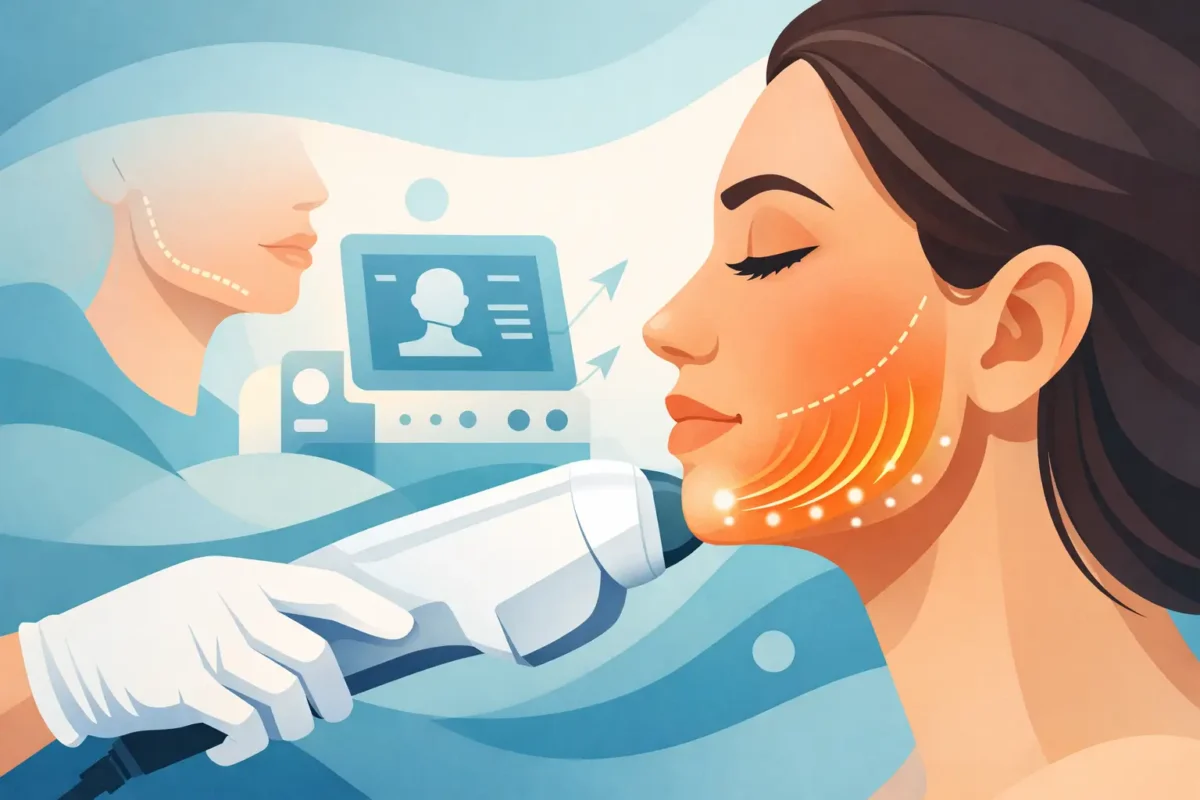
If your jawline looks softer than it used to and the skin around the lower face feels heavier, you are probably asking a very specific question: is HIFU good for jowls? For the right person, it can be a smart, non-surgical way to tighten mild to moderate sagging and create a firmer, more defined lower face. But it is not a facelift, and the difference between a satisfying result and a disappointing one usually comes down to skin quality, degree of laxity, and treatment planning.
Is HIFU good for jowls in real life?
Often, yes – but with limits. HIFU, or high-intensity focused ultrasound, works by delivering focused energy below the skin’s surface to stimulate collagen and create controlled tightening in deeper support layers. That makes it especially appealing for people who want visible improvement without surgery, needles in multiple areas, or extended downtime.
Jowls respond best when they are caused by early skin laxity rather than significant volume loss or heavier tissue descent. If your lower face has just started to lose definition, HIFU can help sharpen the jawline and reduce that slight droop near the corners of the mouth. If the jowls are more advanced, the improvement may still be real, but it will usually be modest rather than dramatic.
That distinction matters. Many people choose HIFU because they want something natural-looking. In that setting, a subtle lift can be exactly the right result. If you are hoping for the kind of correction a surgical lift would produce, HIFU is unlikely to meet that expectation on its own.
How HIFU helps the jowl area
The jowl area changes for a few reasons at once. Skin gets thinner and less elastic with age. Collagen production slows down. Fat shifts. Support structures in the lower face weaken. The result is a blurrier jawline and a heavier look around the chin and mouth.
HIFU addresses the tightening part of that process. The ultrasound energy reaches targeted depths where it creates thermal points that trigger the body’s natural healing response. Over the following weeks and months, new collagen develops and existing tissue contracts. That is why results build gradually rather than overnight.
For jowls, this can translate to firmer skin under the chin, a cleaner jaw contour, and less looseness along the lower cheeks. Patients often like that the skin is not being peeled, burned, or cut at the surface. The treatment is working under the skin, where structural support matters most.
Who tends to get the best results
The best HIFU candidates usually have mild to moderate laxity, decent skin quality, and realistic expectations. In practical terms, that means you can see jowling beginning, but the skin is not severely loose and heavy. You may notice your face looks more tired or less sculpted in photos, especially from the side.
Age is not the only factor, but many ideal candidates are in their 30s, 40s, or 50s and looking for early intervention. HIFU can also be a strong option for people who are not ready for surgery or simply do not want it. If your goal is improvement rather than perfection, this treatment often fits well.
It may be less effective if the lower face is very full, if there is significant skin excess, or if the main issue is lost facial volume rather than laxity. In those cases, tightening alone may not restore harmony. Sometimes the better plan involves combining treatments or choosing a different approach entirely.
Skin laxity vs volume loss
This is where consultation matters. Jowls are not always just loose skin. Some people have deflation in the cheeks that causes tissue to drop lower. Others have fullness under the chin that makes the jawline look less defined. HIFU can tighten tissue, but it does not replace volume where it is missing, and it does not remove large amounts of fat.
That is why a personalized treatment plan tends to outperform a one-size-fits-all promise. A skilled provider looks at the full lower face, not just the area that bothers you most.
What results can you realistically expect?
Most people should expect a gradual, natural-looking improvement. You may notice a little early tightening, but the fuller result usually develops over two to three months as collagen remodeling continues. In some cases, the skin keeps improving for even longer.
For jowls, realistic outcomes include a slightly lifted lower face, better jawline definition, and firmer skin texture. Friends may say you look fresher or more rested without knowing exactly why. That is often the appeal.
What HIFU generally does not do is erase pronounced jowls in one session or create a dramatic surgical-style lift. The treatment can move the needle, sometimes very nicely, but it works within the limits of non-invasive technology.
What treatment feels like and what downtime is really like
HIFU is popular partly because downtime is minimal. Most people return to normal activities right away. The skin may look a little pink, and there can be temporary tenderness, mild swelling, or a tingling sensation afterward. These effects are usually short-lived.
During treatment, people often describe quick bursts of heat or tiny zapping sensations deep under the skin. Comfort varies by person and by treatment depth. The jowl and jawline area can be more sensitive than some expect, but the session is generally tolerable and relatively quick.
The more important point is that low downtime does not mean low precision. HIFU should be performed thoughtfully, with proper mapping and energy settings tailored to the area being treated. This is one reason experienced, medically informed providers tend to deliver more reliable outcomes.
When HIFU may not be the best choice for jowls
If the jowls are advanced, if there is a lot of extra skin, or if you want a dramatic lift, HIFU may not be enough. It can still improve tissue quality, but expectations need to be adjusted. Some patients are better served by a combination approach, while others are truly better candidates for surgery.
There are also cases where the lower face looks heavier because of anatomy rather than aging alone. A weaker chin, fuller submental area, or more pronounced skin folds may affect how much visible change HIFU can create. Tightening one layer of the problem does not always solve the whole picture.
That does not make HIFU a poor treatment. It simply means the right treatment depends on the reason your jowls developed in the first place.
Is one HIFU session enough?
Sometimes, yes. Many patients see worthwhile improvement after one well-planned session. Others benefit from maintenance treatments over time, especially as natural aging continues. Collagen stimulation is not permanent, and the face will keep changing.
A provider may also recommend pairing HIFU with other non-surgical treatments depending on your goals. If skin texture, pigmentation, volume, or muscle movement are also part of the aging pattern, a more complete strategy often gives a better cosmetic result than relying on one device alone.
This is where a modern aesthetic clinic can make a real difference. At Bloom Laser Clinic, the value is not just access to technology. It is matching the right technology to the right face, at the right time, with outcomes that look refreshed rather than overdone.
Questions worth asking before you book
If you are considering HIFU for jowls, ask how much improvement is realistic for your level of laxity. Ask whether your concern is mainly sagging, volume loss, or fullness. Ask how long results typically last and whether maintenance is likely. Those questions do more for your outcome than chasing a before-and-after photo that may not match your anatomy.
It also helps to ask who is performing the treatment and how they assess candidacy. Jowls are a nuanced area. A good consultation should feel honest, not overly optimistic.
So, is HIFU good for jowls?
Yes – when jowls are mild to moderate, when your skin still has enough capacity to respond, and when you want a natural, non-surgical improvement. It is one of the more compelling options for tightening the lower face without disrupting your schedule. But it is not magic, and it is not the best answer for every jawline.
The strongest results come from treating HIFU as part of a smart skin plan, not a shortcut. When your treatment matches your anatomy and your expectations, a subtle lift can do something powerful: help your face look more like you again.