


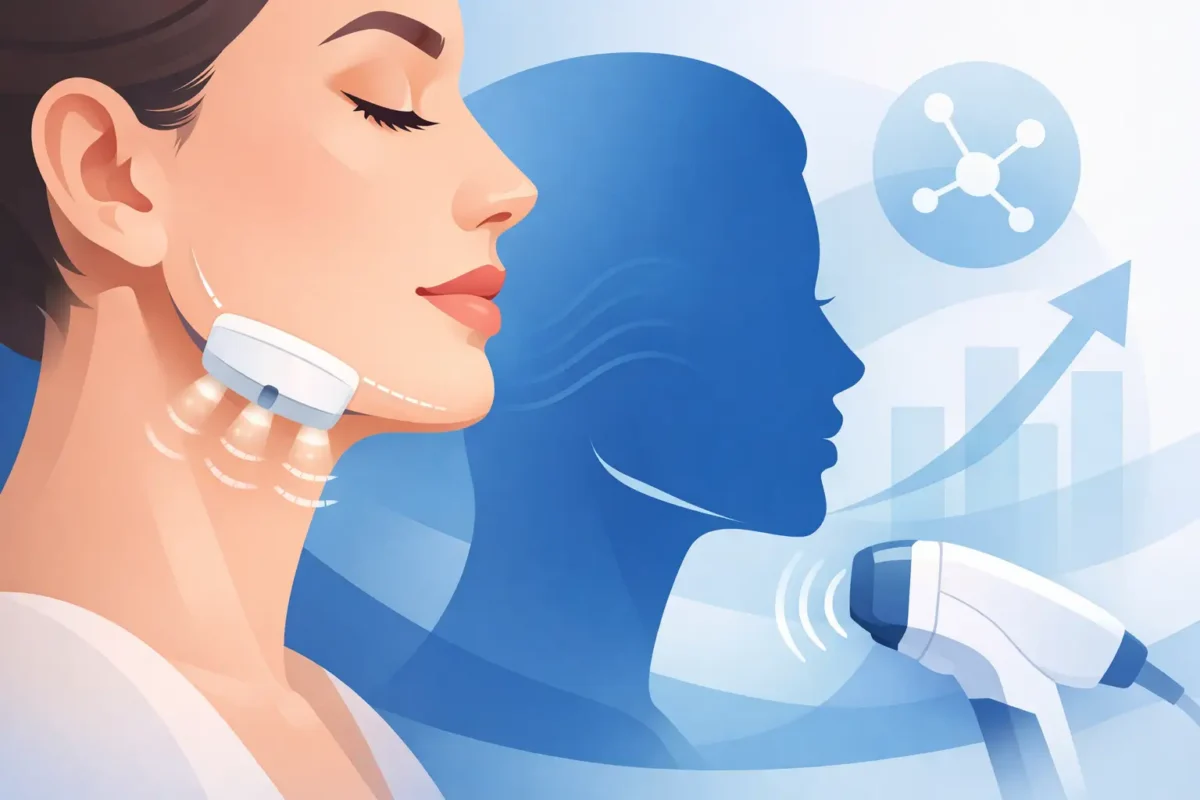
A softer jawline usually shows up in photos before you notice it in the mirror. Maybe the angle between the chin and neck looks less sharp, or the lower face feels heavier than it used to. If you have been wondering how HIFU improves jawline definition, the answer comes down to precision, collagen stimulation, and skin tightening at deeper structural levels.
Unlike treatments that work mainly on the skin surface, HIFU uses focused ultrasound energy to target the tissue beneath it. That matters for the jawline because visible definition is not just about skin texture. It is about support. When deeper layers begin to loosen, the lower face can look less sculpted even if the skin itself still seems healthy.
How HIFU improves jawline definition at a deeper level
HIFU stands for high-intensity focused ultrasound. In aesthetic treatments, it delivers controlled heat to specific depths under the skin without cutting or disrupting the surface. That thermal energy triggers the body’s natural healing response, which includes new collagen production and gradual tissue tightening.
For the jawline, this process can make a meaningful difference. As collagen rebuilds over time, the skin and supportive tissue in the lower face become firmer. That can help reduce the look of mild sagging along the jowls, improve the transition from chin to neck, and create a cleaner, more defined facial outline.
One reason clients are drawn to HIFU is that it treats an area many topical products cannot reach. Creams may improve hydration or smoothness, but they do not lift deeper tissue. HIFU is designed for structural tightening, which is why it is often chosen by people who want a non-surgical option for facial contouring.
Why the jawline loses definition in the first place
A blurred jawline is rarely caused by one factor alone. In most cases, it is a combination of age-related collagen loss, skin laxity, changes in fat distribution, and genetics. Weight fluctuations can also play a role, as can posture and the natural anatomy of the chin and neck.
This is where realistic treatment planning matters. HIFU can improve firmness and contour, but it does not change bone structure or remove large amounts of fat. If the main concern is heavy fullness under the chin, another treatment may be recommended alongside or instead of HIFU. If the issue is mild to moderate laxity, however, HIFU can be a strong fit.
That distinction is important because the best cosmetic results come from matching the technology to the reason the jawline looks softer. A good consultation should look at skin quality, tissue laxity, facial proportions, and your goals rather than offering a one-size-fits-all answer.
What happens during a HIFU jawline treatment
Treatment is typically straightforward. After the skin is cleansed, the provider maps the treatment area and applies ultrasound gel. A handheld device is then used to deliver energy in precise lines along the lower face and jawline.
You may feel brief warmth, tingling, or small pulses of discomfort as the energy reaches targeted depths. Sensation varies. Some clients find it very manageable, while others describe it as intense in bony areas like the jaw or chin. The treatment is not usually considered downtime-heavy, but comfort expectations should be discussed honestly before you begin.
Most appointments are relatively quick, especially when the focus is limited to the jawline and lower face. There may be slight redness or tenderness afterward, though many people return to normal activities the same day.
When results appear and how long they last
HIFU is not an instant sculpting treatment. Some clients notice a subtle early tightening effect, but the more visible change develops gradually as collagen rebuilds. That process often unfolds over several weeks and continues for a few months.
This slower timeline can actually be part of the appeal. The improvement tends to look natural rather than abrupt. Friends may notice you look fresher or more defined without being able to identify exactly why.
As for longevity, results vary with age, skin condition, lifestyle, and the degree of laxity being treated. Many people enjoy improvement for several months to a year or longer, but HIFU does not stop the aging process. Maintenance sessions may be recommended depending on how your skin responds and how sharp you want to keep your jawline.
Who tends to benefit most from HIFU
HIFU is often best for adults with mild to moderate skin laxity who want visible improvement without surgery. It can be a good option if your jawline has started to soften, your jowls look slightly heavier, or the lower face feels less firm than it once did.
It may be less effective if there is significant loose skin or more advanced sagging. In those cases, a non-surgical treatment can still help, but expectations need to be calibrated. The goal may be refinement rather than dramatic lift.
Age alone does not determine whether someone is a good candidate. Skin quality, tissue thickness, and facial anatomy all matter. A younger person with early laxity may respond beautifully, while someone older with good skin integrity may also see strong results. The key is individualized assessment.
HIFU versus other jawline treatments
People often compare HIFU with radiofrequency, injectables, or surgical lifting. Each option works differently.
HIFU is primarily a tightening treatment. It is useful when the main issue is laxity and loss of support. Radiofrequency can also improve firmness, though it typically works more superficially depending on the device. Dermal fillers can sharpen parts of the jawline by adding structure, but they do not tighten loose skin. Botox may help in certain lower-face cases, especially if muscle pull contributes to facial shape, but it is not a skin-tightening treatment. Surgery produces the most dramatic lift, though it comes with downtime, cost, and a very different level of commitment.
This is why combination plans are common in aesthetic medicine. Sometimes the best jawline result comes from tightening tissue with HIFU and addressing other concerns, such as skin texture or volume balance, with separate treatments. It depends on what is causing the loss of definition.
Benefits clients often notice beyond the jawline
Although the jawline is a frequent focus, HIFU may also improve the overall lower-face profile. Some clients notice firmer cheeks, a slightly lifted appearance around the mouth, or a smoother transition between the face and neck. These subtle shifts can make the jawline look even more pronounced because the surrounding tissue appears more supported.
That said, subtle does not mean insignificant. In facial aesthetics, a few millimeters of lift or tightening can change how balanced and refreshed the face looks. The most satisfying results are often the ones that make you look more rested, more sculpted, and still completely like yourself.
What to ask before booking
If you are considering treatment, ask what device is being used, what level of improvement is realistic for your anatomy, and whether your provider sees HIFU as the best choice for your concern. You should also ask how many sessions are typically recommended, what aftercare involves, and whether photos can help track progress.
Clinical expertise matters here. Jawline definition depends on precision and treatment planning, not just technology. A provider should be able to explain where HIFU helps, where it has limits, and whether another approach would serve you better. At Bloom Laser Clinic, that commitment to visible, non-surgical results is part of what makes advanced skin tightening feel approachable rather than intimidating.
The real appeal of HIFU for jawline definition
The reason so many people ask how HIFU improves jawline definition is simple. They want a sharper, firmer lower face without surgery, long recovery, or an overdone look. HIFU speaks to that goal because it works with your body’s own collagen response and focuses on gradual, natural-looking improvement.
For the right candidate, it can restore definition where the jawline has started to blur and bring back some of the structure that makes the face look polished and refreshed. The smartest next step is not chasing the most aggressive treatment. It is choosing the one that fits your anatomy, your timeline, and how you want to feel when you look in the mirror.