


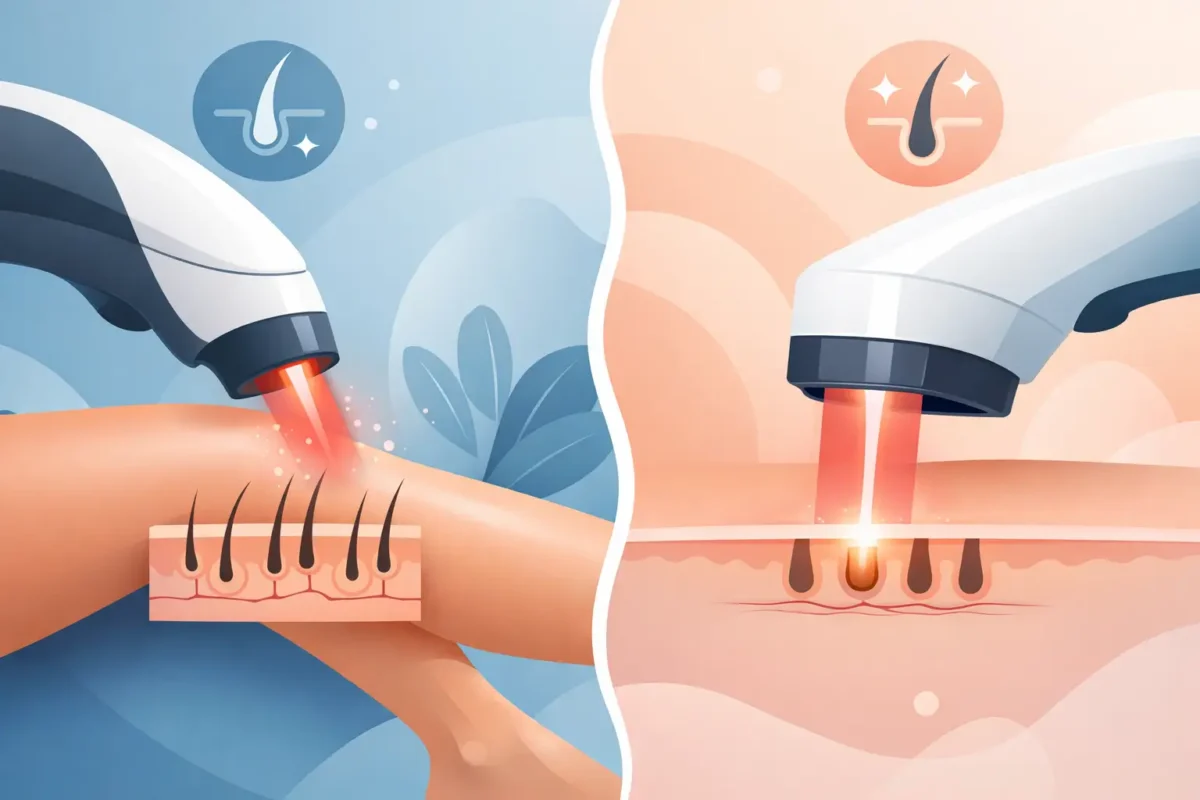
If you have ever wondered why one clinic says laser hair reduction and another says laser hair removal, you are asking the right question. The difference matters because expectations shape satisfaction. When you understand laser hair reduction vs removal, you are much more likely to choose the right treatment plan, commit to the right number of sessions, and feel confident about the results.
The short version is simple. Laser technology is designed to reduce hair growth dramatically and long term. In many areas, that reduction can feel close to removal because the remaining hair is finer, lighter, and much slower to return. But from a clinical standpoint, permanent removal of every single hair forever is not a promise any responsible provider should make.
Laser hair reduction vs removal: what is the real difference?
Laser works by targeting pigment in the hair follicle. The energy heats the follicle and damages its ability to produce strong, visible hair. That is why reduction is the more accurate term. Many follicles become inactive for long periods, while others produce thinner regrowth over time.
Removal suggests a total and final end to all hair in the treated area. That sounds appealing, but biology is more complex than marketing language. Hair grows in cycles, hormones can activate dormant follicles, and the body changes over time. Even after excellent results, some people need occasional maintenance sessions to keep skin smoother.
This is not a weakness of the treatment. It is simply the truth about how hair behaves. The good news is that for most patients, the improvement is significant enough to change their daily routine. Less shaving, fewer ingrown hairs, reduced irritation, and smoother skin are the results people usually care about most.
Why clinics often use both terms
You will often see both phrases used because people search for hair removal, but medical and aesthetic professionals know that reduction is more precise. In practice, patients usually want to know one thing: will I have a lot less hair? For the right candidate, the answer is often yes.
That said, wording should never overpromise. A trustworthy clinic explains that laser can deliver long-lasting hair reduction with the potential for very sparse regrowth. It should also explain that outcomes vary by skin tone, hair color, treatment area, hormones, and consistency with appointments.
What laser treatment can realistically achieve
For many adults, laser treatment creates a major reduction in hair density and thickness after a series of sessions. Areas like the underarms, bikini line, lower legs, chest, and back often respond very well. After a full treatment cycle, some clients see only occasional soft hairs. Others still have visible regrowth, but much less than before.
The result can feel transformative even if it is not absolute removal. Shaving every day may turn into shaving every few weeks, or not at all in certain spots. Razor burn and bumps often improve because there is simply less hair pushing back into the skin.
This is one reason laser remains one of the most popular non-surgical aesthetic treatments. It does not just change how hair grows. It changes the amount of time, irritation, and frustration tied to managing it.
Permanent reduction does not mean zero maintenance
This is where honest consultation matters. Permanent hair reduction means a stable, long-term decrease in the number of hairs regrowing after a completed treatment series. It does not guarantee that every follicle is gone forever.
Hormonal shifts can affect results. Facial hair in women, for example, may require more maintenance than underarm hair because hormones play a stronger role. Areas influenced by conditions such as PCOS can also be more unpredictable. That does not mean laser is ineffective. It means your treatment plan should be tailored to your body rather than based on a one-size-fits-all promise.
Who gets the best results?
Laser targets pigment, so the ideal hair for treatment is usually darker and coarser. Dark hair absorbs laser energy more effectively than blond, gray, white, or red hair. Skin tone also matters because the device and settings must be selected carefully for both safety and effectiveness.
This is where technology and practitioner experience make a real difference. A modern clinic can often treat a wider range of skin tones more safely than older systems allowed, but not every laser is appropriate for every patient. A proper assessment should look at your skin type, hair type, medical history, sun exposure, and goals before treatment begins.
People with unrealistic expectations tend to be disappointed, even when the treatment works well. People who understand that the goal is substantial, lasting reduction are usually happier because the results match what was promised.
How many sessions does it take?
Laser only works on hairs that are in the active growth phase, and not every hair is in that phase at the same time. That is why treatment is done in a series rather than a single appointment. Most people need multiple sessions spaced several weeks apart, with exact timing depending on the area treated.
Facial areas may be scheduled more frequently than body areas because the growth cycle is different. Coarser areas may respond faster than finer ones. Some patients notice a clear difference after the first few sessions, while others need more time to see dramatic thinning.
Consistency matters. Skipping appointments or spacing them too far apart can slow progress because the laser is most effective when treatments are timed to the growth cycle. This is another reason clinical guidance matters as much as the device itself.
Is more expensive always better?
Not necessarily. Value comes from the quality of the technology, the skill of the provider, and the honesty of the treatment plan. Very low pricing can be a red flag if it comes with rushed appointments, poor consultation, or inadequate settings. High pricing alone does not guarantee better outcomes either.
What you want is a clinic that combines medical credibility, advanced technology, and realistic guidance. That balance gives you the best chance of visible results with a strong safety profile.
Common myths about laser hair reduction vs removal
One common myth is that laser makes hair disappear after one session. In reality, shedding after treatment can create the impression that all hair is gone immediately, but new hairs from different cycles can still emerge later.
Another myth is that laser works the same for everyone. It does not. Hair color, hormones, treatment area, and device type all affect the outcome. Someone treating underarms may see very different results from someone treating the upper lip.
A third myth is that maintenance means the treatment failed. That is simply not true. If you go from dense, fast-growing hair to occasional fine regrowth once or twice a year, that is a strong result.
How to decide if laser is right for you
The best candidate is someone looking for long-term convenience, smoother skin, and a meaningful reduction in hair growth, not a miracle promise. If you are tired of shaving, waxing, ingrown hairs, or constant stubble, laser can be a smart investment in both appearance and routine.
It is also a good fit for people who value science-backed treatment and want professional guidance rather than trial and error at home. A consultation should feel clear and reassuring. You should leave knowing what the treatment can do, what it cannot do, how many sessions may be needed, and whether maintenance is likely in your case.
For patients in Nova Scotia, Prince Edward Island, or New Brunswick, choosing a provider with strong clinical experience and modern laser platforms can make the process feel far more comfortable and predictable. At Bloom Laser Clinic, that approach is centered on visible results, informed care, and treatment plans that respect both your goals and the science behind them.
The better question to ask
Instead of asking whether laser means reduction or removal, ask what result will make your life easier and your skin feel better. For most people, the win is not technical perfection. It is stepping out of the shower without reaching for a razor, feeling more comfortable in your skin, and seeing a real change that lasts. That is where laser treatment delivers its value.