


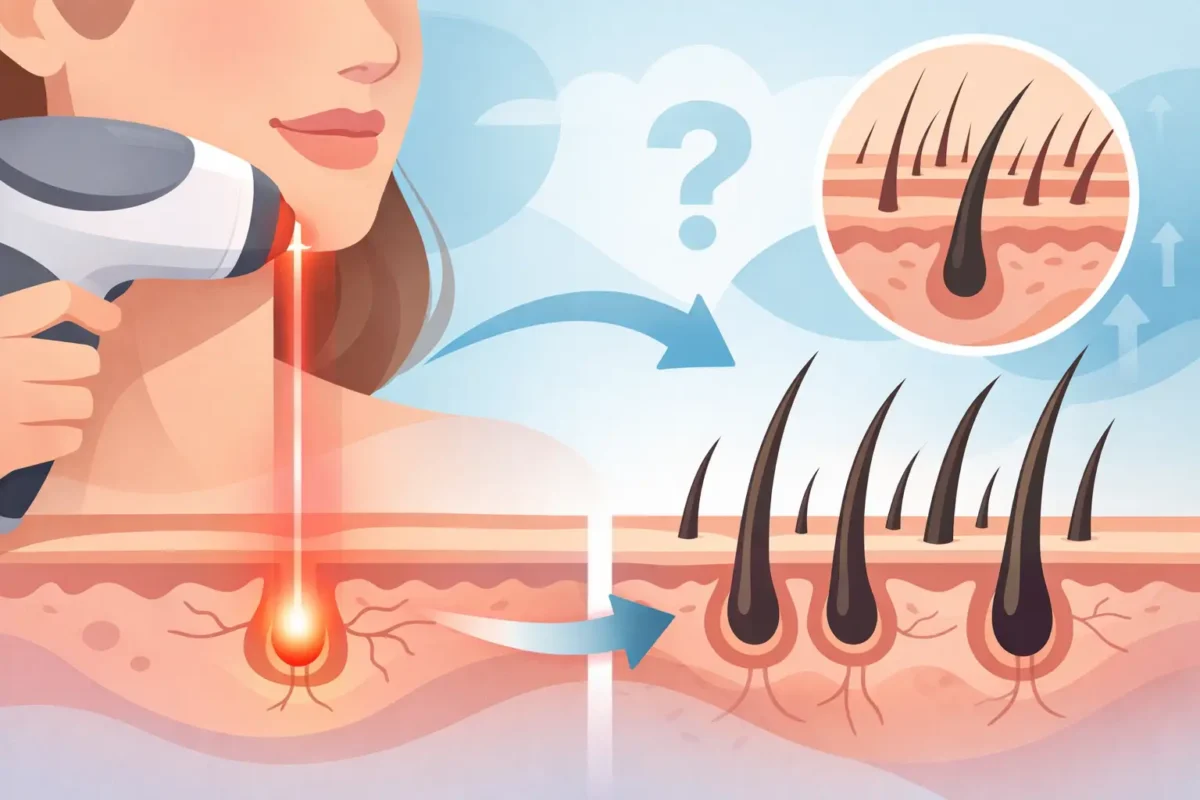
You expected less hair, not more. So if you have noticed new fine hairs, patchy regrowth, or what seems like increased hair after treatment, the question is fair: can laser hair removal cause more hair growth? In some cases, yes – but not in the way most people imagine, and not as the usual outcome.
For most patients, laser hair removal reduces hair density, slows regrowth, and leaves skin smoother over time. But there is a recognized, uncommon effect called paradoxical hypertrichosis, where treatment appears to stimulate more hair growth in or around the treated area. It is real, but it is also rare, and understanding why it happens can help you make better decisions about where you are treated, what device is used, and whether you are a good candidate.
Can laser hair removal cause more hair growth in some cases?
Yes, but context matters. Laser hair removal is designed to target pigment in the hair follicle and damage that follicle enough to reduce future growth. When the hair is coarse and dark, and the laser settings are matched well to the skin type, this process is usually effective.
The issue tends to arise when hair is too fine, too light, hormonally driven, or treated with settings that are not ideal for the follicle. Instead of fully disabling the follicle, the heat may create a stimulatory effect in nearby follicles. That can make previously soft, faint hair become darker, thicker, or more noticeable.
This is why a proper consultation matters so much. A medical aesthetics provider should not look at every area of unwanted hair and automatically recommend laser. Some zones respond beautifully. Others require more caution.
What paradoxical hair growth actually means
Paradoxical hypertrichosis sounds technical, but the idea is simple. It refers to unexpected increased hair growth after laser treatment, usually at the edges of the treated area or in regions with finer hair.
This does not mean laser suddenly creates brand-new follicles. You are born with a set number of hair follicles. What can happen is that existing follicles that were producing very fine, almost invisible hair become more active and start producing thicker hair.
Patients often notice this on the face, neck, upper arms, shoulders, or upper back. These areas can contain a mix of coarse and fine hairs, which makes them less predictable than places like the underarms, bikini line, or lower legs.
Who is more likely to notice more hair after laser?
Not everyone has the same risk. In clinical practice, paradoxical stimulation is more likely in patients with hormonal influences, especially those with polycystic ovary syndrome, insulin resistance, or androgen-related facial hair growth. If the body is already receiving signals to grow more hair, laser may not be enough on its own to control the pattern.
Skin tone and hair type can also affect the plan. Patients with darker skin can absolutely be treated safely and effectively, but device selection and settings are critical. Fine facial hair is another major factor. If the target hair lacks enough pigment or thickness, the laser may heat the area without producing the level of follicle damage needed for reduction.
There is also a difference between true increased growth and normal shedding cycles. After a session, hair can look like it is regrowing before it sheds out. In other cases, dormant follicles may enter a visible growth phase over time, which can make it seem like treatment caused new hair when it was simply not active during earlier sessions.
Why facial laser treatment needs extra judgment
Face treatments are often where confusion starts. A patient may have noticeable coarse hair on the chin or upper lip, along with a halo of lighter fuzz on the cheeks or jawline. The coarse hair may be an excellent laser target. The finer hair around it may not be.
If too broad an area is treated without careful hair assessment, the stronger follicles may respond well while the lighter ones react unpredictably. This is one reason experienced providers are selective with facial hair removal. The goal is not to treat every visible hair. The goal is to treat the right hair with the right technology.
For some women, especially those with hormonal facial hair, long-term management may involve more than one strategy. Laser can reduce dense growth, but maintenance sessions or additional medical evaluation may still be appropriate.
If it happens, was the treatment done wrong?
Not always. Sometimes increased hair growth happens even when treatment is performed by a trained provider using an appropriate device. Biology is not perfectly predictable, and hair growth is strongly influenced by hormones, genetics, and the natural hair cycle.
That said, poor candidate selection is a major reason patients end up disappointed. Treating blond fuzz because it bothers a patient is not the same as treating coarse pigmented hair that is likely to respond. Using settings that are too low, choosing the wrong laser for the skin and hair type, or treating areas that are known to be higher risk can all increase the chance of a less-than-ideal result.
A trustworthy clinic should be upfront about this. Good treatment is not about saying yes to every area. It is about protecting the result.
How to reduce the risk of more hair growth
The best prevention starts before the first session. A proper consultation should assess hair thickness, color, density, skin type, hormonal history, and whether the treatment area is known for higher rates of paradoxical stimulation.
Coarse, dark hair on the underarms, bikini area, and legs is usually the classic laser success story. Fine peach fuzz on the cheeks is not. If a provider speaks in broad promises without examining these differences, that is a red flag.
Device quality matters too. Medical-grade systems with the right wavelengths for different skin tones allow for more precise treatment. So does operator experience. Skilled settings are not just about comfort. They affect whether a follicle is adequately treated or only partially heated.
Consistency matters as well. Sessions need to be spaced according to the hair cycle. If treatment is too frequent, too delayed, or stopped too early, patients may feel they are seeing more growth when what they are really seeing is incomplete reduction.
What to do if you think laser made hair worse
First, do not panic and do not keep treating the area blindly without reassessment. More sessions are not always the answer unless the provider confirms that the issue is true paradoxical growth and adjusts the plan.
Take clear photos over time and compare them in consistent lighting. What feels like dramatic regrowth is sometimes a normal shift in the hair cycle or increased awareness after investing in treatment. If the hair truly appears darker, denser, or more widespread, book a review with a qualified provider.
At that point, the next step depends on the pattern. Some cases improve with continued, well-adjusted laser sessions using better settings or a more suitable device. In other situations, especially with fine facial hair, another hair removal method may be the better choice. If hormonal imbalance is suspected, addressing that piece can make a major difference in long-term results.
What results should you realistically expect?
Laser hair removal is best understood as hair reduction, not always total permanent removal. Many patients get a dramatic decrease in growth, smoother skin, and less shaving or ingrown hair. Some need maintenance. Some areas respond faster than others.
That does not make the treatment less effective. It just means expectations should match biology. Hair grows in cycles, hormones can change over time, and some follicles are more stubborn than others. A polished result usually comes from a well-designed treatment plan, not a one-size-fits-all promise.
For patients who are good candidates, laser remains one of the most effective non-surgical options for reducing unwanted hair. The key is choosing a clinic that combines technology with sound clinical judgment. At Bloom Laser Clinic, that standard of care matters because visible results should never come at the expense of smart treatment decisions.
If you are wondering whether your hair type, skin tone, or treatment area is a good fit, the most useful next step is a professional assessment – one honest conversation can save you from months of guessing and help you move forward with confidence.