


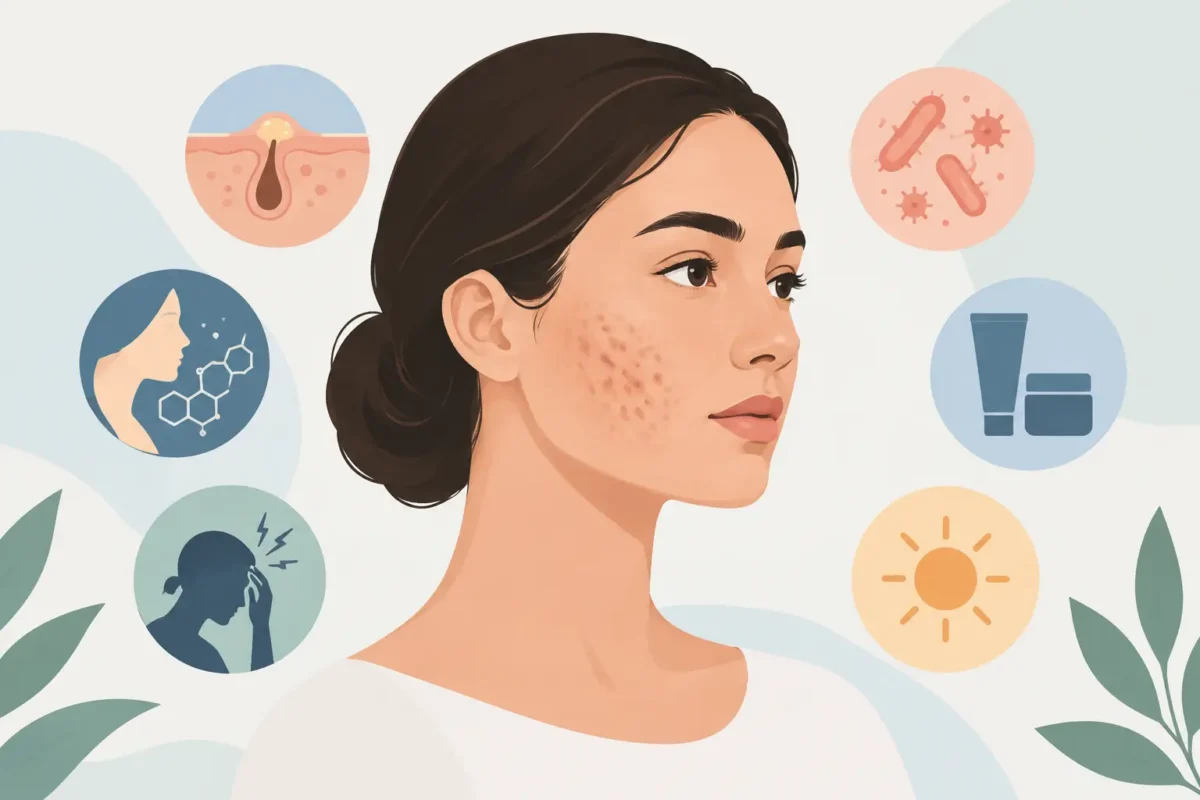
A breakout may last a week, yet the reminder can stay visible for years. If you are wondering what causes adult acne scars, the answer is not simply that you had acne. Scarring happens when a breakout creates enough inflammation to damage the skin’s deeper support structure, then the healing process replaces that tissue unevenly. The good news is that scars are not a sign that you did anything wrong, and effective professional options can improve their appearance.
What Causes Adult Acne Scars in the First Place?
Adult acne scars form when inflammation extends beyond the surface of the skin. A clogged pore can become swollen and infected, putting pressure on the follicle wall. When that wall breaks, bacteria, oil, and inflammatory material can spread into surrounding tissue. Your body immediately begins repairing the damage, but it does not always rebuild collagen in the same smooth, organized pattern.
If too little collagen is produced during healing, the skin can develop a depression or indentation. If the body produces excess collagen, it can form a raised scar. The severity of the original breakout matters, but so do genetics, skin healing patterns, and how quickly the inflammation is controlled.
This is why even people who did not have severe teenage acne can develop scarring later in life. Adult skin is still capable of producing inflammatory breakouts, and each deep lesion has the potential to affect the skin beneath the surface.
The Breakouts Most Likely to Leave a Scar
Not every blemish becomes a scar. Small superficial whiteheads and blackheads typically resolve without permanently changing skin texture. Deep, painful acne lesions carry the highest risk because they involve more inflammation and more tissue damage.
Cysts and nodules are especially likely to leave scars. They often feel tender, swollen, and firmly rooted below the skin rather than sitting at the surface. Pustules and inflamed papules can also lead to scarring, particularly when they recur in the same area or are repeatedly irritated.
Location can play a role, too. The jawline, chin, cheeks, chest, shoulders, and back are common areas for persistent adult acne. Breakouts along the jawline are often associated with hormonal shifts, while acne on the cheeks may be worsened by friction, makeup tools, phones, or hair products. The trigger may differ, but deep inflammation is the issue that raises scar risk.
Picking, squeezing, and friction can make damage worse
It is tempting to squeeze a blemish before an event or try to remove a stubborn clogged pore at home. Unfortunately, pressure can push the contents of an inflamed pore deeper into the skin, increase swelling, and introduce more bacteria. Picking also disrupts the skin’s natural repair process.
This does not mean every touched breakout will scar. It does mean that hands-off care gives inflamed skin a better opportunity to heal cleanly. Repeated rubbing from masks, helmets, chin straps, or tight clothing can have a similar effect in acne-prone areas. Reducing friction where possible is a small but meaningful part of prevention.
Delayed treatment gives inflammation more time
A deep breakout is not always avoidable, especially when hormones, stress, medications, or genetics are involved. But ongoing acne that is left untreated can create a cycle of fresh inflammation and repeated injury to the same skin. The longer that cycle continues, the greater the chance of lasting textural changes.
Early care is about more than clearing one blemish. A personalized acne plan can help reduce the number of active lesions, calm inflammation, and support healthier skin behavior over time. For adults, that plan may also consider factors such as menstrual cycles, pregnancy or postpartum changes, shaving, cosmetic products, and skin sensitivity.
Scars and Dark Marks Are Not the Same Thing
Many people use the word “scar” for any mark left after acne, but the distinction matters when choosing treatment. Post-inflammatory hyperpigmentation is a flat brown, tan, or grayish mark that appears after a blemish heals. Post-inflammatory erythema is a flat pink or red mark. Neither is necessarily a true scar, because the surface texture of the skin has not changed.
These marks can fade gradually, although the timeline varies widely by skin tone, sun exposure, and the amount of inflammation involved. Daily sun protection is especially valuable because UV exposure can make discoloration linger or appear darker.
True acne scars create a textural change. They may look like small pits, wider rolling depressions, sharply defined indentations, or raised areas. A professional assessment can distinguish active acne, discoloration, and scar tissue, since each concern responds best to a different approach.
Common Types of Adult Acne Scars
Atrophic scars are the most common type of acne scar. They sit below the surrounding skin because of collagen loss during healing. Ice-pick scars are narrow and deep, boxcar scars have more defined edges, and rolling scars create a wavy or uneven appearance across a broader area.
Hypertrophic and keloid scars are raised rather than indented. They result from excess collagen production and are more common on the chest, shoulders, back, and jawline. Keloids can grow beyond the borders of the original breakout, so they require particularly thoughtful care.
Scar type affects the treatment strategy. A treatment that can help soften rolling scars may not be the ideal choice for a raised scar or lingering pigment. This is one reason a one-size-fits-all approach can be frustrating and costly.
Why Some Adults Scar More Easily Than Others
Genetics plays a significant role. If close family members scar easily or develop raised scars, your skin may be more prone to a similar healing response. Skin tone can also influence how long discoloration remains visible after acne, even when there is no permanent textural scar.
Collagen production changes with age as well. Adult skin may recover more slowly than younger skin, particularly when it is also dealing with sun exposure, dehydration, smoking, or an impaired skin barrier. That does not mean improvement is out of reach. It simply means treatment should respect your skin’s current condition rather than aggressively chase a quick fix.
Acne severity is only part of the picture. Someone with a few recurring cysts can develop noticeable scars, while another person with more frequent but superficial breakouts may not. The pattern, depth, duration, and healing response all matter.
Can You Prevent New Acne Scars?
The most effective prevention begins with managing active acne before it becomes deep or persistent. Use gentle, non-comedogenic products, avoid scrubbing or over-exfoliating irritated skin, and resist the urge to pick. A consistent routine is generally more helpful than frequently switching products whenever a breakout appears.
If you are experiencing painful, recurring, or scarring acne, professional guidance is worthwhile. In some cases, medical acne treatment is needed to address the underlying condition. In others, clinical skin treatments may complement a home routine by targeting congestion, inflammation, and overall skin renewal. Treatment should be adjusted if your skin is sensitive, prone to pigmentation, pregnant, breastfeeding, or using prescription products.
It is also wise to treat active acne before focusing heavily on scar correction. Improving old scars while new cysts continue to form can feel like taking one step forward and one step back.
Improving the Look of Existing Acne Scars
Acne scars can be softened, but meaningful improvement usually takes time and a tailored plan. Depending on the scar type and skin tone, options may include laser-based resurfacing, collagen-stimulating treatments, chemical peels, microneedling, or carefully selected injectable treatments. Raised scars may need a different medical approach than depressed scars.
There are trade-offs. More intensive treatments can create more dramatic collagen remodeling, but they may involve downtime and are not right for every skin type or concern. Gentler options may require a series of sessions and a longer timeline. No ethical provider should promise to erase every scar, but well-planned treatment can often improve texture, tone, and the way skin reflects light.
At Bloom Laser Clinic, a consultation can help identify whether you are looking at active acne, post-breakout discoloration, true scarring, or a combination of all three. That clarity is the starting point for a plan that feels realistic, safe, and focused on visible progress.
Your skin does not need to be flawless to look healthy and feel beautiful. Addressing active breakouts early, protecting your skin barrier, and choosing treatment based on your individual scar pattern can help you move forward with greater confidence.