


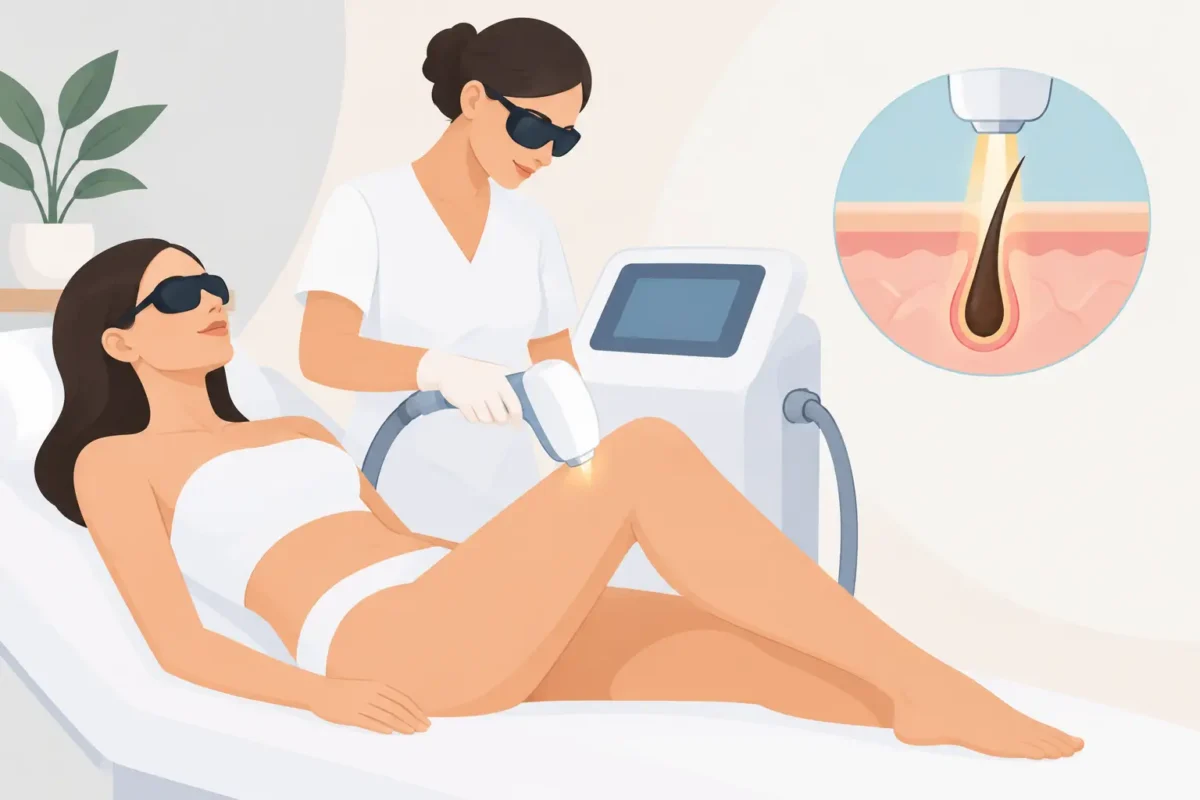
Stubble the morning after shaving, painful ingrown hairs, and the constant cycle of waxing can make unwanted hair feel like a full-time maintenance job. So, what is laser hair removal treatment? It is a professional treatment that uses focused light energy to target hair follicles and reduce future hair growth over a series of sessions.
For many clients, the appeal is not simply less shaving. It is the freedom to feel more comfortable in their skin, whether that means smoother underarms, a more confident bikini line, or less facial hair to manage. Laser hair removal is a non-surgical option with lasting reduction potential, but the best results come from the right technology, an experienced provider, and a treatment plan suited to your skin and hair.
What Is Laser Hair Removal Treatment?
Laser hair removal uses a concentrated beam of light that is absorbed by melanin, the pigment that gives hair its color. The light converts to heat within the follicle, damaging the structures responsible for producing new hair while leaving surrounding skin protected.
The goal is long-term hair reduction, not a promise that every individual hair will disappear forever. After completing a recommended course of sessions, most people experience a significant reduction in visible hair and find that any regrowth is lighter, finer, and easier to manage. Occasional maintenance treatments may be helpful, particularly in hormone-sensitive areas such as the face, chin, and bikini line.
This distinction matters. A reputable clinic should be clear about expected reduction, your likely number of treatments, and the factors that can affect your result. The science is powerful, but it is never one-size-fits-all.
How Laser Hair Removal Works
Hair grows in cycles: active growth, transition, and resting. A laser is most effective when a hair is in its active growth phase because the follicle has the strongest connection to the hair shaft and pigment.
Not every follicle is active at the same time. That is why treatments are spaced several weeks apart and performed as a series. Each appointment targets a different group of actively growing hairs. Areas such as the face may be treated on a shorter schedule, while the legs, back, or other body areas may require more time between sessions.
Hair with more pigment generally absorbs laser energy more readily, which is why dark, coarse hair often responds especially well. Advances in laser technology have expanded treatment options for a broader range of skin tones, but skin tone, hair color, hair thickness, and the device selected all influence safety and effectiveness. A professional consultation is the right place to determine which approach is appropriate for you.
Laser Hair Removal vs. IPL
Laser hair removal and IPL are often grouped together, but they are not the same. A laser uses a more focused wavelength of light, while IPL, or intense pulsed light, uses a broader range of light wavelengths.
Both may be used for hair reduction in the right setting. However, professional laser systems are designed to precisely target the follicle and can offer more predictable treatment planning for many clients. The device matters, but so does the skill of the practitioner operating it. Settings must be selected carefully based on your skin, hair, treatment area, and response to previous sessions.
What Areas Can Be Treated?
Laser hair removal can be used on many areas of the face and body. Popular treatment areas include the upper lip, chin, sideburns, underarms, arms, legs, bikini line, Brazilian area, chest, abdomen, back, and shoulders.
Some areas respond more quickly than others. Underarms and bikini areas often contain darker, coarser hair and may show noticeable reduction early in a treatment series. Facial hair can be more influenced by hormonal changes, so it may require a more personalized schedule and periodic touch-ups.
The treatment is not typically used close to the eyes, and a qualified practitioner will advise you if a particular area is unsuitable. If you have a tattoo in or near the treatment area, that skin must be avoided because laser energy can interact with tattoo pigment.
What Happens During an Appointment?
Before your first session, your provider should review your medical history, current medications, skin type, hair characteristics, and treatment goals. This is also the time to discuss recent sun exposure, tanning products, skin sensitivity, and any history of pigmentation changes or cold sores if facial treatment is planned.
You will usually be asked to shave the area shortly before your appointment. Shaving leaves the follicle in place for the laser to target while keeping hair above the skin short. Waxing, tweezing, threading, and epilating should be avoided before treatment because they remove the hair root the laser needs to identify.
At the appointment, the treatment area is cleansed and protective eyewear is worn. A cooling system, cool air, or gel may be used depending on the technology. Many people describe the sensation as a quick snap against the skin, similar to a warm elastic band. Comfort levels vary by area, hair density, and individual sensitivity, but treatments are generally well tolerated and often move quickly.
Afterward, you may notice mild redness or small bumps around the follicles. This is a common temporary response and often settles within hours to a day or two. Your provider will give you specific aftercare instructions based on your treatment area and skin response.
How Many Sessions Will You Need?
Most clients need a series of treatments to achieve meaningful, long-lasting hair reduction. Six to eight sessions is a common starting range, although some people need fewer and others benefit from more. Thick hair, hormonal hair growth, and larger areas can require additional sessions.
Your plan should never be based on a generic promise alone. The right number of appointments depends on your hair growth cycle, the contrast between hair and skin, the area being treated, and how your follicles respond over time. Consistency matters. Skipping recommended intervals can make it harder to target hair in the ideal growth phase.
Once the initial series is complete, maintenance may be scheduled as needed. Some clients return once or twice a year, while others enjoy longer stretches between appointments.
Preparing for Safer, Better Results
Avoiding direct sun exposure and tanning before and after treatment is one of the most important parts of laser hair removal care. Tanned or sunburned skin can be more reactive and may increase the risk of unwanted pigmentation changes. Daily sunscreen is especially important when treating exposed areas such as the face, neck, arms, or legs.
You should also arrive with clean skin free of lotions, deodorant, fragrance, or makeup in the treatment area unless your provider tells you otherwise. Tell your practitioner about any new medications, skincare products, or changes in your health. Certain medications and active ingredients can make skin more sensitive to light.
After treatment, keep the area cool and avoid hot baths, saunas, strenuous exercise, and friction for the period recommended by your provider. Do not pick or scrub the skin. As treated hairs begin to shed, it can look like regrowth, but this is often part of the normal process.
Is Laser Hair Removal Right for You?
Laser hair removal may be an excellent choice if you are tired of shaving, waxing, or dealing with ingrown hairs and want a more lasting reduction in hair growth. It can be especially valuable for people who experience irritation from traditional hair removal methods.
That said, a professional assessment is essential. Very light blonde, gray, white, and red hair may not respond as strongly because there is less pigment for the laser to target. Pregnancy, active skin infections, certain medications, recent tanning, and some medical conditions may require postponing treatment or choosing another option.
At Bloom Laser Clinic, treatment planning starts with your individual skin, hair, and goals – not a generic package. A careful consultation helps make advanced laser care feel approachable, informed, and tailored to the results you want.
The best next step is a conversation with a qualified laser professional who will set realistic expectations and build a plan around you. Smooth skin is not about chasing perfection. It is about choosing care that lets you spend less time managing unwanted hair and more time feeling beautiful in your own skin.