


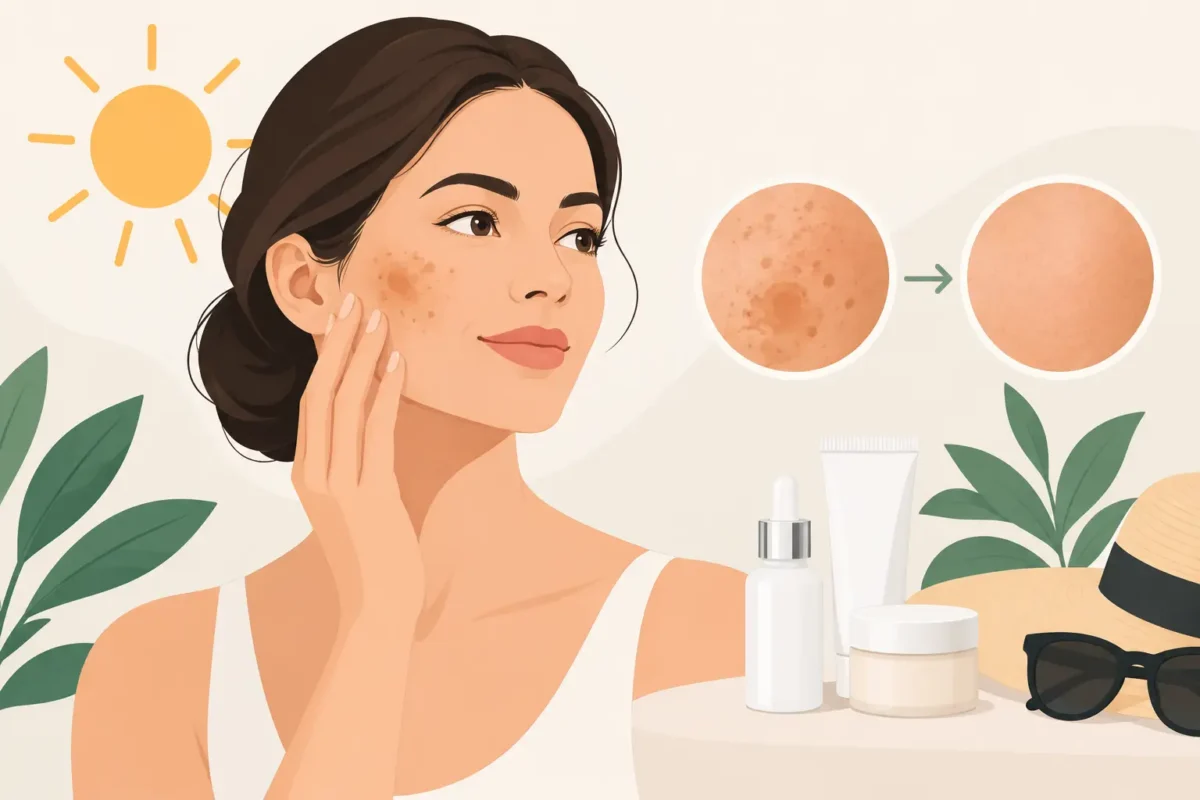
Those small brown marks that seem to appear out of nowhere are rarely random. Sun spots are a visible record of cumulative UV exposure, and learning how to address sun spots starts with understanding that fading them and preventing new ones are two parts of the same plan. The right approach can help restore a clearer, more even-looking complexion without surgery or guesswork.
What Sun Spots Are and Why They Appear
Sun spots, also called solar lentigines or age spots, are flat areas of increased pigment. They commonly develop on the face, chest, shoulders, forearms, and hands – the places that receive the most ultraviolet exposure over time. They can range from light tan to dark brown and often become more noticeable as the years of sun exposure add up.
UV rays stimulate melanocytes, the cells responsible for producing melanin. Melanin is the pigment that gives skin its color and helps protect it from the sun, but repeated exposure can cause pigment to collect unevenly. That uneven distribution creates the distinct patches many people recognize as sun spots.
Sun spots are not the same as freckles, which can become darker and lighter with changing sun exposure, or melasma, which often appears as larger, more symmetrical patches and may be influenced by hormones, heat, and visible light. Acne marks can also resemble pigmentation. An experienced skin professional can help identify what you are seeing before recommending treatment, because different pigment concerns do not always respond to the same solution.
How to Address Sun Spots at Home
At-home care has an essential role, but it works best as a long-term support strategy rather than a quick fix. Consistency matters far more than using an aggressive product for a few weeks.
Start With Broad-Spectrum Sun Protection
Daily broad-spectrum sunscreen is the foundation of every pigmentation plan. Choose SPF 30 or higher, apply it generously to exposed skin, and reapply when you are outside for extended periods, sweating, or swimming. On bright winter days, UVA rays still reach the skin, so sun protection is not just a summer habit.
A wide-brimmed hat, sunglasses, and seeking shade add another useful layer of protection. This does not mean avoiding daylight altogether. It means reducing the repeated exposure that can deepen existing spots and create new ones after treatment.
Choose Brightening Ingredients Carefully
A thoughtful home routine may include ingredients such as vitamin C, niacinamide, retinoids, azelaic acid, or gentle exfoliating acids. These can support a more even skin tone by encouraging cell turnover, reducing visible discoloration, or limiting excess pigment production.
The trade-off is irritation. Overusing acids, scrubs, or retinoids can compromise the skin barrier, leading to redness and inflammation that may make pigmentation look worse, especially in deeper skin tones. Introduce one active ingredient at a time and give it several weeks before deciding whether it suits your skin.
Hydration also deserves attention. A well-supported skin barrier tolerates corrective products and professional treatments more comfortably. Use a gentle cleanser, a moisturizer suited to your skin type, and avoid picking or scrubbing at pigmented areas.
When Professional Treatment Makes Sense
Topical skincare can improve overall brightness and help maintain results, but more established sun spots often require professional treatment for a meaningful visible change. This is especially true when spots are dark, well-defined, widespread, or have not responded to months of consistent home care.
A professional consultation should consider your skin tone, the type of pigmentation, your history of melasma, current medications, sun habits, downtime preferences, and treatment goals. There is no single best treatment for every brown spot. Treating pigment too aggressively can cause irritation or post-inflammatory hyperpigmentation, which is why customized settings and aftercare are so valuable.
Laser Treatment for Targeted Pigment
Laser technology can be an effective option for sun spots because it targets pigment within the skin. The energy is absorbed by melanin, helping break up visible discoloration while minimizing impact on surrounding tissue when properly selected and performed.
Some spots temporarily darken or form a fine crust before they lift away as the skin renews. Others fade gradually over a series of treatments. The response depends on the depth and density of the pigment, the technology used, and how carefully the skin is protected afterward.
At Bloom Laser Clinic, pigment concerns can be assessed as part of a personalized facial rejuvenation plan. Advanced laser options may be used alone or combined with a tailored skincare strategy when that approach better supports even, healthy-looking skin.
Laser Peels and Gentle Resurfacing
For clients with uneven tone, dullness, fine lines, enlarged pores, and scattered sun damage, a laser peel or gentle resurfacing treatment may offer broader rejuvenation than spot treatment alone. These treatments encourage skin renewal and can improve the appearance of overall texture and clarity.
A laser peel is not necessarily the right choice for every form of pigmentation. For example, melasma can be sensitive to heat and inflammation, so a conservative approach is often wiser. The goal is not to chase the strongest treatment. It is to choose the treatment your skin can respond to well.
Chemical Exfoliation and Combination Plans
Professional exfoliation can be useful for surface-level discoloration and lackluster skin, particularly when paired with a disciplined sunscreen routine. Some clients benefit from alternating professional treatments with corrective skincare, allowing the skin time to recover between visits.
Combination plans are often practical because pigment is rarely the only concern. You may want to address sun spots while also improving acne marks, fine lines, redness, or skin texture. A provider can prioritize what will create the most visible, natural-looking improvement without over-treating the skin.
What to Expect After Treatment
The best results usually come from patience. Depending on the treatment, pigment may darken first, then gradually flake, fade, or disperse over the following days or weeks. Avoid exfoliating, picking, or using strong active products until your provider says it is appropriate. Prematurely removing dry or darkened skin can increase irritation and interfere with healing.
Aftercare commonly includes gentle cleansing, moisturizer, and diligent broad-spectrum sunscreen. Your provider may also recommend pausing certain products before and after treatment, particularly retinoids, exfoliating acids, or products that make skin more sensitive. Follow those instructions closely, even if your skin feels normal.
It is also realistic to expect maintenance. Professional treatment can clear existing visible pigment, but it cannot erase future sun exposure. A well-maintained result often looks better and lasts longer than a single intensive correction followed by inconsistent protection.
Know When a Spot Needs Medical Evaluation
Not every dark spot should be treated as cosmetic pigmentation. Have a physician or dermatologist evaluate any spot that is new, changing, asymmetrical, irregularly bordered, unusually dark, itchy, bleeding, painful, or different from the others around it. Cosmetic treatment should begin only after suspicious lesions have been properly assessed.
This step is particularly important if you have a personal or family history of skin cancer, many moles, or significant sun exposure. Clearer skin and healthy skin should always go together.
A Smarter Path to More Even-Looking Skin
Sun spots can be frustrating because they often appear after years of exposure, but they are highly manageable with the right strategy. Start by protecting your skin every day, use corrective skincare without overloading it, and seek professional guidance when spots are persistent or widespread. With an approach that respects your skin type and your goals, brighter, more even-looking skin can feel like a realistic next step – not a temporary cover-up.