


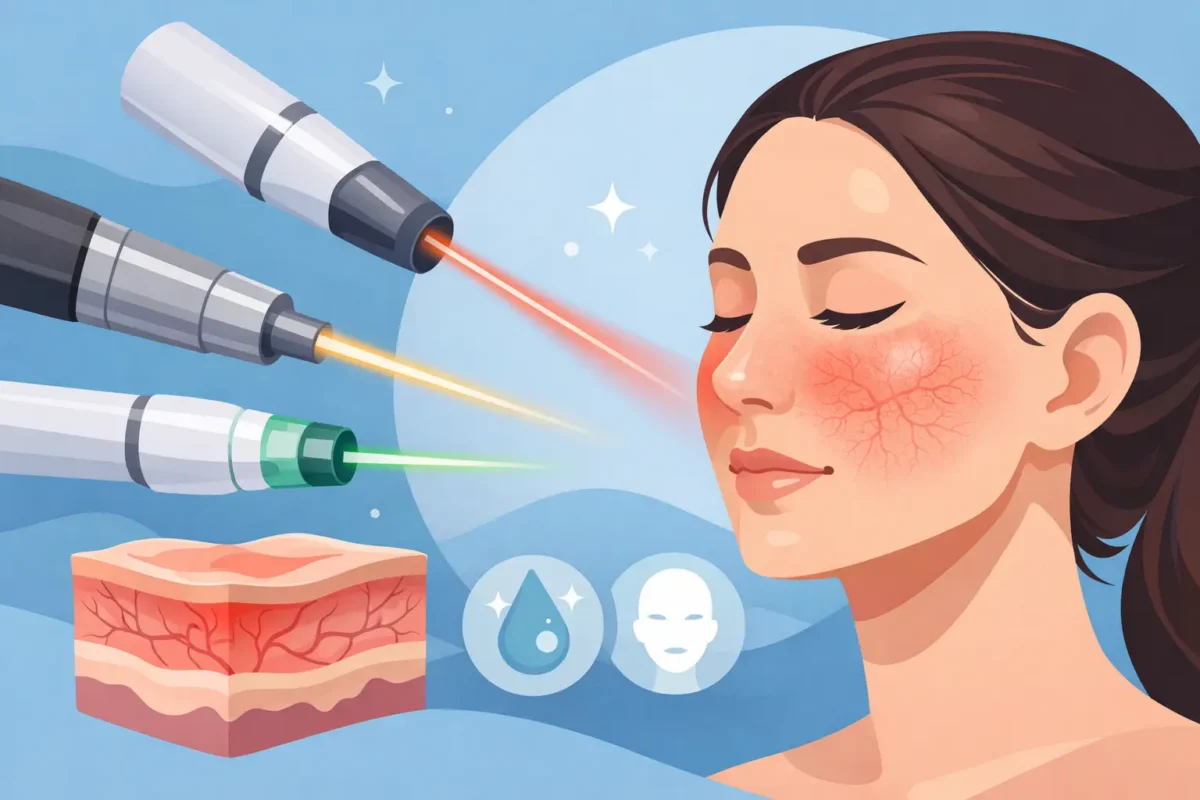
Facial flushing can make skin feel difficult to predict. One warm room, glass of wine, workout, or stressful meeting can leave cheeks noticeably red for hours. If you are asking what laser helps rosacea redness, the short answer is that vascular laser treatments, especially pulsed dye laser, KTP laser, and in some cases Nd:YAG laser, are designed to target the visible blood vessels that contribute to persistent redness.
The right option is not simply the strongest laser available. It depends on whether your primary concern is diffuse redness, fine broken capillaries, larger facial veins, frequent flushing, skin sensitivity, or a combination of these concerns. A thoughtful assessment helps match the technology and settings to your skin rather than treating rosacea with a one-size-fits-all approach.
What Laser Helps Rosacea Redness?
Rosacea redness is often connected to dilated blood vessels close to the skin’s surface. Vascular lasers deliver controlled light energy that is absorbed by hemoglobin, the pigment in red blood cells. That targeted heat helps the body gradually clear treated vessels while leaving the surrounding skin as protected as possible.
For many people, a pulsed dye laser, commonly called PDL, is considered a leading option for diffuse rosacea redness and flushing. It uses a wavelength that is strongly attracted to blood vessels, making it especially useful for pink or red skin tones, fine facial veins, and redness across the cheeks, nose, chin, or forehead.
A KTP laser is another effective option for superficial vessels. It can be an excellent choice for small, visible red capillaries and localized redness, particularly when vessels sit close to the surface of the skin. Because it is more focused on superficial vascular concerns, KTP may not be the best fit for every deeper vessel or every skin tone.
Nd:YAG laser treatments work at a longer wavelength and can reach deeper or larger vessels. This may make Nd:YAG appropriate for certain prominent facial veins, including vessels around the nose. It requires experienced treatment planning because deeper-penetrating energy is not automatically better for generalized rosacea redness.
Laser Versus IPL for Rosacea
Intense pulsed light, or IPL, is often included in conversations about rosacea treatment. IPL is not technically a laser. It uses a broad spectrum of light, while a laser uses one specific wavelength. Both can reduce the appearance of redness and visible vessels when selected appropriately.
IPL can be a practical choice for clients who have multiple signs of photodamage along with rosacea-related redness, such as uneven tone, sun spots, or fine vascular marks. It can treat a wider area efficiently and may create a more even-looking complexion over a series of sessions.
A vascular laser is often more precise for distinct capillaries and stubborn redness. The best treatment may be laser, IPL, or a combination approach scheduled over time. What matters most is choosing a modality that addresses your specific vessels, sensitivity level, and skin characteristics without creating unnecessary irritation.
Which Rosacea Concerns Respond Best?
Laser and light treatments can be highly rewarding for the vascular signs of rosacea. Persistent background redness, visible thread veins, broken capillaries, and some flushing patterns often improve with professionally planned sessions. Many clients notice that their skin looks calmer, clearer, and easier to cover with minimal makeup.
However, rosacea is a chronic inflammatory condition, not just a cosmetic redness concern. Lasers do not cure rosacea or eliminate every trigger. They also do not directly treat all rosacea symptoms equally. Papules and pustules, which can resemble acne, may require a different plan involving medical skincare or prescription treatment. Dryness, stinging, eye irritation, and eyelid inflammation should also be discussed with a qualified medical provider.
This distinction matters. Treating visible vessels can create meaningful improvement in how skin looks and feels, but long-term results are strongest when laser treatment is paired with a rosacea-conscious routine and smart trigger management.
What a Treatment Appointment Feels Like
A proper consultation comes before the laser. Your provider should review your rosacea history, current skincare products, medication use, recent tanning or sun exposure, previous treatments, and any tendency toward cold sores or post-inflammatory pigmentation. They should also examine whether redness is caused by rosacea, sun damage, facial veins, irritation, or another skin condition.
During treatment, most clients describe quick snaps of warmth against the skin. Cooling measures are commonly used to improve comfort and protect the skin surface. Treatment time varies with the area being addressed, but facial sessions are often relatively quick.
Afterward, mild redness and warmth are common. With some vascular laser settings, tiny treated vessels may temporarily darken or become more visible before they fade. Pulsed dye laser can occasionally cause temporary bruising, particularly when settings are chosen for stronger vascular response. This can be worthwhile for the right concern, but it is a real trade-off if you need minimal downtime for an upcoming event.
Your provider may recommend gentle skincare, daily broad-spectrum sunscreen, cool compresses if needed, and a short pause from exfoliants, retinoids, heat exposure, strenuous exercise, alcohol, and other personal flushing triggers. Exact aftercare depends on the treatment used and your skin’s response.
How Many Sessions Are Usually Needed?
Rosacea redness rarely disappears after a single treatment. Many clients benefit from a series of approximately three to five treatments, often spaced several weeks apart. The ideal number depends on the amount of redness, vessel size, skin reactivity, treatment type, and your desired level of improvement.
Some people see a visible change after the first session, while others notice more gradual clearing as treated vessels fade and overall redness becomes less pronounced. Maintenance treatments may be helpful because rosacea can remain active and new visible vessels can develop over time.
The goal should be realistic improvement, not a promise of permanently flawless skin. A well-planned series can reduce the constant red appearance that makes many people feel self-conscious, while helping skin look more balanced between flare-ups.
Who Needs Extra Caution?
Not every red face is ready for laser treatment on the day of consultation. An active flare with severe burning, significant irritation, a rash of uncertain cause, or a compromised skin barrier may need to settle first. Treating inflamed skin too aggressively can worsen discomfort and prolong recovery.
Skin tone also deserves individualized attention. Vascular treatments can be safely performed on many skin types, but the chosen wavelength, energy level, cooling, and pre-treatment preparation must be appropriate. Clients with more melanin in their skin may have a higher risk of unwanted pigment changes if treatment is not carefully planned.
Pregnancy, certain medications, photosensitivity, recent isotretinoin use, active infection, and a history of abnormal scarring can affect candidacy. This is why professional screening is more than a formality. It is part of achieving visible results with a safety-first approach.
Supporting Your Results Between Sessions
Laser can address the vascular component of rosacea, but daily habits help protect your investment. Use a gentle cleanser, a simple fragrance-free moisturizer, and sunscreen that feels comfortable enough to wear every day. Mineral sunscreens with zinc oxide or titanium dioxide are often well tolerated by reactive skin, though individual preferences vary.
Avoid introducing several new active products at once. Strong acids, physical scrubs, fragranced products, and high-strength retinoids can be difficult for rosacea-prone skin, especially near treatment dates. Keep track of personal triggers as well. Heat, spicy foods, alcohol, emotional stress, and abrupt weather changes affect people differently.
The most effective plan is one that respects your skin’s limits while targeting the redness that does not improve with skincare alone. At Bloom Laser Clinic, a personalized assessment can help determine whether vascular laser treatment, IPL, or another approach is the right next step toward calmer-looking, more confident skin.