


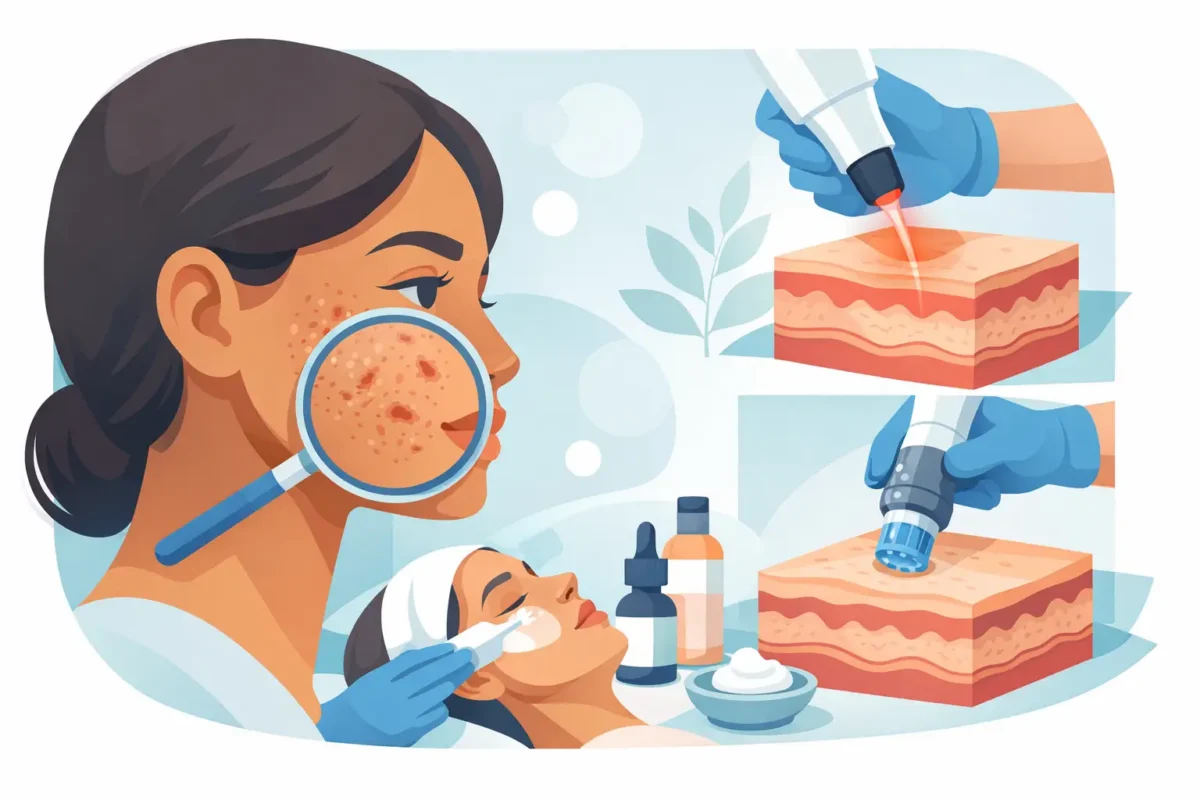
A breakout may last days or weeks. Acne scars can remain visible for years, changing how skin reflects light, how makeup sits, and sometimes how confident you feel without either. The encouraging news is that scars are not a single concern with a single solution. With a treatment plan matched to your scar type, skin tone, and lifestyle, meaningful improvement is possible without surgery.
Why Acne Scars Look So Different
Acne creates inflammation below the skin’s surface. When that inflammation damages collagen during healing, the skin may heal with too little tissue, too much tissue, or uneven pigment. This is why two people with similar acne can be left with very different marks.
Post-inflammatory hyperpigmentation is often mistaken for scarring. These are flat brown, gray, or red marks left after a blemish resolves. They can fade gradually, especially when skin is protected from sun exposure and irritation, but they may need targeted treatment when they persist.
True scars change the skin’s texture. Atrophic scars sit below the surrounding skin and are the most common type. Ice-pick scars are narrow and deep, boxcar scars have defined edges, and rolling scars create broader, wave-like indentations. Raised scars, including hypertrophic scars and keloids, develop when the body produces excess collagen. Each type responds differently, which is why a one-size-fits-all facial rarely delivers the result most clients want.
The First Step: Treat Active Acne
Scar treatment works best when active acne is controlled. Treating inflamed breakouts while they are still forming can create new irritation and, in some cases, new scars. A clinical provider may recommend beginning with a plan to calm congestion, reduce oil and inflammation, and support the skin barrier before moving into corrective treatments.
This does not mean you have to wait until your skin is perfect. It means timing matters. If you experience occasional hormonal breakouts, treatment can often be planned around them. If acne is painful, cystic, or leaving frequent new marks, a medical evaluation may be the right priority before resurfacing procedures.
Avoid picking, squeezing, or aggressively exfoliating blemishes in the meantime. Those habits can extend inflammation deeper into the skin. Daily broad-spectrum sunscreen is equally important because ultraviolet exposure can darken post-acne marks and make textural irregularities appear more noticeable.
Professional Options for Acne Scars
The most effective approach often combines treatments over time. Collagen remodeling is gradual, and different scar patterns may need different technologies. A consultation should look beyond the label “acne scars” to assess depth, location, pigmentation, skin sensitivity, and the amount of downtime that feels realistic for you.
Laser resurfacing and laser peels
Laser treatments can help improve acne-related texture, enlarged pores, uneven tone, and lingering discoloration. Depending on the technology and settings, a laser may gently refresh the superficial layers of skin or direct controlled energy deeper to stimulate collagen renewal.
Laser peels are often a good fit for clients who want a fresher, brighter appearance with limited social downtime. More intensive resurfacing may offer stronger texture correction but can involve redness, peeling, and a longer recovery period. The right choice depends on the severity of the scarring and your skin’s ability to tolerate treatment safely.
For deeper scars, laser treatment may soften edges and improve the overall surface rather than erase every indentation. That distinction matters. The goal is skin that looks smoother, more even, and more confident in real life, not an unrealistic promise of poreless perfection.
Microneedling for collagen support
Microneedling uses very fine needles to create controlled microchannels in the skin. This process signals the body’s repair response and encourages new collagen and elastin production. It can be especially helpful for mild to moderate rolling scars, shallow boxcar scars, textural roughness, and visible pores.
Results develop over a series of treatments because collagen remodeling takes time. Many clients notice a healthier glow first, followed by gradual smoothing in the weeks that follow. Microneedling is not always the best standalone option for deep ice-pick scars or tethered scars, but it can be a valuable part of a broader plan.
Treatments for tethered or deep scars
Some rolling scars are held down by fibrous bands beneath the skin. Surface treatments alone may improve their appearance but cannot always release the underlying pull. In these cases, a provider may discuss a procedure designed to address the tethering before or alongside collagen-stimulating treatments.
Deep, narrow ice-pick scars can also require a more targeted approach. The correct strategy depends on the scar’s shape and depth, as well as your skin tone and history of healing. This is where an experienced assessment is more valuable than choosing a treatment based on a before-and-after photo online.
Addressing dark marks and redness
When the main issue is color rather than texture, treatment may focus on pigment and vascular redness. Certain laser settings and professional skin-care strategies can help reduce the appearance of brown marks or persistent red post-acne marks. These concerns can exist alongside scars, so treating both may create a more complete improvement.
Pigment-prone skin needs a particularly thoughtful plan. Overly aggressive treatment can trigger more discoloration, especially if aftercare is ignored. A provider should consider your natural skin tone, history of melasma or hyperpigmentation, medications, and recent sun exposure before selecting a procedure.
What Results Can You Expect?
The honest answer is that it depends. Scar depth, scar type, active acne, age, skin tone, and collagen response all influence the outcome. Most professional scar treatments aim for visible improvement rather than total removal. Even a moderate improvement can make a substantial difference in how skin looks under makeup, in photographs, and in natural daylight.
Results are usually cumulative. One treatment may improve radiance and soften superficial irregularities, while a full series can create more noticeable textural refinement. Your provider should explain the anticipated number of sessions, expected recovery, possible side effects, and what level of improvement is realistic before treatment begins.
Be cautious of anyone who guarantees permanent scar removal in one appointment. Good aesthetic care balances ambition with skin safety. It also gives your skin adequate time to heal between sessions, because more aggressive is not always more effective.
How to Prepare for a Scar Consultation
Come prepared to discuss when your acne started, whether you still break out, the products and medications you use, and any prior treatments. Mention if you have a history of cold sores, keloid scars, melasma, or sensitivity to procedures. These details affect which treatments are appropriate and how they should be performed.
It also helps to be clear about your goals. Are you most concerned about makeup catching in scars? Do dark marks bother you more than indentations? Do you need minimal downtime for work or family commitments? A personalized plan should fit your life as well as your skin.
At Bloom Laser Clinic, an experienced provider can help identify the scar patterns affecting your complexion and recommend non-surgical options that support gradual, natural-looking refinement. Professional guidance is especially valuable when acne scars include both texture and discoloration, since treating only one concern may leave results feeling incomplete.
Protect Your Progress Between Treatments
Aftercare is part of the result. Follow the instructions given for cleansing, moisturizing, sun protection, and returning to active ingredients such as retinoids or exfoliants. Avoid heat, friction, picking, and unapproved products while the skin is healing. A temporary flare of dryness or redness can be normal after some procedures, but persistent pain, swelling, blistering, or unusual changes should be reported promptly.
The most satisfying acne scar treatment plans are not rushed. They begin with a careful assessment, use the right technology for the right concern, and allow time for collagen to do its work. When your plan respects both your skin and your schedule, smoother-looking skin can become a realistic next step rather than a distant wish.