


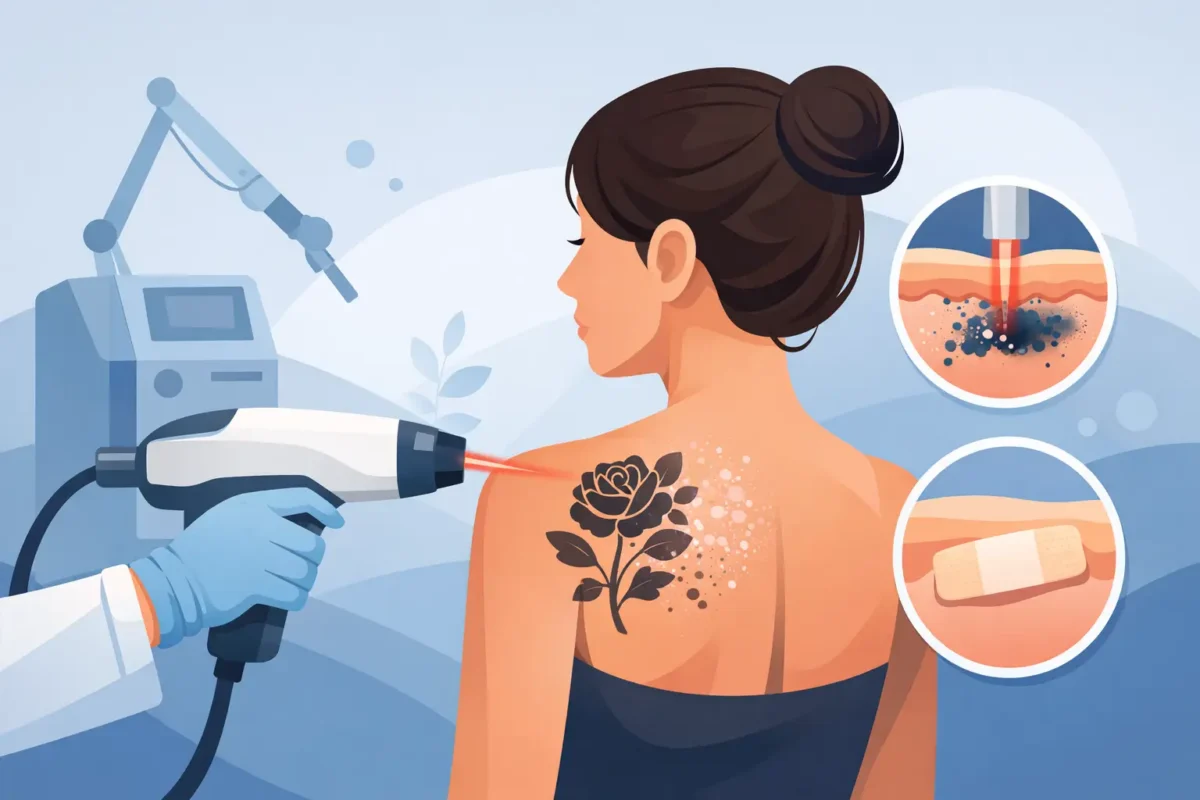
A tattoo may represent a meaningful chapter, a style that no longer feels like you, or simply an artist’s work you would like softened for a future cover-up. Whatever your reason, tattoo removal is not about erasing the past. It is about giving you more choice in how you feel in your skin.
Modern laser treatment can significantly fade many tattoos without surgery, but the best results come from a realistic plan, skilled treatment, and patient aftercare. Here is what to know before beginning.
How Tattoo Removal Works
Professional laser tattoo removal uses focused pulses of light energy to target pigment beneath the skin. The ink absorbs that energy and breaks into smaller particles. Your body’s natural immune processes gradually clear those particles away between appointments, which is why fading continues after each session.
Different ink colors respond to different laser wavelengths. Dark black and dark blue inks often respond very well because they absorb laser energy efficiently. Red, orange, green, and lighter shades can also be treated, but they may require a more specialized approach or additional sessions. White, beige, and some cosmetic pigments can be unpredictable and may darken before fading.
A laser does not remove an entire tattoo in one visit. The skin needs time to recover, and the body needs time to process the disrupted ink. Spacing appointments appropriately protects the skin and supports a more even result.
Why Every Tattoo Responds Differently
There is no reliable way to promise an exact number of sessions before a consultation. A small, amateur black tattoo may fade more quickly than a large, professionally applied multicolor design. Ink depth, pigment density, the tattoo’s location, your skin tone, circulation, and your immune response all influence the process.
Older tattoos sometimes respond more readily because some ink has already broken down over time. Professional tattoos can take longer because the pigment is often applied more densely and consistently. Tattoos on areas with strong circulation, such as the upper body, may fade differently from those on hands, feet, or lower legs.
If your goal is a cover-up rather than full clearance, you may need fewer sessions. Strategic fading can give your tattoo artist a cleaner canvas and more design options, which may be the most efficient path to the result you want.
Who Is a Good Candidate for Tattoo Removal?
Most healthy adults can be considered for laser tattoo removal following a proper assessment. The right treatment plan begins with an experienced practitioner examining the tattoo, discussing your medical history, and reviewing your skin type and goals.
A consultation is especially valuable if you have darker skin, a history of raised scarring, active skin irritation, or a tattoo with cosmetic or unusual pigments. These factors do not automatically rule out treatment, but they affect laser settings, session timing, and the level of caution required.
Let your provider know about medications, supplements, recent tanning, skin conditions, past reactions to laser treatments, or any history of cold sores when treating near the mouth. If you are pregnant, breastfeeding, or managing a health condition, ask your medical provider and laser practitioner whether treatment should be postponed. Honest information helps create a safer, more personalized plan.
What Happens During a Laser Tattoo Removal Appointment?
Your appointment begins with a review of the area being treated and a check that the skin is suitable for that day’s session. The treatment area is cleansed, and protective eyewear is worn by everyone in the room. Depending on the tattoo and your comfort needs, a cooling device or topical numbing option may be discussed before treatment.
During the laser pulses, many clients describe the sensation as quick snaps against the skin, followed by warmth. Treatment time itself is often brief, particularly for smaller tattoos. Larger or more complex designs naturally take longer.
Immediately afterward, the tattoo may appear white or frosted. This is a common temporary response to laser energy. Redness, swelling, pinpoint bleeding, tenderness, and small blisters can occur as the skin begins healing. Your practitioner will provide clear aftercare instructions tailored to the treatment area.
Aftercare Matters as Much as the Treatment
The laser session starts the fading process, but thoughtful aftercare helps protect the skin while it heals. Keep the area clean, avoid picking or scratching, and follow the instructions you receive about dressings, ointments, and bathing. Blisters should be left intact whenever possible, since they act as a natural protective barrier.
Sun exposure is one of the biggest factors to manage. Treated skin is more vulnerable to pigment changes when exposed to UV light. Keep the area covered when practical and use sun protection once the skin has healed enough for it, according to your provider’s guidance. Avoid tanning beds and intentional tanning before and between sessions.
You may also need to pause activities that create friction, excess heat, or heavy sweating for a short period. That can include hot tubs, swimming, intense exercise, and tight clothing over the treatment site. Your exact restrictions depend on the location of the tattoo and how your skin responds.
Contact your treatment provider if you notice increasing pain, spreading redness, unusual drainage, fever, or other signs that concern you. Healing should be monitored, not guessed at.
How Many Tattoo Removal Sessions Will You Need?
Many tattoos need a series of treatments, often scheduled several weeks apart. It can be tempting to treat more frequently in hopes of faster fading, but more time is not always better. The body continues clearing fragmented ink after the visible redness has gone down, and rushing can increase unnecessary stress on the skin.
Your practitioner may adjust the plan as the tattoo changes. A treatment that works well early on may need refinement once darker ink has faded and lighter colors remain. Progress photos taken under consistent lighting can be useful because tattoo fading can be gradual enough that day-to-day changes are hard to notice.
Complete removal is possible for some tattoos, but not every design will disappear without any trace. Some clients may be left with faint pigment, slight textural change, or a subtle ghost image. A trustworthy consultation makes room for that reality while explaining the options available for your specific tattoo.
Choosing a Professional Laser Provider
Tattoo removal is a clinical service, not a decision to make based on price alone. The quality of the laser technology matters, but so does the person operating it. Look for a provider who performs a detailed consultation, explains expected outcomes without overpromising, and can discuss how they approach different skin tones and ink colors.
You should also feel comfortable asking about experience, treatment protocols, pain management, and aftercare support. Before-and-after photos can be helpful when they show comparable tattoos, skin types, and treatment goals. A reputable clinic will explain that results vary and will recommend a treatment schedule based on your skin’s response rather than a one-size-fits-all package.
At Bloom Laser Clinic, tattoo removal planning is centered on advanced laser care, professional assessment, and a realistic path toward clearer-looking skin. Whether you want complete fading or space for a new design, a personalized consultation can turn uncertainty into a practical next step.
The best time to start is not when you are certain how many sessions you will need. It is when you are ready to understand your options, protect your skin, and choose a plan that respects both your goals and your healing process.