


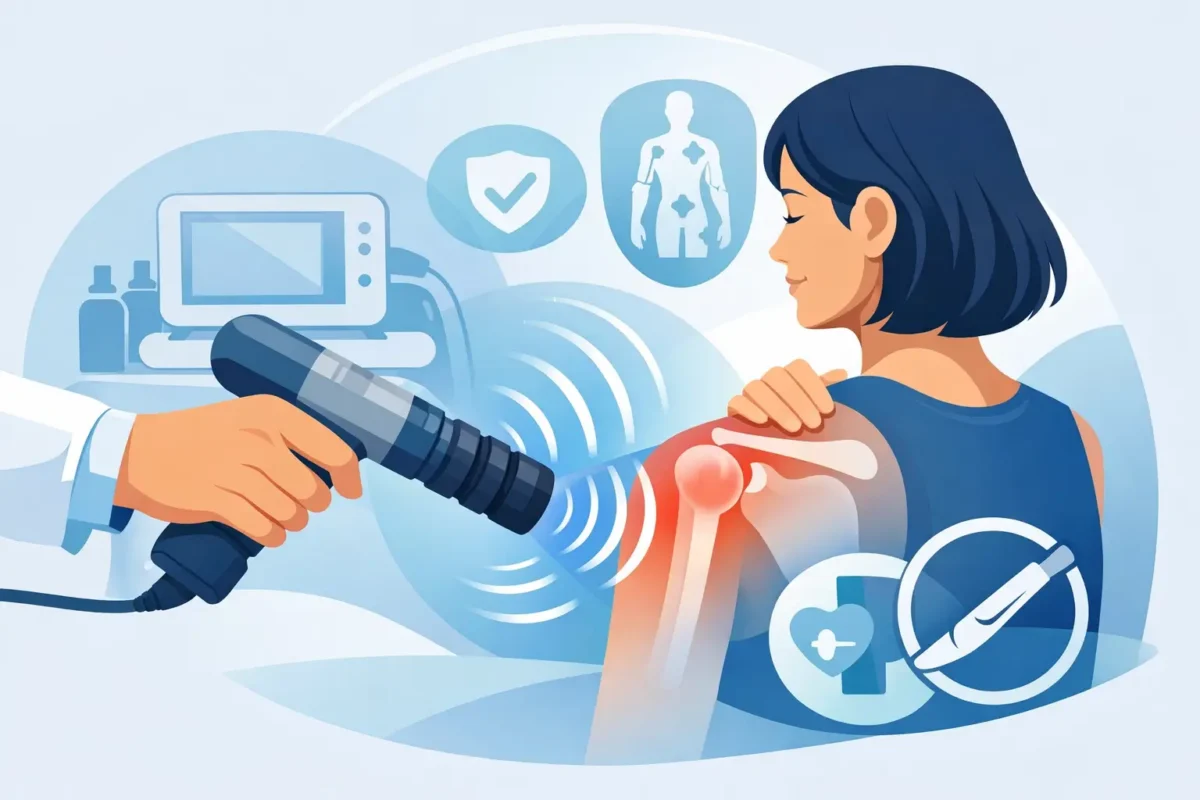
A stubborn heel pain that flares with the first steps of the morning, an elbow that aches every time you lift a bag, or a tight shoulder that will not settle can make everyday movement feel limiting. Understanding how shockwave therapy relieves pain can help you decide whether this non-surgical treatment may be a practical next step when rest, stretching, or other conservative care has not delivered enough relief.
Shockwave therapy uses carefully controlled acoustic waves delivered through the skin to the affected area. It is not an electrical shock, and it does not involve needles or surgery. The goal is to stimulate the body’s own healing response in tissue that has become persistently irritated, painful, or slow to recover.
What Shockwave Therapy Is Designed to Treat
Shockwave therapy is commonly used for musculoskeletal pain involving tendons, connective tissue, and certain chronic soft-tissue conditions. Many people seek it for plantar fasciitis, Achilles tendinopathy, tennis elbow, golfer’s elbow, shoulder tendon pain, hip pain, or tight, tender areas that have not improved with basic measures.
The treatment is often considered when pain has lasted for several weeks or months. Chronic pain can change the way tissue functions: circulation may be reduced, movement patterns may become guarded, and the body’s normal repair process can stall. Shockwave therapy is designed to prompt a response in that underperforming tissue rather than simply masking discomfort for a few hours.
It is not a one-size-fits-all answer. A recent injury, a fracture, a nerve-related condition, arthritis, or pain caused by a more serious medical issue may require a different approach. A qualified assessment is the right starting point.
How Shockwave Therapy Relieves Pain in the Body
The treatment works through mechanical energy. A handheld device sends acoustic pressure waves into the targeted area, where they create controlled stimulation in the tissue. Depending on the treatment plan, a provider may use radial shockwave therapy, which disperses energy over a broader area, or focused shockwave therapy, which targets deeper tissue more precisely.
It encourages circulation and healing activity
Healthy circulation helps supply tissue with oxygen and nutrients while carrying away metabolic waste. In long-standing tendon and fascial pain, local blood flow can be limited. The acoustic waves may encourage the formation of tiny new blood vessels and support better circulation in the treatment area.
This does not mean a damaged tendon is instantly repaired after one appointment. Instead, the body may gradually increase its healing activity over the following days and weeks. That is one reason providers usually recommend a series of treatments rather than judging the outcome after a single session.
It can reduce pain sensitivity
Persistent pain is not always a direct measure of tissue damage. When an area has been painful for a long time, local nerves can become more sensitive to pressure and movement. Shockwave therapy may help alter pain signaling and reduce this heightened sensitivity.
Some clients notice a change quickly, while others experience a gradual improvement as the tissue becomes less reactive. The goal is not to ignore pain and push through every activity. It is to make comfortable movement more achievable, so the area can be progressively strengthened and used with confidence.
It helps address tight, dysfunctional tissue
Chronic strain can leave tissue feeling stiff, thickened, or restricted. Shockwave stimulation may improve tissue mobility and support remodeling in tendons and fascia. When paired with appropriate mobility work and strengthening, this can help restore a more comfortable range of motion.
That pairing matters. Shockwave treatment can create a useful window for recovery, but lasting progress often depends on what happens between appointments. A provider may recommend specific exercises, changes to footwear, improved ergonomics, or a short adjustment in training volume based on the source of the pain.
It may break the cycle of inflammation and guarding
Pain often creates a protective cycle: an area hurts, you move less or compensate, muscles tighten, and the affected tissue becomes even more sensitive. By reducing pain and encouraging movement, shockwave therapy may help interrupt that cycle.
For example, someone with heel pain may start avoiding a normal walking pattern. As discomfort improves, they may be better able to return to gradual calf strengthening, supportive footwear, and regular walking. Those changes can be as meaningful to the final result as the treatment itself.
What a Shockwave Therapy Appointment Feels Like
A treatment session is typically brief, often lasting around 15 to 20 minutes depending on the area being treated. Your provider will identify the most tender or clinically relevant points, apply gel to the skin, and move the treatment handpiece across the area.
You may feel rhythmic tapping or pulsing, along with a deep ache in sensitive spots. Intensity can be adjusted throughout the session. Treatment should be tolerable, and open communication helps your provider set an energy level that is effective without being unnecessarily uncomfortable.
It is common to have temporary soreness, redness, or mild tenderness afterward, much like the feeling after a deep workout. Some people notice immediate relief, while others feel a short-lived increase in sensitivity before improvement begins. Avoiding high-impact activity for a short period may be recommended for certain conditions, but your provider will give guidance that matches your treatment area and lifestyle.
How Many Sessions Will You Need?
Most treatment plans involve several sessions, often spaced about a week apart. The ideal number depends on the condition, how long you have had symptoms, the depth and location of the tissue involved, and your overall health and activity level.
A newer issue may respond differently than pain that has been present for years. Someone who can consistently follow a strengthening plan may progress more quickly than someone whose work or sport repeatedly overloads the affected area. Results are individual, and a responsible provider should be clear about that from the beginning.
At Bloom Laser Clinic, shockwave therapy is approached as part of a non-surgical wellness plan built around your goals, comfort, and clinical assessment. The focus is on helping you move more freely while supporting the body’s natural recovery process.
Who Should Speak With a Provider Before Treatment?
Shockwave therapy is non-invasive, but it is not suitable for everyone. Tell your provider about all medical conditions, medications, and recent injuries before starting. Treatment may not be appropriate directly over a tumor, an active infection, an open wound, a blood clot, or certain growth areas in younger patients.
Extra caution is also needed for people with bleeding disorders or those taking blood-thinning medication. Pregnancy, implanted medical devices, reduced sensation in the treatment area, and a history of cancer should be discussed during your consultation. A careful review protects your safety and helps ensure treatment is directed at the true source of pain.
Getting Better Results From Your Treatment Plan
The strongest outcomes usually come from combining treatment with smart, consistent care. Keep your follow-up appointments, complete any recommended mobility or strengthening work, and give the area time to adapt. If a particular exercise or activity causes sharp or worsening pain, do not assume you need to push harder. Let your provider know so the plan can be adjusted.
For active clients, the aim is usually not total inactivity. It is sensible load management: temporarily reducing what aggravates the problem while maintaining movement that feels safe. For example, a runner with Achilles discomfort may need to modify mileage and focus on calf strength before returning to speed work. The details depend on the condition.
Pain does not have to be the price of staying active, working comfortably, or enjoying daily life. A personalized assessment can clarify whether shockwave therapy fits your needs and create a realistic path toward more comfortable movement.