


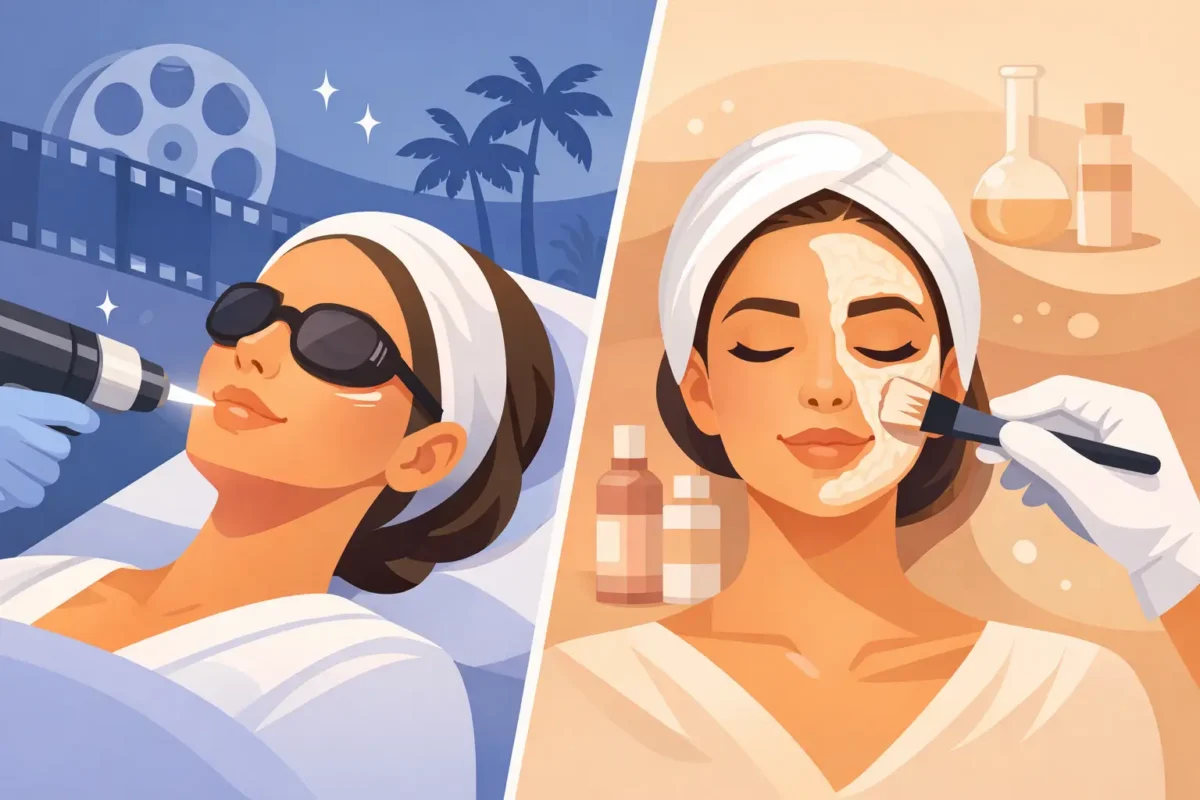
A clear, camera-ready glow is appealing, but the best treatment is not always the one with the biggest name. When comparing a Hollywood Peel vs chemical peel, the real question is how your skin concern, tolerance for downtime, and desired level of correction line up with each treatment. Both can improve dullness, uneven tone, texture, and the look of pores, yet they work in fundamentally different ways.
A Hollywood Peel is a laser-based treatment, often performed with a carbon lotion and a Q-switched Nd:YAG laser. A chemical peel uses carefully selected exfoliating acids to encourage the shedding of damaged surface cells and, depending on its depth, stimulate renewal further within the skin. One is not universally better than the other. The right choice is the one that can improve your skin without asking more of it than it is ready to give.
Hollywood Peel vs Chemical Peel: The Core Difference
The Hollywood Peel is sometimes called a carbon laser peel. After a thin carbon lotion is applied, laser energy targets the carbon particles on the skin’s surface. This process helps lift oil, debris, and dead skin cells while delivering heat that can support collagen renewal over time. It is a popular option for clients who want skin to look fresher, smoother, and more refined with little interruption to their routine.
A chemical peel works through a controlled application of an exfoliating solution. The formula may contain ingredients such as alpha hydroxy acids, beta hydroxy acids, trichloroacetic acid, or other professional-grade blends. The solution loosens bonds between old cells and can create a measured level of exfoliation. Superficial peels generally focus on brightening and mild texture concerns, while medium-depth peels can address more established discoloration, acne scarring, and visible photoaging.
This difference matters because a Hollywood Peel is primarily about laser energy and surface purification, while a chemical peel creates a chemical exfoliation response. A skilled practitioner can recommend either treatment alone or incorporate them into a longer skin-rejuvenation plan, but they should not be treated as interchangeable services.
What Results Can You Expect?
For many clients, the Hollywood Peel offers an immediate polished look. Skin may appear brighter, cleaner, and less oily after one session, with makeup applying more smoothly. It is often chosen ahead of events because most people experience only mild, short-lived redness. With a series of treatments, it may help improve the appearance of enlarged pores, congestion, fine lines, uneven tone, and mild acne-related concerns.
Chemical peel results depend heavily on the formula and depth. A light peel can restore radiance and smooth rough texture with minimal visible peeling. A stronger peel may produce more noticeable flaking, redness, and temporary sensitivity, but it can also create more significant improvement in sun damage, stubborn pigment, fine lines, and certain acne scars. Results develop as the skin completes its renewal process, so patience is part of the treatment.
If your priority is a refreshed glow with minimal downtime, Hollywood Peel treatment is often the better fit. If you have a more pronounced concern that requires deeper exfoliation, a professionally selected chemical peel may offer greater correction. A consultation is especially valuable for melasma and pigmentation, since the wrong intensity or treatment type can aggravate these conditions.
Pores, Oil, and Breakouts
Clients with oily, congested skin are often drawn to the Hollywood Peel because the carbon lotion and laser process can help reduce surface oil and clear debris from pores. It can be an excellent maintenance option for skin that looks shiny by midday or feels persistently congested.
Chemical peels can also be highly effective for acne-prone skin, particularly formulas that include salicylic acid or other ingredients chosen for comedonal breakouts. However, active inflamed acne, skin picking, and irritation all need to be assessed before treatment. The goal is to calm and improve the skin, not trigger unnecessary inflammation.
Pigmentation, Sun Damage, and Uneven Tone
Both options can support a more even-looking complexion. The difference is in the approach. A Hollywood Peel may suit mild sun damage and overall dullness, especially for clients seeking a gentle, gradual program. Chemical peels can offer more intensive resurfacing when pigmentation sits closer to the surface and the skin is an appropriate candidate.
Pigmentation is not a one-size-fits-all concern. Post-inflammatory hyperpigmentation, freckles, sunspots, and melasma behave differently. In deeper skin tones or melasma-prone skin, treatment selection must be conservative and clinically informed. Sunscreen, home care, and a plan that avoids excess heat or irritation are just as important as the procedure itself.
Downtime: The Practical Deciding Factor
Downtime often decides the Hollywood Peel vs chemical peel conversation. A Hollywood Peel is known for being low downtime. Some warmth or light redness can occur, but many clients return to normal activities the same day. Your provider may advise avoiding intense exercise, heat exposure, exfoliating products, and direct sun immediately after treatment.
Chemical peel downtime ranges from very little to substantial. A superficial peel may cause dryness or fine flaking for a few days. Medium-depth treatments can involve visible peeling, redness, and a longer recovery period. Skin should never be pulled or scrubbed while it is shedding. Letting the process happen naturally protects the fresh skin underneath and reduces the risk of irritation or uneven pigment.
Neither treatment should be scheduled casually before an important occasion. Even low-downtime services can produce a temporary reaction, particularly in sensitive skin. If you are preparing for a wedding, vacation, photos, or a major event, give yourself enough lead time for a trial treatment and recovery.
Who Should Choose a Hollywood Peel?
A Hollywood Peel may be a strong option if your goals are clearer pores, a more balanced-looking complexion, smoother texture, and a healthy glow without significant peeling. It is also appealing for people who want to maintain results between more targeted skin treatments or who prefer a gradual, low-interruption approach.
It can be particularly useful when your schedule does not allow for a visible recovery period. That said, low downtime does not mean no preparation is needed. Your practitioner should review your current skincare routine, recent sun exposure, history of cold sores, active acne medications, and any prior laser or exfoliation treatments.
Who Should Choose a Chemical Peel?
A chemical peel may be the better path when your skin needs a more direct exfoliation strategy. Superficial peels can help with dullness, roughness, mild acne, and uneven tone. Stronger professional peels may be considered for more visible photoaging, persistent discoloration, or textural acne scars when the skin is suitable.
The best peel is not necessarily the strongest one. Over-exfoliation can compromise the skin barrier, leading to sensitivity, breakouts, and post-inflammatory discoloration. A well-planned series of moderate treatments often produces more reliable results than one aggressive peel performed without proper preparation or aftercare.
Safety and Aftercare Matter More Than the Trend
Both treatments should begin with an honest skin assessment. Tell your provider about prescription retinoids, isotretinoin use, pregnancy or nursing status, allergies, autoimmune conditions, a history of keloid scarring, cold sores, and recent tanning. These factors can affect candidacy, treatment settings, timing, or whether another service is more appropriate.
After either procedure, gentle care protects your investment. Use a mild cleanser, moisturizer, and broad-spectrum sunscreen every day. Pause scrubs, exfoliating acids, retinoids, and strong acne products until your provider says it is safe to restart them. Sun protection is essential, not optional, because newly treated skin is more vulnerable to discoloration.
At Bloom Laser Clinic, treatment recommendations are built around your skin, your goals, and a realistic plan for visible improvement. The science of smart skin is not about chasing the most aggressive option. It is about choosing the right level of treatment at the right time.
How to Make the Right Choice
Choose a Hollywood Peel when you want a low-downtime refresh that targets surface buildup, oil, pore appearance, and overall radiance. Consider a chemical peel when you are comfortable with a more intentional exfoliation process and need greater support for texture, discoloration, or sun-related skin changes.
The most helpful next step is a professional consultation, not a guess based on a before-and-after photo. Your skin has its own history, sensitivity, and goals. A thoughtful treatment plan can help you feel beautiful in your skin while protecting its long-term health.