


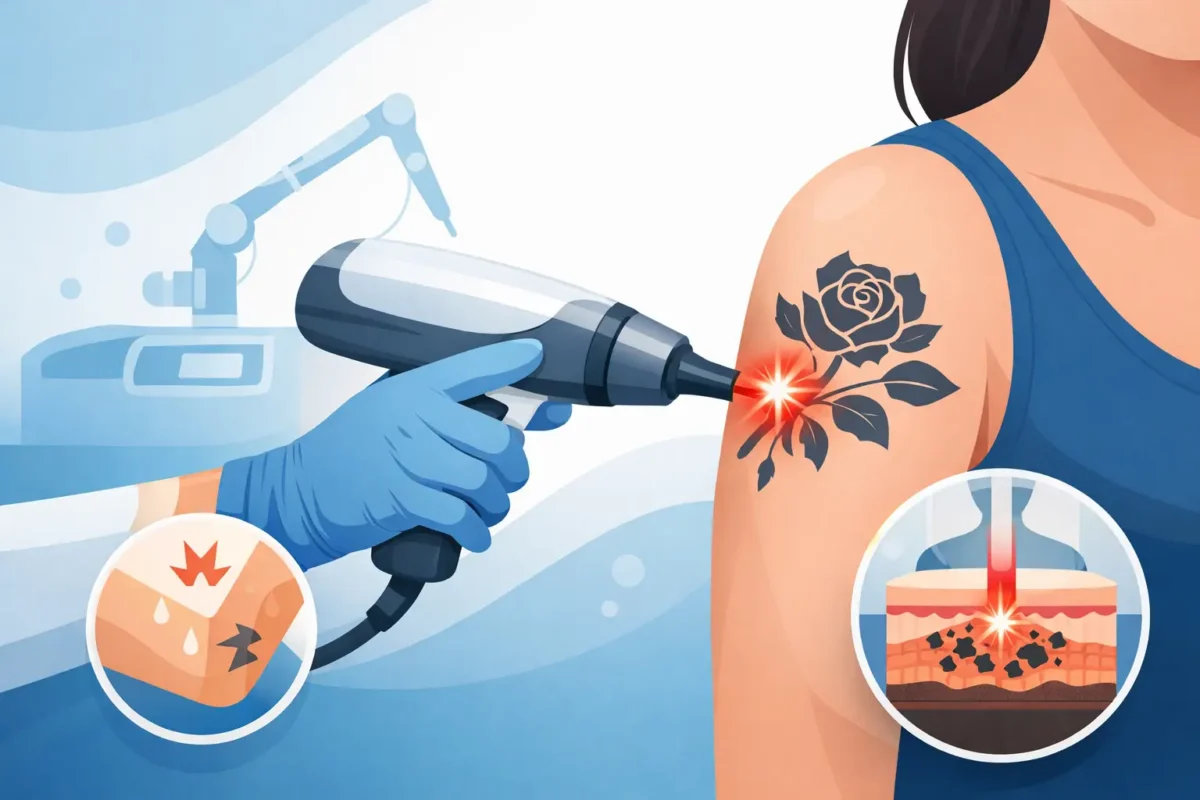
If you are asking how painful laser tattoo removal is, the honest answer is that it can be uncomfortable, but it is usually more manageable than people expect. Most clients describe each laser pulse as a quick snap against the skin, similar to a rubber band flick paired with a brief heat sensation. The treatment is fast, and modern comfort measures can make a meaningful difference.
The decision to remove a tattoo is personal. Whether the design no longer reflects you, has faded unevenly, or simply occupies space you want to reclaim, knowing what to expect can replace anxiety with a clear plan. Pain tolerance matters, but so do the tattoo’s location, color, age, and the technology used for treatment.
What Laser Tattoo Removal Feels Like
Laser tattoo removal works by sending targeted energy into tattoo ink. The energy breaks larger ink particles into smaller fragments, which your body can gradually clear through its natural processes. That rapid delivery of energy is what creates the sharp, momentary sensation during treatment.
For many people, the feeling is more intense than laser hair removal but far shorter-lived because the laser treats only the tattooed area. A small tattoo may take just a few minutes to treat. Rather than a constant pain, it is a series of quick pulses with short pauses as your provider works across the design.
Pain is subjective. One person may rate the experience as a 3 or 4 out of 10, while another may find the same treatment closer to a 7. The useful question is not whether it will feel completely painless. It is whether the sensation is brief, supported, and worth the outcome you want. For many clients, it is.
Why Some Tattoos Hurt More Than Others
The placement of the tattoo is one of the largest factors. Areas with thinner skin, less cushioning, or more nerve endings tend to feel more sensitive. Tattoos over the ribs, ankles, feet, hands, fingers, spine, sternum, and inner arm can be more uncomfortable than tattoos on the outer thigh, upper arm, or calf.
Tattoo size also matters. A larger design does not necessarily make each pulse hurt more, but it does mean a longer appointment and more total pulses. Dense areas of solid black ink can require focused treatment, while tattoos with several colors may require different laser settings or wavelengths over a course of sessions.
Age and quality of the tattoo affect removal progress more than pain. Older, naturally faded tattoos may respond more readily than newer or professionally saturated designs. Still, each treatment is customized. An experienced provider adjusts the approach based on your skin, ink, healing response, and treatment goals rather than using a one-size-fits-all setting.
Your Body Can Change the Experience
Your comfort threshold can shift from one appointment to the next. Poor sleep, stress, dehydration, illness, and approaching your menstrual cycle may make the treatment feel more intense. Arriving rested, hydrated, and having eaten a normal meal can help you feel steadier during your session.
It is also wise to avoid alcohol before treatment. Alcohol can contribute to dehydration and may increase bruising risk. Your provider should review medications, supplements, skin conditions, and any relevant health history before beginning treatment.
How Providers Help Make Treatment More Comfortable
A reputable clinic does not treat comfort as an afterthought. Cooling is commonly used before, during, and after laser tattoo removal to reduce the heat sensation and calm the skin. Depending on the treatment plan, a topical numbing cream may also be recommended or applied according to clinical guidance.
Cooling can make a noticeable difference, especially in sensitive areas. It may be delivered through a cold-air device, chilled contact cooling, or cold packs after treatment. You can also ask your provider to work in shorter sections or pause briefly if needed. Clear communication matters. There is no prize for silently pushing through discomfort.
At Bloom Laser Clinic, tattoo removal is approached as a personalized treatment plan, with attention to both visible progress and the client experience. A consultation is the place to discuss pain concerns openly, review the tattoo, and learn which comfort options are appropriate for you.
What Happens Right After a Session
Immediately after treatment, the area may look white or frosted for a short period. Redness, warmth, tenderness, and mild swelling are also common. These effects usually settle as the skin begins its healing process, though the exact timeline varies by person and treatment area.
The aftercare period can feel similar to caring for a minor skin irritation or sunburn. Keep the area clean, protect it from friction, and follow the aftercare instructions you are given. Avoid picking, scratching, or popping any blisters that develop. Blistering can occur after laser tattoo removal and is not automatically a sign that something has gone wrong, but it should be handled carefully.
You will also need to protect the treated skin from sun exposure. Tanned or irritated skin can affect how and when future treatments are performed. If you notice severe pain, spreading redness, pus, fever, or symptoms that concern you, contact your provider or seek medical care promptly.
Is It More Painful Than Getting the Tattoo?
This comparison comes up often, and there is no universal answer. Getting tattooed involves repeated needle passes over the skin for a much longer period. Removal can feel sharper per pulse, but the treatment itself is typically much quicker. A small tattoo-removal session may be over before a tattoo artist would have completed a single detailed section of the original design.
The emotional experience can be different, too. During a tattoo appointment, the discomfort accompanies the creation of something new. During removal, each session represents progress toward a change you have chosen. That sense of purpose can make the temporary sensation easier to tolerate.
Preparing for a More Comfortable Appointment
You do not need to overcomplicate your preparation, but a few practical choices help. Eat normally beforehand, drink water throughout the day, and wear clothing that gives easy access to the tattoo without rubbing against it afterward. Avoid treating sunburned skin or arriving with a fresh tan.
Come prepared to discuss your full health history and any changes since your last session. If you are concerned about pain, say so before treatment begins. Your provider can explain the expected sensation for your tattoo placement, discuss cooling or numbing options, and set realistic expectations for the pace of removal.
Remember that tattoo removal is a process, not a single appointment. Sessions are spaced apart to allow your skin to heal and your body time to clear fragmented ink. Trying to rush that process can compromise comfort and results.
The Bottom Line on Pain and Results
Laser tattoo removal is not usually described as relaxing, but it is brief, controlled, and highly individualized. The most sensitive placements and dense tattoos can be more challenging, while cooling, thoughtful preparation, and an experienced provider can make sessions far more manageable.
The right treatment plan should leave you feeling informed rather than intimidated. When you are ready to move on from a tattoo, a professional consultation can help you understand the likely number of sessions, expected healing, and the comfort measures available for your skin and your goals.