


If you are tired of planning your life around shaving, waxing, and ingrown hairs, the real question is not whether professional hair removal works. It is which option fits your skin, hair, budget, and patience. When clients ask about laser hair removal vs electrolysis, they are usually asking something deeper: which treatment will give me the best long-term result with the least frustration?
That answer depends on what you want treated, how much hair you have, your hair color and skin tone, and whether you value speed over precision. Both treatments can dramatically reduce unwanted hair. They simply get there in very different ways.
Laser hair removal vs electrolysis: the core difference
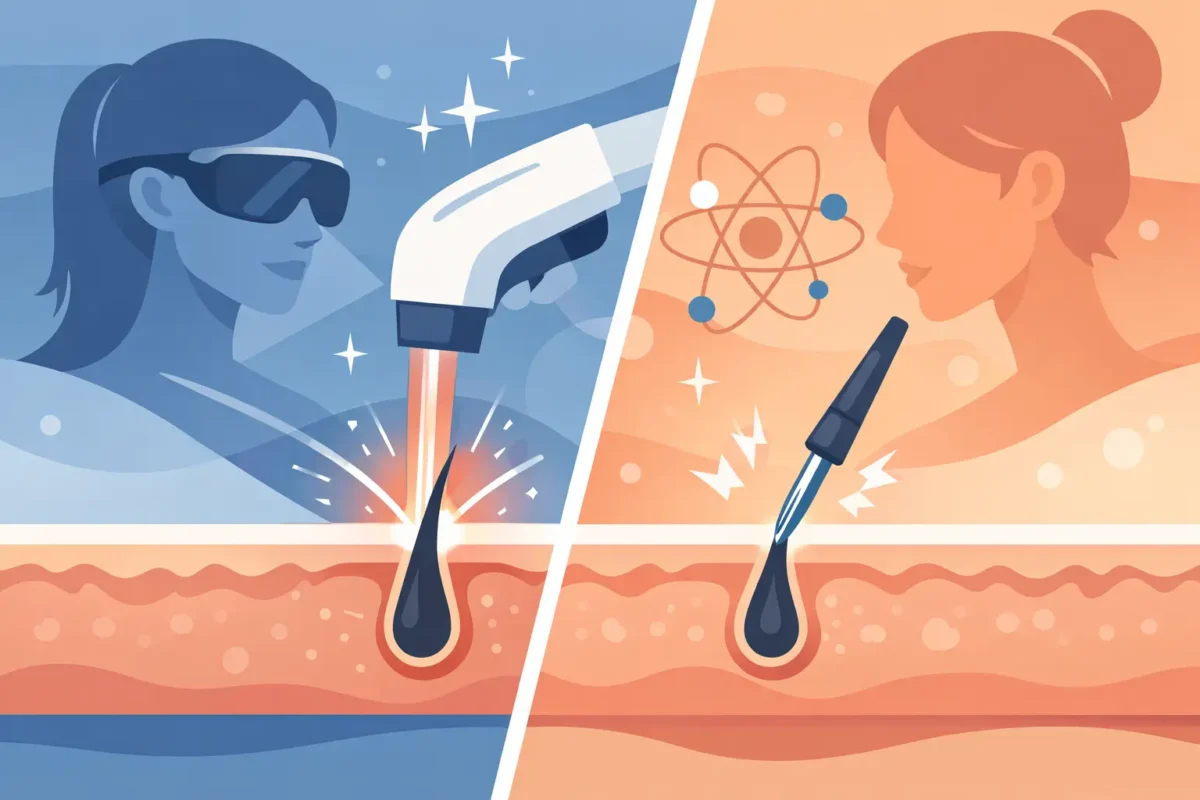
Laser hair removal uses concentrated light energy to target pigment in the hair follicle. The heat damages the follicle and reduces its ability to regrow hair over time. Because the laser is attracted to pigment, it works best when there is a clear contrast between hair and skin, although newer technologies have made treatment safer and more effective across a wider range of skin tones than many people realize.
Electrolysis works one follicle at a time. A very fine probe is inserted into the follicle, and an electrical current destroys the growth center. It does not rely on pigment the way laser does, which is why it can treat blond, gray, red, and white hairs that laser may not effectively target.
In practical terms, laser treats an area. Electrolysis treats individual hairs. That single difference shapes everything else, from treatment speed to comfort to cost.
Which treatment is faster?
For larger areas, laser is usually the clear winner. Legs, underarms, bikini, back, and chest can often be treated relatively quickly because the device targets many follicles with each pulse. If your goal is to thin or remove dense hair across a broad area, laser is generally the more efficient option.
Electrolysis is much slower because every follicle must be treated separately. That can be a smart trade-off for small areas like the chin, upper lip, areola, or a few stubborn facial hairs. It is far less appealing when you are looking at full legs or a full back.
This is one of the biggest reasons people choose laser first. It is not just about convenience. It is about making a long-term treatment plan feel manageable.
What about permanence?
This is where the conversation gets more nuanced. Electrolysis is widely recognized as a permanent hair removal method because it destroys follicles individually. Laser hair removal is often described as permanent hair reduction. That wording matters.
Laser can produce long-lasting, dramatic reduction, and many clients experience smooth skin with only occasional maintenance after completing a series. But hormones, genetics, and the body’s natural hair cycles can still trigger some regrowth over time. For many people, that regrowth is finer, lighter, and far less noticeable than before.
So if you want the most exact answer, electrolysis has the stronger claim for permanence on a follicle-by-follicle basis. If you want the more useful real-world answer, laser often delivers the result people actually want: much less hair, much less maintenance, and a far easier routine.
Skin tone, hair color, and treatment match
Hair and skin characteristics matter a great deal in the laser hair removal vs electrolysis decision.
Laser tends to perform best on dark hair because it needs pigment to target. Coarse, dark hair on areas like the underarms, bikini line, and legs often responds especially well. Technological advances have improved outcomes for more skin tones, but treatment should always be performed with the right device settings and by experienced professionals who understand how to treat safely.
Electrolysis has the advantage when hair is very light, gray, red, or white. Since it does not depend on pigment, it can treat hair that laser may miss. That makes it a strong option for facial touch-ups, hormonally driven hairs, and those fine but persistent strands that continue to bother you even when most of the area is clear.
For some clients, the smartest plan is not choosing one forever. It is using laser for broad reduction, then electrolysis for remaining lighter or resistant hairs.
Pain and comfort: what should you expect?
Neither treatment is exactly spa-like, but neither is usually unbearable. Laser is often described as a quick snap against the skin, sometimes compared to a rubber band. The sensation varies by area and by individual pain tolerance, but modern systems often include cooling features that make treatment much more comfortable.
Electrolysis can feel more intense because each follicle is treated individually. On delicate facial areas, sessions may feel tedious as much as uncomfortable. Since treatments can be longer and more repetitive, clients often notice the cumulative discomfort more than they would with a shorter laser session.
Comfort also depends on how much area you are treating. A few minutes of electrolysis on the chin is one thing. Repeating that process over large body areas is something else entirely.
Cost: cheaper upfront or smarter long term?
Cost is where many people get tripped up because they look only at the price per session. Electrolysis sessions may seem affordable at first, especially for a small area. But because treatment is slow and repeated frequently, the total investment can add up significantly over time.
Laser sessions often cost more per appointment, but larger areas can be treated much faster, and the number of sessions needed is often reasonable for the amount of hair reduction achieved. If you are treating legs, underarms, bikini, or back, laser is frequently the more cost-effective route overall.
That said, if you only want a handful of light chin hairs removed permanently, electrolysis may be the better value. The right question is not which treatment has the lower sticker price. It is which one gets you to your goal with the fewest appointments and the least wasted effort.
The treatment schedule matters more than people expect
Hair grows in cycles, and both methods require multiple appointments because not every follicle is active at the same time. Laser treatments are typically spaced weeks apart, giving the skin time to recover and allowing the next set of follicles to enter an active growth phase.
Electrolysis also requires repeat visits, often on a more ongoing basis, especially in the beginning. Because the treatment is so precise, consistency becomes a major part of success. Missing appointments or stopping early can stretch the process out considerably.
This is why lifestyle matters. If you want a treatment plan that fits a busy schedule, laser may feel more realistic. If you are highly motivated and dealing with a small area or light-colored hair, electrolysis may still be the right fit.
Which areas respond best?
Laser is usually the go-to for underarms, legs, bikini area, chest, back, and arms. It excels where there is enough hair density to make area-based treatment efficient. It is especially appealing for clients who are prone to razor burn, ingrown hairs, or dark shadowing after shaving.
Electrolysis shines on smaller facial areas and detailed cleanup work. It can also be ideal for shaping, refining, or finishing after another treatment method has already reduced the bulk of the hair.
In a clinic setting, this often becomes less of a debate and more of a strategy. The best recommendation is based on the area, the hair type, and the result you care about most.
So which one should you choose?
Choose laser if you want to treat larger areas, have darker hair, want faster sessions, and are looking for significant long-term reduction with less day-to-day maintenance. For many beauty-conscious clients, it offers the best balance of speed, value, and visible results.
Choose electrolysis if your hair is too light for laser, you want to target a small area with precision, or you are focused on removing individual hairs permanently over time.
And if your case is not perfectly one or the other, that is normal. A customized plan often delivers the best outcome. At Bloom Laser Clinic, that kind of treatment planning matters because good results are not just about having advanced technology. They come from choosing the right technology for the person in front of you.
The best hair removal method is the one that fits your real life, not just the one that sounds best on paper. When your treatment matches your skin, your hair, and your goals, smooth skin stops feeling like a chore and starts feeling effortless.