


You usually notice the real value of treatment a few months after you start – when shaving stops running your schedule. That is the point where most people ask how laser hair reduction lasts, and the honest answer is better than a simple number. Results can be long-lasting, but they are shaped by your hair type, hormones, treatment area, and how consistent your sessions are.
Laser hair reduction is designed to significantly reduce hair growth over time, not promise that every single hair will disappear forever after one round. For many clients, treated hair becomes finer, lighter, and much slower to return. In the right areas and with a well-timed treatment series, you can enjoy smooth skin for months or even years with only occasional maintenance.
How laser hair reduction lasts in real life
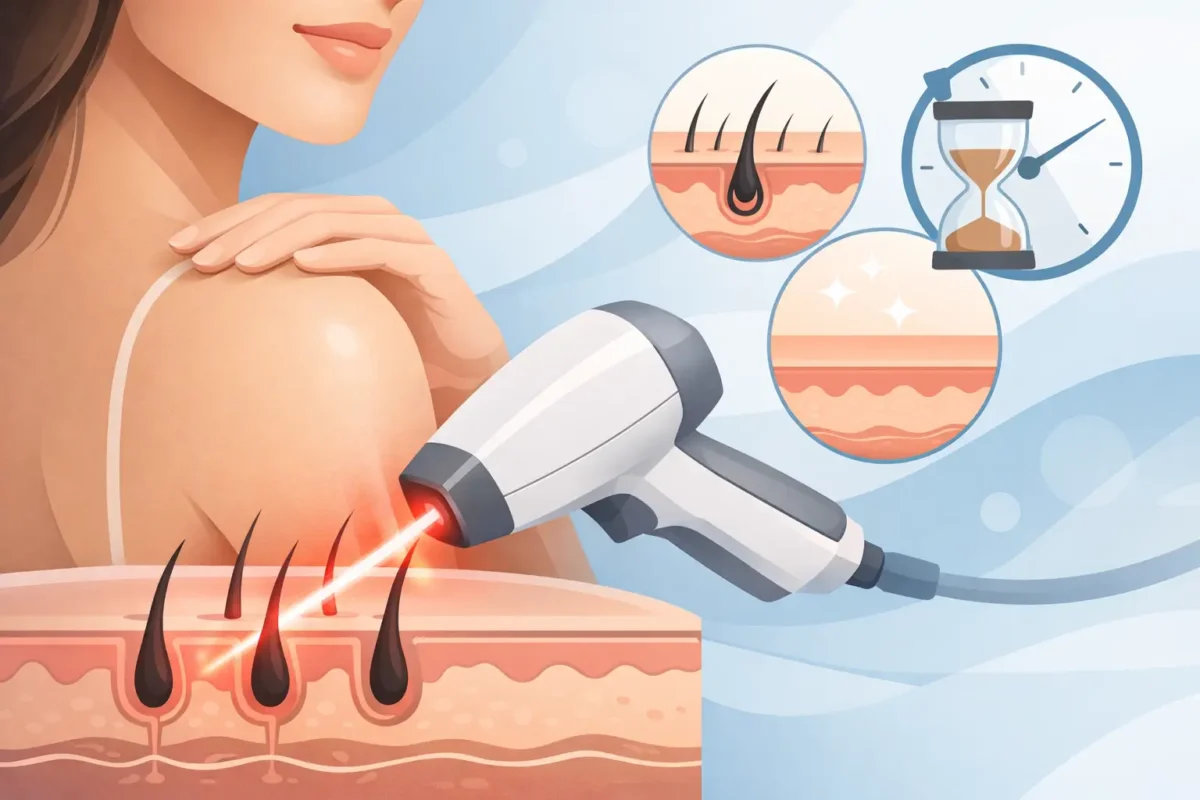
The laser targets pigment in the hair follicle and delivers heat that damages the follicle’s ability to keep producing strong, visible hair. Because hair grows in cycles, only some follicles are active and treatable at each appointment. That is why laser hair reduction is done as a series rather than a one-time visit.
Most people need multiple sessions spaced several weeks apart to catch hairs in the proper growth phase. After a full series, many clients see a major drop in hair density. Some areas may stay very smooth for a long stretch, while others develop scattered regrowth that is softer and easier to manage than before.
If you are looking for a realistic timeline, many clients enjoy noticeable reduction for several months after completing treatment, and often much longer with maintenance. A touch-up once or twice a year is common, especially in hormone-sensitive areas. That does not mean the treatment failed. It means your body can activate dormant follicles over time, and maintenance keeps results looking polished.
What affects how laser hair reduction lasts
No two people respond exactly the same way. The longevity of your results depends on a few key factors, and this is where a professional treatment plan matters.
Hair color and thickness
Dark, coarse hair usually responds best because the laser can more easily target pigment. Fine or light hair can be harder to treat effectively. If the hair has less pigment, the laser has less to lock onto, which can affect both the speed of your results and how long they hold.
Skin tone and treatment technology
Modern systems can treat a wider range of skin tones more safely and effectively than older devices, but technology still matters. The right laser settings, matched to your skin and hair profile, can improve both safety and long-term reduction. This is one reason physician-led or medically informed clinics tend to stand out – precision matters.
The area being treated
Some parts of the body tend to hold results longer than others. Underarms and lower legs often respond very well. Facial areas, especially the upper lip and chin, can be more influenced by hormones, which means regrowth is more likely over time. Bikini treatments can also vary depending on your natural hair density and hormone profile.
Hormones and health changes
Hormonal shifts can wake up follicles that were quiet before. Pregnancy, menopause, thyroid conditions, and conditions such as PCOS can all affect regrowth. This is why one person may have very stable results for years while another needs more regular maintenance.
Session timing and consistency
Skipping appointments or stretching them too far apart can make the process less efficient. Laser works best when treatments follow the growth cycle closely enough to catch active hairs. If you complete the recommended series on schedule, your results are usually stronger and longer-lasting.
What results can you realistically expect?
A good treatment plan should leave you with much less hair, less frequent regrowth, and hair that is often finer when it does return. Many clients also notice fewer ingrown hairs and less irritation compared with shaving or waxing. That benefit alone can make laser hair reduction feel transformative.
What you should not expect is instant permanence after one session. Hair reduction happens progressively. After the first few treatments, you may notice patchiness, slower growth, and areas that seem to stop growing altogether. That is a sign the follicles are responding, not a sign the process is finished.
By the end of a full series, many clients feel they have traded constant upkeep for occasional maintenance. That is a major quality-of-life shift. The time saved, the smoother texture, and the reduction in razor bumps often matter just as much as the visible hair loss.
How to make laser hair reduction last longer
If you want the longest possible runway between touch-ups, aftercare and planning matter.
Start by completing the full course recommended by your provider. Stopping as soon as hair looks better can leave too many active follicles untreated. The best results usually come from finishing the series, even if the area already looks improved halfway through.
It also helps to avoid waxing, tweezing, or threading between sessions. These methods remove the hair from the follicle, and the follicle needs to be present for the laser to target it. Shaving is usually the preferred option because it leaves the follicle intact under the skin.
Sun protection matters too. Tanned or sunburned skin can limit when treatment can be performed safely, which can delay your schedule. Keeping skin protected helps you stay consistent and supports safer settings.
Finally, do not ignore maintenance. A touch-up session at the right time is often what keeps results looking smooth year after year. Think of it as preserving your investment rather than starting over.
Why some regrowth does not mean starting from scratch
This is one of the biggest misunderstandings around laser treatment. If a few hairs come back, it does not erase the progress you made. Regrowth after laser hair reduction is often different from your original hair pattern. It may be sparser, finer, lighter, and much slower to appear.
That difference matters. Before treatment, you may have needed to shave daily or every other day. After a successful treatment series, you might only notice a few stray hairs after weeks or months. Maintenance at that stage is much easier than managing untreated growth.
This is also why the word reduction is more accurate than removal in many cases. The goal is a dramatic, lasting improvement in hair growth, not an unrealistic promise. For most clients, that improvement is exactly what they are after – smoother skin, less hassle, and more confidence.
Is laser hair reduction worth it for long-term results?
If you are tired of temporary methods, laser hair reduction can absolutely be worth it. The payoff is not just fewer hairs. It is less daily maintenance, fewer ingrown hairs, smoother-feeling skin, and more freedom in your routine.
The trade-off is that it takes commitment upfront. You need multiple sessions, patience between visits, and realistic expectations. It is not a one-appointment fix. But for people who want a modern, non-surgical treatment with visible, lasting improvement, it is one of the most practical options available.
At a clinic such as Bloom Laser Clinic, the value also comes from being treated with the right technology and a plan built around your skin, hair, and goals. That personalized approach can make a real difference in how well your treatment performs over time.
When to book a touch-up
There is no universal schedule. Some people want maintenance as soon as they notice scattered regrowth. Others wait until hair becomes more visible. A good rule is to book a touch-up when the area no longer feels as low-maintenance as it did right after your initial series.
For some clients, that is every six months. For others, it is once a year or less. Hormone-sensitive areas may need attention sooner than legs or underarms. The right timing is the one that keeps your results consistent without overtreating.
The best laser outcomes usually come from a simple strategy: start with a complete series, stay consistent, and treat maintenance as part of the plan rather than an inconvenience. If your goal is smoother skin that lasts far beyond the life of a razor or wax appointment, laser hair reduction offers a smart, science-backed path forward.