


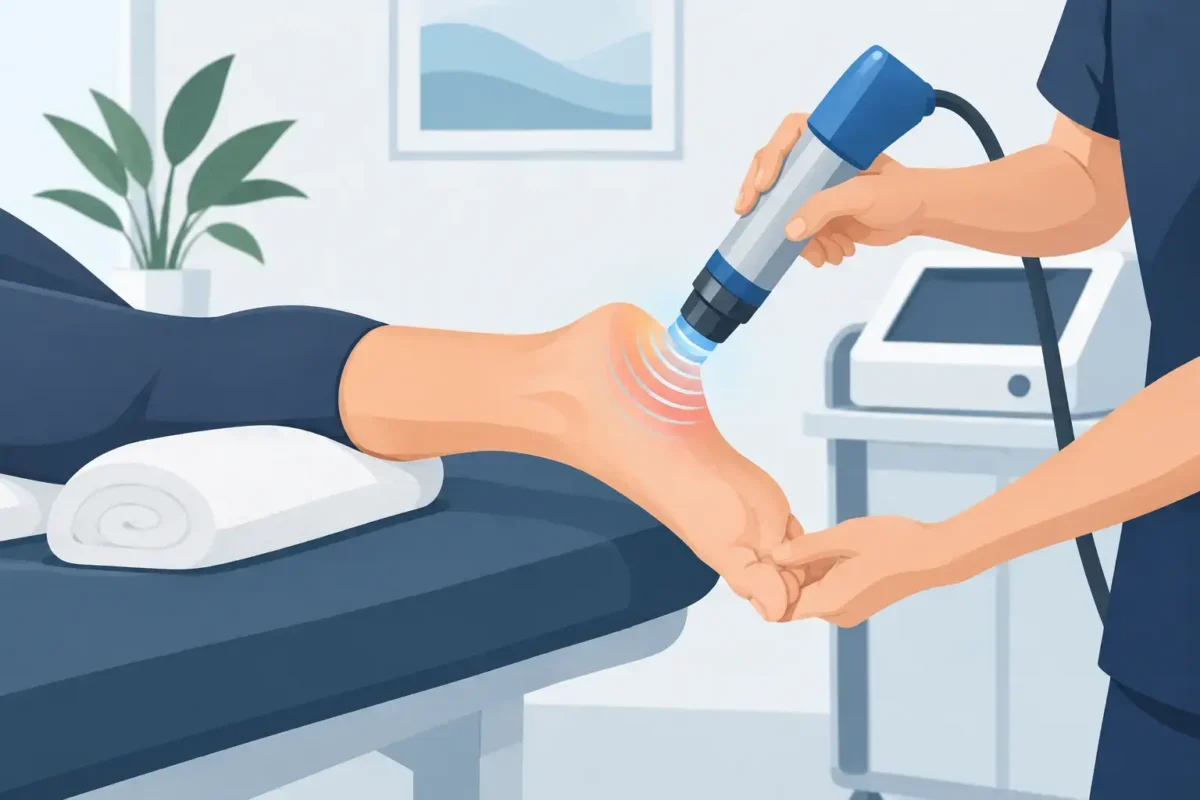
That sharp first-step pain in the morning can make a short walk to the kitchen feel like a major event. If stretching, supportive shoes, and rest have not brought lasting relief, you may be wondering how shockwave therapy treats heel pain and whether it could be the next step for you. This non-surgical treatment is designed to support the body’s natural repair process while helping calm persistent pain that can limit work, exercise, and everyday movement.
Why heel pain can be so stubborn
Heel pain is often linked to plantar fasciitis, an irritation or degeneration of the thick band of tissue that runs from the heel to the toes. It is common in people who spend long hours standing, increase their activity quickly, wear unsupportive footwear, or have tight calves and limited ankle mobility.
Despite its name, long-lasting plantar fasciitis is not always driven by active inflammation alone. In many cases, the tissue has been under repeated strain and is not recovering as effectively as it should. That is why anti-inflammatory approaches may help some people early on but do not always resolve chronic symptoms.
Pain can also come from Achilles tendon irritation, heel spurs, nerve involvement, stress injuries, or other foot conditions. A proper assessment matters. Treating the right source of pain is the first step toward a result that lasts.
How shockwave therapy treats heel pain
Shockwave therapy, also called extracorporeal shockwave therapy or ESWT, delivers controlled acoustic energy into the painful area. These are not electrical shocks. The treatment uses sound-wave energy applied through a handheld device to encourage biological changes in the affected tissue.
For chronic heel pain, the treatment is usually directed at the point where the plantar fascia attaches near the heel bone, as well as nearby tight or sensitive tissue when appropriate. The goal is not to numb the foot temporarily. It is to create a healing response in tissue that has struggled to recover.
It stimulates the body’s repair response
The acoustic waves create small mechanical stresses in the tissue. This process can encourage increased local circulation and signal the body to begin tissue remodeling. It may also support the production of factors involved in healing and the formation of healthier collagen fibers over time.
This is why shockwave therapy is often considered for heel pain that has lasted for months rather than a brand-new injury. The treatment is intended to help restart a stalled recovery process, not simply mask discomfort for a few hours.
It can reduce pain sensitivity
Persistent pain changes the way the nervous system responds to movement and pressure. Shockwave therapy may help reduce sensitivity in local pain pathways, making the heel less reactive during walking or standing. Many patients notice that the familiar tenderness at the bottom of the heel gradually becomes less intense between sessions.
Pain relief is not always immediate, and that is normal. Some people feel a change quickly, while others improve more gradually as tissue repair progresses. The response depends on the cause of the pain, how long it has been present, activity demands, footwear, and overall health.
It supports movement without surgery
For the right candidate, shockwave therapy offers a non-invasive alternative before considering more invasive options. There are no incisions, no downtime from surgery, and typically no need for anesthesia. It can be especially appealing for people who want to stay active but need a clinically guided way to address pain that has not responded to basic self-care.
Who may be a good candidate?
Shockwave therapy is commonly considered for adults with persistent plantar fasciitis or tendon-related heel pain that has not improved enough with conservative care. This may include stretching, activity modification, physical therapy, supportive footwear, orthotics, ice, or anti-inflammatory measures recommended by a medical professional.
The best candidates usually have pain that has continued for several months and is clearly localized to the heel or plantar fascia. Morning pain, discomfort after sitting, and pain that returns after long periods on your feet are common plantar fasciitis patterns.
A consultation helps determine whether shockwave therapy fits your symptoms. At Bloom Laser Clinic, this means looking beyond the painful spot itself. Calf tightness, foot mechanics, activity level, prior injuries, and the type of shoes you wear can all influence recovery. A treatment plan should be personal, not one-size-fits-all.
What a shockwave therapy appointment feels like
Your practitioner will identify the treatment area and apply gel to help transmit the acoustic waves. The handheld device is then moved over targeted points around the heel. A session is usually brief, often taking about 10 to 20 minutes depending on the area being treated.
Most people describe the sensation as firm tapping or pulses with some discomfort at the most tender point. Intensity can be adjusted to keep treatment tolerable. Because the heel is already sensitive, the goal is not to push through severe pain. Clear communication during your appointment helps your practitioner tailor the settings appropriately.
Many treatment plans involve a series of sessions spaced about a week apart. The exact number varies, but three to five treatments are common for chronic heel pain. Your provider may also recommend simple home measures, such as calf and plantar fascia stretches, supportive footwear, and temporary adjustments to high-impact activity.
When will you see results?
Shockwave therapy works with your body’s healing timeline, so improvement is usually gradual. Some people report reduced pain after the first or second session, while others notice the most meaningful change several weeks after completing treatment.
It is also possible to have mild soreness, redness, or temporary sensitivity for a day or two afterward. This can be part of the body’s response to treatment. Most patients can return to regular daily activities right away, although it may be wise to avoid a demanding run, jump workout, or long hike immediately after a session if the heel is tender.
The strongest results tend to come from combining treatment with better load management. If the same strain that contributed to heel pain continues without changes to footwear, training volume, or standing habits, progress may be slower. Shockwave therapy can support healing, but it cannot replace the role of thoughtful movement and foot support.
Safety and when shockwave therapy may not be right
Shockwave therapy is generally well tolerated when provided by a trained practitioner, but it is not suitable for everyone. An assessment is important if you are pregnant, have an active infection or open wound near the treatment area, have a known blood clotting concern, use certain blood-thinning medications, or have a history of cancer in the treatment area.
People with reduced sensation in the feet, significant circulation problems, or unexplained severe heel pain should also be evaluated carefully. Sudden pain after an injury, marked swelling, bruising, numbness, fever, or an inability to bear weight may point to a condition that needs prompt medical attention rather than shockwave therapy.
A qualified provider will review your health history and help distinguish chronic plantar fasciitis from conditions that need a different approach. That clinical judgment is just as valuable as the technology itself.
Common questions about heel pain shockwave therapy
Is shockwave therapy the same as a cortisone shot?
No. Cortisone injections are medication-based treatments intended to reduce inflammation and pain. Shockwave therapy uses acoustic energy to stimulate a local healing response. In some cases, a clinician may discuss both options, but they have different benefits and considerations.
Will a heel spur disappear after treatment?
Not necessarily, and it does not always need to. Many heel spurs are painless. Treatment focuses on the irritated tissue and your symptoms, not simply on what appears in an X-ray.
Can I walk after a session?
Yes, most people can walk and return to normal routine activities after treatment. Listen to your body, wear supportive shoes, and follow any activity guidance provided by your practitioner.
Heel pain has a way of shrinking your world one avoided walk at a time. A professional evaluation can clarify whether shockwave therapy is an appropriate way to move more comfortably again, with a plan built around your body, your schedule, and the activities you want to return to.