


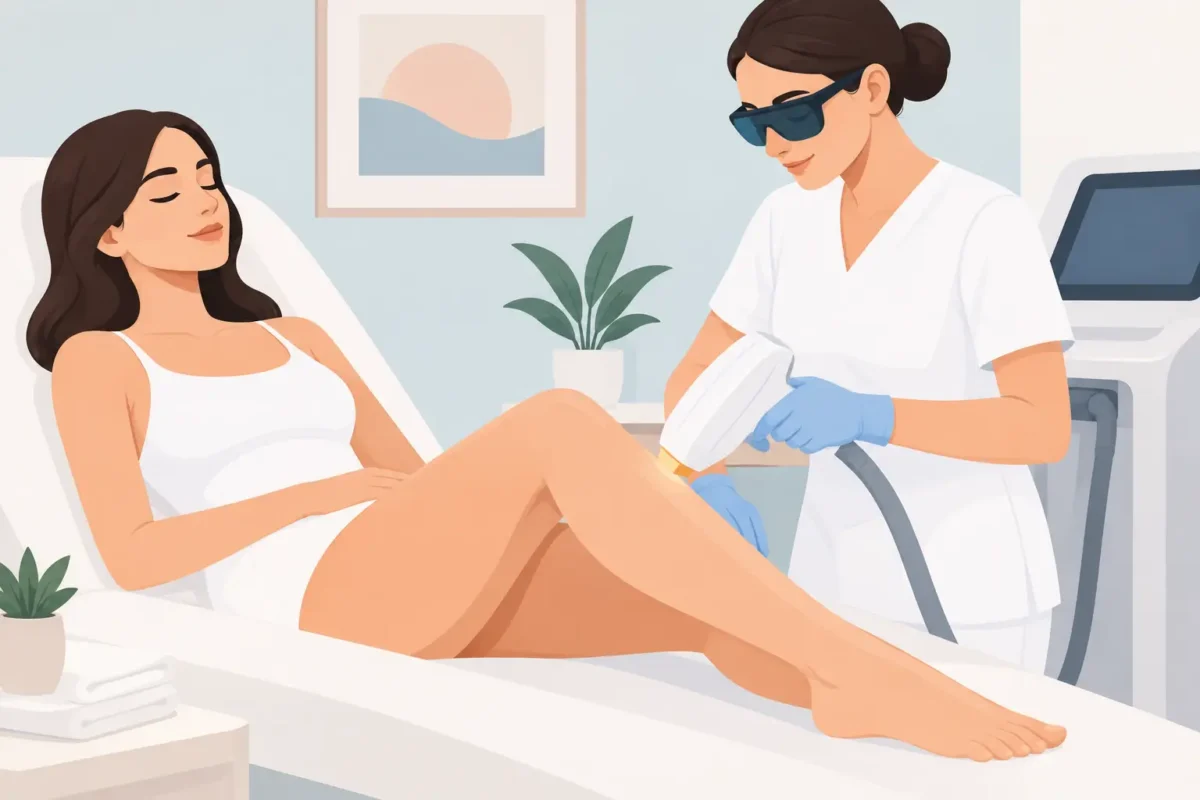
The first laser pulse is usually the moment people remember most. Does laser hair removal hurt? For most clients, it feels more like a quick snap of a warm rubber band against the skin than a prolonged painful experience. The sensation is brief, and modern laser systems are designed with cooling technology that helps make treatment far more comfortable than many people expect.
That said, comfort is personal. Your treatment area, hair texture, skin sensitivity, and the settings needed to treat your hair effectively all play a role. A professional consultation helps set realistic expectations and create a plan that prioritizes both visible results and your comfort.
Does Laser Hair Removal Hurt More in Certain Areas?
Yes. Areas with denser hair, thinner skin, or more nerve endings can feel more sensitive. The upper lip, bikini area, underarms, ankles, and shins are common examples. A small area like the upper lip is treated quickly, so even though the pulses may feel sharper, the appointment itself is often very short.
Larger areas such as the legs, back, or arms may be less intense pulse by pulse, but treatment takes longer because there is more skin to cover. Many clients find the feeling manageable because each pulse is over in a fraction of a second.
Hair can also affect the sensation. Dark, coarse hair often absorbs more laser energy than fine hair because the laser targets pigment in the hair follicle. This can create a more noticeable snap, particularly during early sessions when there is more active hair growth to treat. As hair becomes finer and less dense over a treatment series, many people find appointments more comfortable.
What Laser Hair Removal Actually Feels Like
Laser hair removal is not typically described as relaxing in the way a facial or massage might be. It is a focused clinical treatment, and you may notice heat, quick pinches, or a light stinging sensation as the laser targets follicles.
The important distinction is timing. The feeling does not linger for long. Most people experience a quick pulse, followed by cooling, then move on to the next area. After treatment, the skin may feel warm or look slightly pink, similar to mild sun exposure. This response generally settles within hours, though sensitive areas can remain a little tender longer.
A qualified practitioner will check in throughout the appointment. If the treatment feels too intense, settings and techniques can be adjusted appropriately. Effective treatment should be tailored, not endured.
Why Cooling Makes Such a Difference
Modern laser devices often use built-in cooling before, during, or after each pulse. Cooling protects the skin’s surface while the laser energy works beneath it at the follicle. It can significantly reduce the feeling of heat and make each pulse easier to tolerate.
Some providers may also use chilled air or other comfort measures depending on the treatment area and technology. These details matter. Advanced equipment is not only about speed and results – it also helps create a more comfortable client experience.
What Affects Your Comfort During Treatment?
There is no single answer that applies to every client. A few factors can make laser hair removal feel easier or more noticeable from one appointment to the next.
Your menstrual cycle may increase skin sensitivity, especially for bikini or underarm treatments. If you know you are more sensitive during a certain time of the month, consider scheduling around it when possible.
Recent sun exposure can also change how your skin responds. Tanned or irritated skin is not ideal for laser treatment, both for comfort and safety. Following your provider’s pre-treatment instructions helps protect your skin and allows them to use settings that are appropriate for your goals.
Caffeine can make some people feel more alert or sensitive, so limiting coffee, energy drinks, and pre-workout beverages right before an appointment may help. Stress and poor sleep can have a similar effect. Arriving hydrated, well-rested, and with questions answered can make the session feel much more manageable.
Your provider’s experience is another major factor. Laser hair removal is not a one-setting service. Safe, effective treatment requires an understanding of skin tone, hair characteristics, medical history, and the laser technology being used. The right treatment parameters help balance comfort with meaningful follicle reduction.
How to Make Laser Hair Removal More Comfortable
Preparation is simple, but it has a real impact. Shave the treatment area as directed, usually the day before or on the day of your appointment. Shaving leaves the follicle in place for the laser to target while avoiding surface hair that can hold heat and create extra discomfort.
Avoid waxing, tweezing, threading, or using depilatory creams in the weeks before treatment unless your provider gives different instructions. These methods remove the root, which means there is less for the laser to target.
On appointment day, arrive with clean skin. Skip lotions, oils, deodorant, makeup, perfume, and self-tanner on the area being treated. If you are considering an over-the-counter pain reliever, ask your treatment provider first. Not every option is suitable for every person or procedure.
Afterward, treat the skin gently. Avoid hot showers, saunas, intense workouts, and direct heat for the period recommended by your provider. A cool compress and a simple, fragrance-free moisturizer can be soothing if the skin feels warm. You should also use sun protection consistently, particularly on exposed areas.
Is Laser Hair Removal More Painful Than Waxing?
For many clients, laser hair removal is more comfortable than waxing over time. Waxing pulls many hairs out at once and must be repeated indefinitely as long as you want smooth skin. Laser treatment involves quick pulses of energy and is intended to reduce hair growth progressively over a series of appointments.
The comparison is not exact. Waxing discomfort is a strong pull that can leave skin tender, while laser treatment feels more like individual quick snaps with heat. Some people prefer one sensation over the other. However, clients often appreciate that laser hair removal can reduce the need for repeated shaving, waxing, ingrown-hair management, and last-minute grooming.
When Should You Tell Your Provider Something Feels Wrong?
Brief heat, redness, and mild sensitivity can be normal after laser hair removal. Sharp, escalating pain, significant swelling, blistering, or discomfort that does not improve should be reported to your provider promptly. Do not try to push through an unusually painful treatment session.
Your consultation is the time to mention medications, recent tanning, active skin irritation, a history of cold sores for facial treatments, pregnancy status, or any medical condition that may affect treatment planning. Clear communication helps your provider determine whether treatment should proceed, be adjusted, or be postponed.
Laser hair removal works best when it is approached as a personalized series rather than a one-time appointment. Hair grows in cycles, and laser energy is most effective when follicles are in an active growth phase. Several sessions, spaced according to your treatment plan, are usually needed for the smoothest long-term reduction.
At Bloom Laser Clinic, treatment planning begins with understanding your skin, hair, and comfort level – so you can pursue smoother skin with confidence, not anxiety. A consultation is the best place to ask exactly how a specific area may feel and what can be done to make your experience as comfortable as possible.