


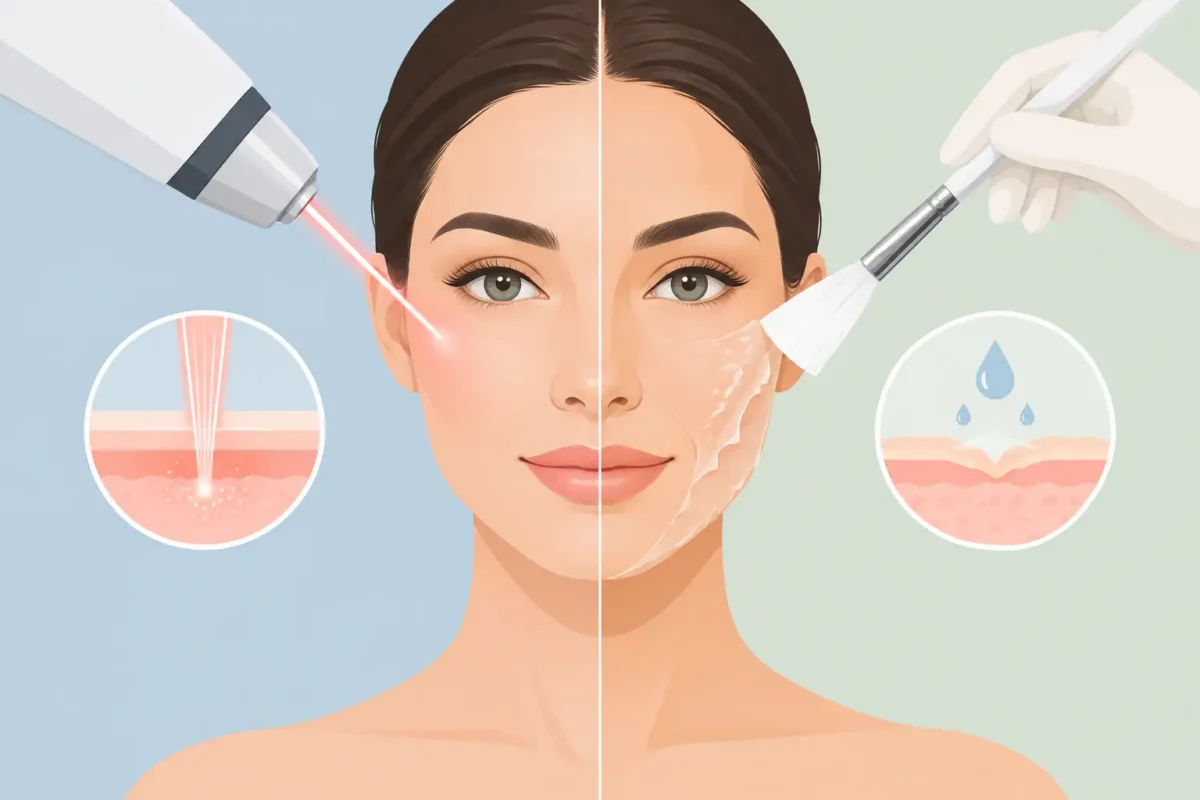
A brighter, smoother complexion should not require guessing which treatment fits your skin. When weighing a laser peel versus chemical peel, the better choice depends on the concern you want to treat, your skin tone and sensitivity, the downtime you can manage, and how quickly you want to see change. Both treatments refresh the skin, but they do so in very different ways.
A consultation is where the comparison becomes personal. Acne congestion, sun spots, fine lines, melasma, enlarged pores, and rough texture may all look like reasons for a “peel,” yet they do not respond best to the same approach. Smart skin care starts with an accurate assessment, not a one-size-fits-all treatment.
Laser Peel Versus Chemical Peel: The Core Difference
A chemical peel uses a carefully selected solution to exfoliate the outer layers of skin. Depending on its ingredients and strength, it can be superficial, medium depth, or deep. Common peeling agents include alpha hydroxy acids, beta hydroxy acids, trichloroacetic acid, and blends designed for specific concerns. As treated skin sheds and renews, the complexion can look clearer, smoother, and more even.
A laser peel uses controlled laser energy rather than a topical acid solution. The term can describe several treatments, so the technology matters. A gentle Spectra laser peel, sometimes called a carbon or Hollywood Peel when paired with a carbon lotion, targets surface debris, oil, and pigmentation while delivering heat into the skin. Other laser resurfacing treatments may work more deeply to stimulate collagen and improve lines or scars.
That distinction matters because “laser peel” is not a single standardized treatment. Ask what laser is being used, what it is intended to treat, and what recovery is realistic for your skin.
What Each Treatment Can Improve
Chemical peels are especially versatile for dullness, uneven tone, superficial discoloration, active breakouts, post-acne marks, and texture. A light peel can be a useful option before an event when the goal is fresh-looking skin with limited recovery. A series of carefully spaced treatments can build on those results over time.
Laser peels can be an excellent choice for congested pores, excess oil, mild acne, uneven pigment, and a lackluster complexion. Spectra-based treatments are often valued for their ability to create a polished glow with minimal interruption to daily life. Because laser energy can be precisely adjusted, it can also be part of a broader plan for pigmentation, redness, acne scarring, or collagen support.
For deeper acne scars, pronounced wrinkles, or more extensive sun damage, neither a light chemical peel nor a gentle laser peel may be enough on its own. A provider may recommend a more intensive resurfacing treatment, a targeted laser protocol, microneedling, injectables, or a combination plan. Visible change comes from matching the method to the depth of the concern.
Pigmentation and melasma need a careful plan
Dark spots are not all the same. Sun spots, post-inflammatory marks, and melasma can look similar in a mirror, but their triggers and treatment needs differ. Heat can aggravate melasma in some people, while certain peel formulations may also cause irritation that leads to more pigment if the skin is not properly prepared.
This does not mean laser or chemical treatments are automatically off limits. It means treatment settings, product selection, sun protection, and timing should be chosen thoughtfully. For clients prone to hyperpigmentation or with deeper skin tones, professional evaluation is particularly valuable.
Downtime, Comfort, and the Treatment Experience
Downtime is often the deciding factor. With a superficial chemical peel, you may experience temporary tightness, redness, dryness, and light flaking for several days. Some people peel visibly, while others simply notice a dry, slightly rough texture. Medium and deep peels require more recovery and are not casual lunch-break treatments.
A gentle laser peel may leave the skin pink or warm immediately afterward, much like a mild sunburn, but many clients return to normal activities quickly. Mild dryness or flaking can still occur. More aggressive laser resurfacing has a very different recovery profile, with greater redness, swelling, and aftercare needs. The phrase “laser peel” should never be treated as a guarantee of zero downtime.
Comfort varies as well. Chemical peels commonly create tingling, warmth, or stinging as the solution is active. Laser treatments can feel like quick snaps of heat against the skin. Topical numbing may be used for some laser procedures, depending on the device and intensity. Your practitioner should explain what you are likely to feel before treatment begins and how they will keep you comfortable.
Results: Immediate Glow or Gradual Renewal?
A superficial chemical peel can reveal brighter-looking skin once initial dryness settles. For concerns such as recurring acne, uneven texture, or discoloration, a series often produces a more meaningful improvement than a single appointment. Results also depend on consistent home care and avoiding unnecessary sun exposure.
With a gentle laser peel, many people notice a cleaner, more refined look shortly after treatment. Improvements in oiliness, pores, and overall radiance may continue with repeat sessions. Treatments designed to stimulate collagen usually take longer to show their full effect because the skin needs time to remodel.
Neither option should be sold as a permanent fix. New sun exposure, hormonal changes, inflammation, and the natural aging process can all affect the skin. A realistic maintenance schedule and daily broad-spectrum sunscreen protect the investment you make in professional care.
Who May Be Better Suited to Each Option?
A chemical peel may be the better fit if your primary goal is controlled exfoliation for acne, surface texture, dullness, or mild discoloration. It can also be a strong choice when a provider wants to use a specific formulation to address your skin’s current condition.
A laser peel may make more sense if you want a low-downtime approach to pore congestion, oil, superficial pigment, and a refreshed complexion. It can be particularly appealing for clients who prefer a technology-based treatment and want precise adjustments based on their response.
Your recent skin history is just as relevant as your goals. Active infection, open lesions, a sunburn, certain medications, recent isotretinoin use, pregnancy or breastfeeding considerations, a history of cold sores, and a tendency toward scarring can change what is appropriate. Be candid about your health history, skin-care products, and previous reactions to procedures.
The best choice is sometimes a sequence, not a single service
Skin does not always need one hero treatment. A provider may recommend calming active acne before addressing marks, preparing pigment-prone skin with home care before a peel, or alternating treatments at safe intervals. Combining procedures without a plan can create irritation, so timing matters as much as treatment selection.
At Bloom Laser Clinic, a personalized assessment can help distinguish between a gentle Spectra laser peel, a chemical exfoliation treatment, or another non-surgical option that better serves your goals. The focus should be healthy-looking skin and measurable improvement, not choosing the trendiest treatment.
How to Prepare and Protect Your Results
In the days before either procedure, your provider may ask you to pause retinoids, exfoliating acids, scrubs, or other potentially irritating products. Do not wax, pick, or use aggressive at-home treatments on the area unless you have been advised to do so. Arrive with clean skin and disclose every product and medication you use.
Afterward, keep your routine gentle. Use a mild cleanser, a simple moisturizer, and broad-spectrum sunscreen. Avoid heat, intense exercise, hot tubs, direct sun, and exfoliation for the period your provider recommends. Do not pull at peeling skin. Allowing the skin barrier to recover is part of the treatment, not an optional extra.
The most confidence-building choice is the one that respects your skin’s needs, your schedule, and your long-term goals. A thoughtful consultation can turn the laser peel versus chemical peel question into a treatment plan that helps you feel beautiful in your own skin.