


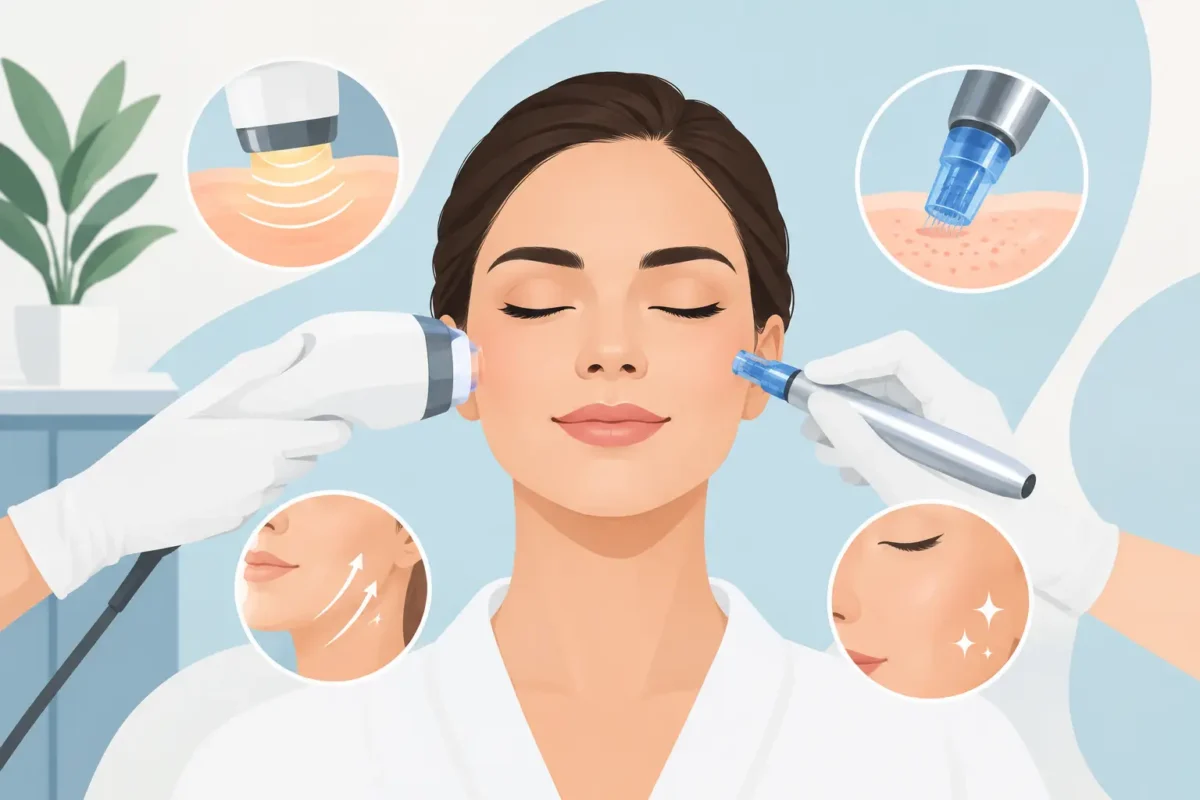
A dull complexion, stubborn redness, acne scarring, or early loss of facial firmness can change how you feel when you look in the mirror. Noninvasive facial procedures offer a practical way to address those concerns without surgical incisions, general anesthesia, or a lengthy recovery. The right treatment is not about changing your face. It is about helping your skin look clearer, firmer, smoother, and more refreshed.
For many people, the appeal is simple: visible improvement that fits into real life. But “noninvasive” does not mean every procedure is interchangeable. Laser treatments, HIFU skin tightening, injectables, and corrective skin therapies work in different ways, target different concerns, and have different timelines for results. A thoughtful consultation is where smart skin care begins.
What Counts as a Noninvasive Facial Procedure?
Noninvasive treatments improve the appearance of the skin and facial contours without surgery. Most involve energy-based technology, medical-grade skin treatments, or precisely placed injectables. They may create temporary redness, warmth, swelling, or flaking, depending on the procedure, but they do not require surgical cutting or the recovery associated with a facelift.
Some treatments work at the skin’s surface to improve tone and texture. Others send controlled energy below the surface to support collagen production or target pigment, blood vessels, and acne-related inflammation. Injectable treatments such as neuromodulators and dermal fillers are often grouped into nonsurgical facial rejuvenation because they can soften expression lines or restore volume without an operation.
The best choice depends on what you want to improve. Fine lines, deep folds, sagging along the jawline, melasma, enlarged pores, facial veins, and acne scars are not the same concern, so they should not be treated with a one-size-fits-all plan.
Noninvasive Facial Procedures for Common Concerns
Skin laxity and early signs of aging
When the lower face, cheeks, or neck start to look less defined, skin tightening can be an excellent nonsurgical option. HIFU, or high-intensity focused ultrasound, delivers focused energy beneath the skin to encourage the body’s natural collagen response. It is often chosen by clients who want gradual lifting and firmer-looking skin without the downtime of surgery.
HIFU is not a substitute for a surgical facelift when there is significant loose skin or pronounced jowling. Its strength is subtle, natural-looking refinement. Some clients see an early change, while collagen remodeling continues over the following weeks and months. Results vary with age, skin quality, and the degree of laxity.
For dynamic lines caused by repeated facial movement, neuromodulator injections can soften the appearance of forehead lines, frown lines, and crow’s feet. For volume loss around the cheeks, lips, or lower face, dermal fillers may be considered. These treatments require skilled assessment because balance matters more than simply adding volume.
Sun damage, pigmentation, and uneven tone
Brown spots, freckles, patchy pigmentation, and an uneven complexion can make skin look older than it feels. Laser-based treatments can target unwanted pigment while supporting a clearer, more even appearance. Spectra laser treatments and laser peels are often selected for concerns such as sun damage, enlarged pores, dullness, and certain forms of hyperpigmentation.
Melasma requires particular care. It can be triggered or worsened by heat, hormones, sun exposure, and irritation, so aggressive treatment is not always the best treatment. A personalized plan may combine appropriate laser settings with skin care guidance and disciplined sun protection. The goal is to manage the condition thoughtfully, not chase a quick fix that causes rebound pigmentation.
A Hollywood Peel can be a popular option when the goal is a fresher-looking complexion with minimal interruption to your schedule. By pairing carbon lotion with laser energy, it can help refine the look of pores, oiliness, surface texture, and brightness. It is often used as part of ongoing skin maintenance rather than a single dramatic correction.
Acne scars, rough texture, and visible pores
Acne may be temporary, but the marks it leaves behind can remain long after breakouts have settled. Scar treatment begins with identifying the type of scarring. Shallow textural scars, discoloration, active acne, and deeper indented scars each respond differently.
Laser treatments can help encourage healthier-looking skin renewal and improve the appearance of uneven texture over a series of sessions. Progress is usually gradual. That is a positive sign of a treatment plan designed around controlled improvement rather than excessive trauma to the skin.
Active acne may also need attention before scar-focused work begins. Treating inflammation, excess oil, congestion, and post-acne redness can create a better foundation for later corrective procedures. Patience is part of the process, especially for clients who have spent years trying products that promised more than they delivered.
Redness, rosacea, and facial veins
Persistent redness is not always just sensitive skin. Rosacea, broken capillaries, and visible facial veins can create a flushed appearance that makeup only partially conceals. Vascular laser treatments can selectively target visible vessels and redness while leaving surrounding tissue intact.
Rosacea tends to be a long-term condition, so the goal is often reduction and management rather than a permanent cure. Trigger awareness still matters. Heat, alcohol, spicy foods, stress, and certain skin care ingredients can contribute to flare-ups for some people. Combining professional treatment with a gentle home routine can make the difference between short-lived improvement and more stable results.
How to Choose the Right Treatment Plan
A good aesthetic plan starts with a clear conversation, not a menu of procedures. During a consultation, your provider should consider your skin tone, medical history, current medications, history of cold sores, sensitivity level, sun exposure, and prior cosmetic treatments. These details affect both safety and the treatment settings that may be appropriate for you.
Be honest about your goals. “I want to look less tired” is a useful starting point, but your provider can help identify whether that appearance comes from pigment, under-eye hollowness, volume loss, texture, expression lines, or a combination of factors. Many of the best outcomes come from treating the cause rather than chasing the symptom.
Ask what kind of result is realistic, how many sessions may be needed, and what recovery to expect. Some procedures are convenient enough to schedule during a busy week, while others may involve several days of redness or light peeling. A treatment with little downtime may require more sessions. A stronger corrective treatment may offer more noticeable change but demand more careful aftercare. There is no universally best option, only the right balance for your skin and schedule.
What Results and Recovery Really Look Like
The most satisfying results often look like you on a very good day. Your skin may appear more even, your facial contours more rested, or your texture smoother without anyone being able to identify exactly what changed.
Immediate results are possible with certain injectables and complexion-focused treatments, but collagen-based improvements take time. Skin tightening and scar correction are biological processes, not overnight transformations. Expect your provider to explain the timeline clearly and recommend a series when a single session is unlikely to meet your goals.
Aftercare protects your investment. Depending on your procedure, you may need to avoid direct sun, intense exercise, heat exposure, exfoliating acids, retinoids, or makeup for a short period. Daily broad-spectrum sunscreen is especially essential after pigmentation and laser treatments. It helps preserve results and reduces the risk of unwanted discoloration.
Why Clinical Experience Matters
Advanced technology is only as effective as the person using it. The same laser can produce very different outcomes based on skin assessment, settings, technique, and post-treatment guidance. This is especially true for deeper skin tones, melasma-prone skin, rosacea, and anyone with a history of pigmentation changes.
At Bloom Laser Clinic, treatment planning is built around physician-led expertise, proven technology, and a realistic understanding of what your skin needs. That means recommending a procedure because it fits your concerns, not because it is the latest trend.
Noninvasive facial procedures can be a powerful option when your goal is refined, natural-looking change without putting your life on hold. Start with an informed consultation, choose a plan that respects your skin, and give the process enough time to reveal the confidence you deserve.