


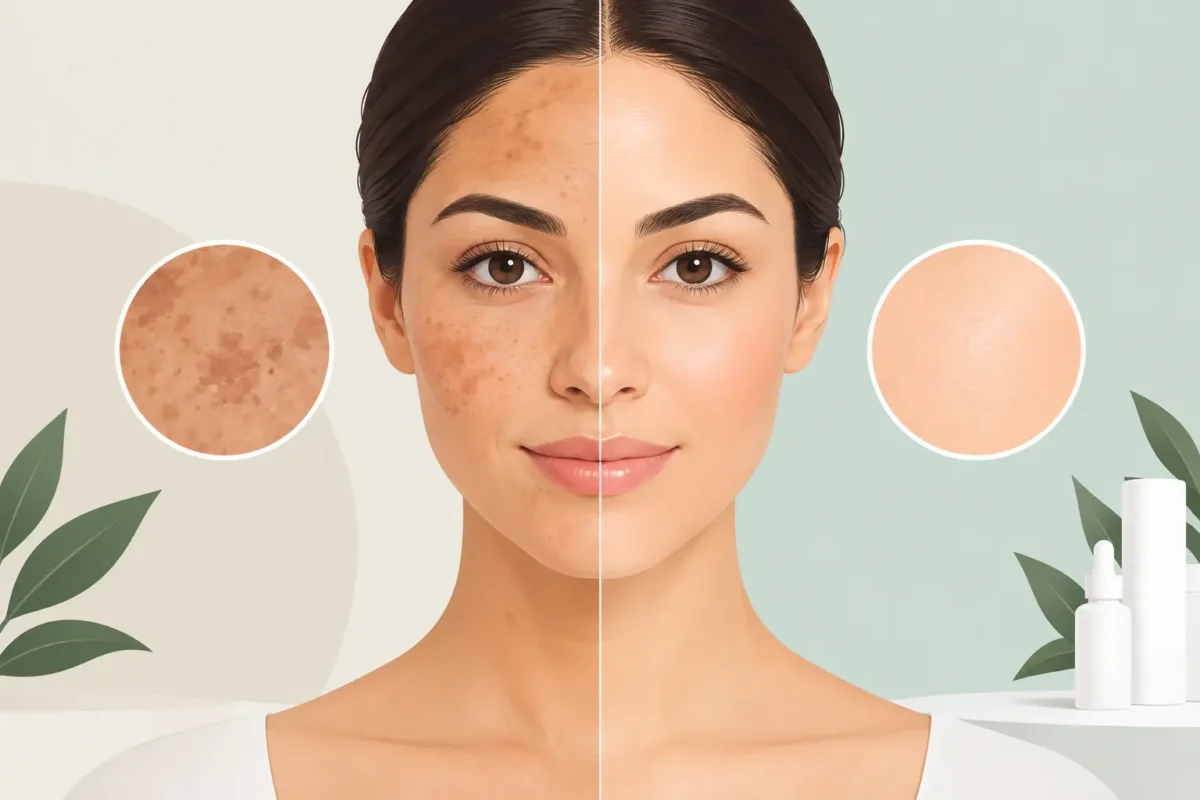
A dark spot can feel far more visible to you than it does to anyone else, especially when it sits on the cheekbones, forehead, upper lip, or hands. But pigmentation treatment results are rarely about making skin look filtered or featureless. The goal is healthier-looking skin with a clearer, more even tone – while respecting your skin type, the cause of discoloration, and the time skin needs to respond.
For sun spots, post-acne marks, melasma, and uneven tone, the most satisfying changes tend to happen gradually. Understanding that process before treatment helps you recognize real progress and make choices that protect your investment.
What Causes Uneven Pigmentation?
Pigment is produced by melanocytes, the cells that create melanin. Melanin helps protect skin from ultraviolet exposure, but its production can become uneven after sun exposure, inflammation, hormonal shifts, acne, injury, or certain medications. The result may be freckles, age spots, brown patches, or lingering marks after a breakout has healed.
Not every brown mark behaves the same way. A clearly defined sun spot near the skin’s surface may respond differently than melasma, which is often influenced by hormones, heat, and visible light as well as ultraviolet exposure. Post-inflammatory hyperpigmentation can also require a careful approach, particularly in deeper skin tones that are more prone to pigment changes after irritation.
That distinction matters. Effective care begins with identifying what you are treating, not simply choosing the strongest possible procedure.
Pigmentation Treatment Results: A Realistic Timeline
Many clients expect discoloration to disappear immediately after a laser session or peel. In reality, early changes can look temporary before the skin reveals its improvement.
After a targeted laser treatment, individual sun spots may darken for several days. This can be a normal part of the process: pigment rises toward the surface, then gradually flakes away as the skin renews itself. Mild redness, dryness, or a slightly rough texture can occur during this period. Picking or scrubbing at treated skin can interfere with recovery and increase the risk of unwanted marks.
Within one to two weeks, many people begin to see a brighter overall tone and softer contrast between darker areas and surrounding skin. More established spots may need a series of sessions. Melasma often improves in a more measured way and may require ongoing management rather than a one-time correction.
Most treatment plans are evaluated over several weeks, not a few days. Collagen-supporting treatments, laser peels, and medically selected skincare can continue to enhance the complexion as skin renewal progresses. Progress photographs taken in consistent lighting are often more useful than judging your skin in a bathroom mirror every morning.
The Right Treatment Depends on the Pigment
A personalized consultation is the safest way to determine whether laser treatment, a chemical peel, topical skincare, or a combination approach makes sense. At Bloom Laser Clinic, treatment planning is centered on the skin concern in front of you, rather than a one-size-fits-all protocol.
Laser-based options can target excess pigment with precision and may be well suited to visible sun damage, age spots, freckles, and certain post-acne marks. A Spectra laser peel or Hollywood Peel may also support a brighter, smoother-looking complexion while addressing dullness, pores, and uneven tone. Depending on the concern, a practitioner may recommend a series of gentler sessions rather than one aggressive treatment.
For melasma, the plan often needs extra care. Heat and inflammation can trigger recurrence for some people, so treatment may emphasize conservative laser settings, pigment-regulating skincare, sun protection, and maintenance visits. A treatment that works beautifully for isolated sun spots is not automatically the best choice for melasma.
Chemical exfoliation and professional skincare can also play an important role. These approaches help encourage regular cell turnover and can support laser results between appointments. However, overusing active products or layering too many exfoliants can irritate skin and make discoloration more noticeable. More is not always better.
What Makes Results More Noticeable?
Treatment technology matters, but aftercare and everyday habits have a major effect on how well pigmentation fades and how long the improvement lasts. The skin responds best when it is protected, hydrated, and not pushed into unnecessary inflammation.
Sun protection is the non-negotiable step. Apply a broad-spectrum sunscreen daily, including on cloudy days and when you are indoors near windows. Reapply when spending time outside, and use a hat or seek shade when practical. For melasma-prone skin, tinted mineral sunscreen can be especially useful because it may also help shield the skin from visible light.
Follow the aftercare instructions given for your specific procedure. That often means avoiding direct sun, hot yoga, saunas, intense workouts, retinoids, exfoliating acids, and scrubs for a short period. These restrictions are temporary, but they give the skin a better opportunity to recover evenly.
Consistency with a prescribed home routine also matters. The best routine is not necessarily the longest one. A gentle cleanser, appropriate moisturizer, sunscreen, and carefully selected corrective products can be more effective than a crowded shelf of strong products that compete with one another.
Why Some Spots Return
Pigmentation can return because the underlying trigger is still present. New sun exposure can stimulate melanin production, hormones can influence melasma, and acne can leave fresh dark marks after inflammation. This is not necessarily a sign that your prior treatment failed. It is a reminder that pigmentation management is often a partnership between in-clinic treatment and daily prevention.
Some discoloration is also deeper or more complex than it appears. It may lighten significantly without disappearing completely. A responsible provider should be clear about this possibility rather than promise flawless skin. The most meaningful outcome is often a complexion that looks more balanced, refreshed, and easier to feel confident in without relying on heavy coverage.
Maintenance treatments may be recommended for concerns with a tendency to recur, particularly melasma or ongoing sun damage. The frequency depends on your skin, lifestyle, response to treatment, and goals. For many clients, maintaining a clear-looking complexion requires less time and treatment than correcting years of accumulated discoloration.
Questions to Ask Before You Begin
Before booking treatment, ask what type of pigmentation is suspected, how many sessions may be needed, and what recovery you can expect. It is also wise to discuss your skin tone, history of melasma, recent tanning or sun exposure, current skincare products, medications, and any past reaction to lasers or peels.
Be honest about upcoming vacations, outdoor work, and events. Timing matters. If you are preparing for a wedding, photos, or a special occasion, begin your consultation well ahead of the date so there is time for a thoughtful plan and full recovery.
A qualified practitioner should also assess any spot that is new, changing, unusually dark, raised, bleeding, or irregular in shape before cosmetic treatment. Cosmetic procedures are not a substitute for medical evaluation of suspicious lesions.
Clearer Skin Starts With a Better Plan
The best pigmentation treatment results are not created by chasing a dramatic overnight change. They come from accurate assessment, appropriate technology, skilled treatment, and consistent protection afterward. Whether you are bothered by sun spots, post-acne marks, or patchy melasma, a tailored plan can help move your skin toward a more even, luminous appearance.
Give your skin time to respond, protect it carefully, and let each improvement build on the last. That is how visible change becomes lasting confidence.