


Persistent heel pain can change the way you move through an entire day. The first steps out of bed hurt, long walks feel less appealing, and even a favorite workout can become something to manage rather than enjoy. This shockwave therapy review looks at what the treatment actually feels like, where it may help, and how to decide whether it deserves a place in your pain-management plan.
Shockwave therapy is a non-surgical treatment that delivers targeted acoustic energy to an area of chronic musculoskeletal pain. Despite the name, it is not an electric shock. The device creates pressure waves that travel through the skin into underlying tissue. In the right clinical setting, those waves may support circulation and the body’s natural repair response while helping reduce pain sensitivity in a stubborn area.
It is commonly considered for conditions that have not improved enough with rest, supportive footwear, exercise modification, or other conservative care. Plantar fasciitis, Achilles tendon pain, tennis elbow, shoulder tendinopathy, and certain chronic muscle or tendon complaints are frequent reasons people ask about it.
Shockwave Therapy Review: The Realistic Benefits
The strongest reason to consider shockwave therapy is not a promise of overnight relief. It is the possibility of making progress when a painful tendon or fascia problem has lingered for months and is limiting everyday life.
Many clients appreciate that there are no incisions, no anesthesia, and usually no required downtime. A session is relatively short, and most people can return to normal daily activities afterward. For someone who wants a modern, non-invasive option before considering more invasive measures, that can be a meaningful advantage.
Results are gradual. Some people notice a change after the first one or two sessions, while others do not feel meaningful improvement until several weeks into a treatment plan. That timing makes sense: the purpose is not simply to mask discomfort for a few hours, but to encourage a healthier response in tissue that has been slow to settle.
The outcome also depends on the diagnosis. Heel pain, for example, is not always plantar fasciitis. It can stem from nerve irritation, arthritis, a stress injury, or another issue that needs a different approach. A careful assessment matters more than choosing a treatment because it is popular.
What the Research and Real-World Experience Suggest
Shockwave therapy has been used for years in orthopedic and rehabilitation settings, particularly for chronic tendon-related pain. Evidence is most encouraging for select conditions such as plantar fasciitis and some forms of tendinopathy, especially when symptoms have persisted despite initial care.
Still, no honest review should present it as a universal fix. Research protocols vary by device type, energy level, number of sessions, and condition being treated. Individual recovery also varies with activity level, biomechanics, overall health, and how long the pain has been present. The best results often come when treatment is paired with a tailored plan that may include stretching, strengthening, footwear changes, or activity adjustments.
What Does a Shockwave Session Feel Like?
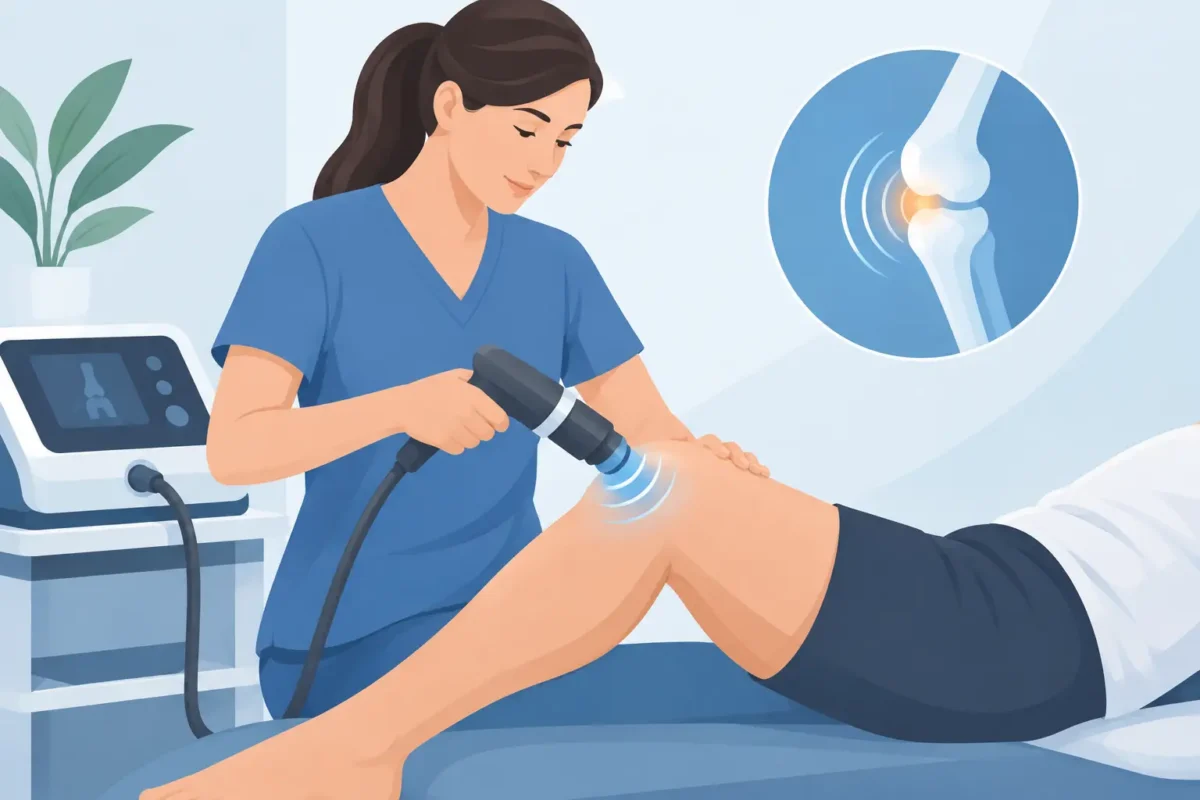
Before treatment, the practitioner identifies the painful area and applies gel to help transmit the acoustic waves. A handheld applicator is then moved across the target tissue. You may feel tapping, pulsing, or firm pressure that becomes more noticeable over sensitive points.
Most clients describe the sensation as uncomfortable but manageable, rather than sharply painful. Intensity can be adjusted during the session, so speak up if the treatment feels too strong. There is no prize for tolerating more than you need to. A skilled provider uses an appropriate setting for your condition and comfort while still delivering an effective treatment.
Afterward, the area may feel tender, warm, or mildly sore for a day or two. Some clients experience temporary redness or minor bruising. These effects generally settle on their own. Avoiding aggressive impact activity immediately after a session may be recommended, depending on the body part treated and your specific condition.
How Many Treatments Will You Need?
A typical plan often includes several sessions spaced about a week apart, but there is no one-size-fits-all number. The condition, its severity, the device used, and your response to earlier sessions all influence the recommendation.
Chronic plantar fasciitis may require a different approach than an elbow tendon issue, for instance. It is also normal for a provider to reassess after a few appointments rather than committing you to an overly broad package before seeing how your body responds.
Ask what outcome is realistic for your starting point. For one person, success may mean returning to morning walks without limping. For another, it may mean completing a workout or standing through a work shift with far less discomfort. Clear goals make it easier to recognize meaningful improvement.
Who Is a Good Candidate for Shockwave Therapy?
The ideal candidate usually has a well-defined, persistent musculoskeletal concern that has not fully responded to simpler measures. Pain that has lasted for several months, is localized to a tendon or fascial area, and interferes with normal movement may be worth evaluating.
A consultation should include questions about your symptoms, health history, medications, and prior treatments. It should also address whether another assessment is needed before proceeding. Sudden severe pain, swelling, loss of function, numbness, fever, or an injury that may involve a fracture should be medically evaluated rather than treated as routine chronic soreness.
Shockwave therapy may not be appropriate for everyone. Pregnancy, a known bleeding disorder, certain medications that affect bleeding, active infection, cancer in the treatment area, or particular implanted devices can affect eligibility. Suitability depends on the treatment location and your medical history, so this is a conversation to have openly with a qualified clinician.
Questions Worth Asking Before You Book
A quality consultation should leave you with more than a price and a calendar date. Ask what diagnosis is being treated, what type of shockwave device is used, how many sessions are likely to be recommended, and what you should do between visits. It is also reasonable to ask how the provider will measure progress and when they would suggest a different approach if treatment is not helping.
Be cautious with claims that any pain problem can be solved in a single visit. Effective care is specific. It should be based on your symptoms, your activity demands, and the tissue being treated.
Is Shockwave Therapy Worth It?
For the right person, shockwave therapy can be a valuable middle ground between simply living with chronic pain and moving immediately toward invasive options. Its appeal is practical: treatments are brief, recovery is usually uncomplicated, and it can be integrated into a broader wellness plan without putting life on pause.
The trade-off is patience. You may need multiple sessions, your provider may recommend exercises or changes to your routine, and relief may build gradually rather than arrive on the treatment table. That is not a drawback unique to shockwave therapy. It reflects the reality of treating chronic tendon and soft-tissue concerns thoughtfully.
At Bloom Laser Clinic, the goal is to make advanced, non-surgical care feel approachable while keeping recommendations grounded in your individual needs. If pain has been keeping you from moving comfortably and confidently, a professional assessment can help clarify whether shockwave therapy is a sensible next step. The most useful treatment is the one that fits the source of your pain, your lifestyle, and the progress you want to feel in the weeks ahead.