


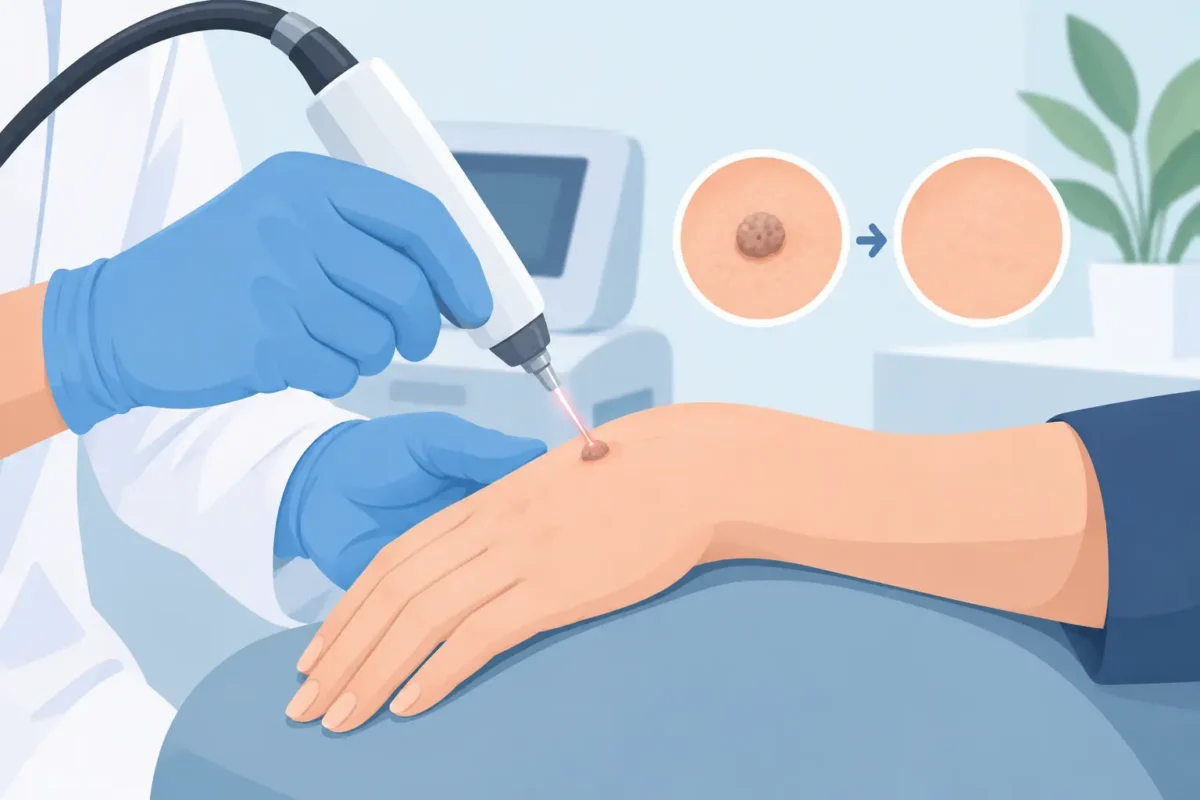
A wart may be small, but it can become a surprisingly persistent concern. When over-the-counter products have not worked, when a wart is painful, or when it sits in a highly visible area, wart removal with laser treatment can offer a precise, clinically guided alternative. The goal is not simply to remove the surface bump. It is to target the wart tissue while supporting healthy healing and minimizing unnecessary impact on the surrounding skin.
Warts are common, but they are not all alike. Their location, size, depth, and duration can affect which treatment approach makes the most sense. A professional consultation helps confirm that the spot is truly a wart and determines whether laser treatment is an appropriate next step.
What Is Wart Removal With Laser Treatment?
Warts are caused by strains of the human papillomavirus, or HPV, that enter the skin through tiny breaks. The virus prompts extra skin-cell growth, creating the rough, raised lesion many people recognize as a wart. They may appear on the hands, feet, knees, elbows, face, or other areas of the body.
Laser treatment uses focused light energy to address wart tissue with a high degree of accuracy. Depending on the type of laser and the characteristics of the wart, the energy may break down targeted tissue, seal off small blood vessels that help sustain the wart, or both. This is especially useful for warts that have resisted topical treatments, have returned after removal, or are difficult to treat because of their location.
Laser treatment is not necessarily the first option for every wart. Some small, new warts respond well to simpler treatments. But for persistent, multiple, or bothersome warts, a laser-based approach may be a practical option worth discussing with an experienced provider.
When Laser Wart Treatment May Be a Good Fit
The right treatment is based on your skin, the specific lesion, and your medical history. Laser removal may be considered when a wart has not improved with pharmacy treatments, is spreading, causes discomfort, or affects your confidence in a visible area.
Plantar warts on the soles of the feet are a common example. Because pressure from walking can push them inward, they may feel like stepping on a small stone. Warts around the nails can also be difficult to treat because they are close to delicate skin and may persist despite repeated home care.
Before proceeding, your practitioner should assess the area carefully. Not every raised or rough spot is a wart. Certain moles, skin tags, calluses, and other skin changes can look similar. If a spot has changed in color, shape, size, or behavior, it deserves a proper evaluation before cosmetic treatment.
What Happens During the Appointment?
A laser wart treatment appointment begins with an assessment of the treatment area and a discussion of your goals, prior treatments, medications, allergies, and health history. Your provider will explain the expected healing process, possible side effects, and whether one session or a series may be needed.
The skin is cleansed before treatment. Depending on the location and sensitivity of the wart, a topical numbing cream or local anesthetic may be used. You and your provider wear protective eyewear while the laser is in use.
During treatment, many clients describe a brief snapping, warming, or pinching sensation. Treatment time itself is often relatively short, although the full appointment includes consultation, preparation, and aftercare instructions. A larger, deeper, or clustered wart can require more time than a small isolated lesion.
Afterward, the area may look red, feel tender, or develop slight swelling. Some treated warts darken, crust, or form a small scab as the tissue responds and heals. These changes are generally part of the expected process, but your provider should tell you exactly what is normal for your treatment plan and when to contact the clinic.
Healing After Laser Wart Removal
Healing times vary by body area, laser settings, and the depth of the wart. Skin on the hands or face may heal differently than skin on the feet, where friction and pressure are harder to avoid. In many cases, the treated area gradually dries, sheds, and improves over the following days or weeks.
Keep the area clean and follow the specific instructions you receive. You may be advised to use a protective dressing for a period of time, particularly if the area is likely to rub against shoes or clothing. Avoid picking at crusting or scabbing. Removing it too early can delay healing and raise the chance of irritation or scarring.
Sun protection also matters when a treated area is exposed. Freshly healing skin can be more prone to temporary pigment changes. Protecting the area from direct sun helps support a more even recovery, especially for clients who are prone to dark marks after inflammation.
It is wise to avoid pools, hot tubs, and activities that create heavy friction until your provider confirms the skin is ready. If pain increases rather than improves, or if you notice spreading redness, drainage, fever, or another unexpected change, contact your provider promptly.
How Many Treatments Will You Need?
A single session may be enough for some warts, but it is not possible to promise that outcome in advance. Stubborn warts, deep plantar warts, and warts that have been present for a long time may need more than one treatment. The immune system also plays a role in how the body clears HPV-related tissue.
Recurrence can happen, even after a wart appears fully resolved. Laser treatment addresses the visible lesion, but HPV can remain in nearby skin for a time. That does not mean the treatment failed. It reflects the fact that warts are virus-related and can be unpredictable.
Your provider may recommend a follow-up assessment to monitor healing and decide whether additional treatment is beneficial. A tailored plan is more valuable than treating repeatedly without reassessing the skin.
Benefits and Trade-Offs to Consider
The main advantage of laser treatment is precision. It can focus energy on the wart while limiting treatment to the surrounding area. For clients who are frustrated by recurring or treatment-resistant warts, that targeted approach can be particularly appealing.
Still, laser removal is not a no-downtime treatment for everyone. Tenderness, redness, crusting, and temporary changes in skin color are possible. There is also a small risk of infection or scarring, as with many procedures that intentionally treat the skin. The risk can depend on the location, your skin type, your aftercare, and how aggressively the wart needs to be treated.
Cost is another consideration. Coverage varies, and treatment for a cosmetic concern may not be covered by insurance. During your consultation, ask about the anticipated number of sessions, healing expectations, and total investment so you can make an informed decision.
Reducing the Risk of Spreading Warts
Warts can spread through direct contact or by sharing items that touch the skin, such as razors, towels, socks, or footwear. They can also spread from one area of your own body to another. Avoid picking, shaving over, or biting around a wart, and keep it covered if it is likely to come into contact with others.
For plantar warts, wear sandals in public locker rooms, pool areas, and communal showers. Keep feet clean and dry, and avoid sharing shoes or socks. These habits cannot guarantee prevention, but they can reduce opportunities for the virus to spread.
Professional Care for a Concern That Will Not Go Away
A wart should not have to become a long-term source of discomfort or self-consciousness. At Bloom Laser Clinic, laser-based care is approached with the same focus on thoughtful assessment, advanced technology, and visible results that guides every skin treatment.
The best next step is a professional evaluation, especially if a lesion is painful, rapidly changing, bleeding, recurring, or uncertain. With the right diagnosis and a personalized treatment plan, you can move forward with clearer expectations and healthier-looking skin.