


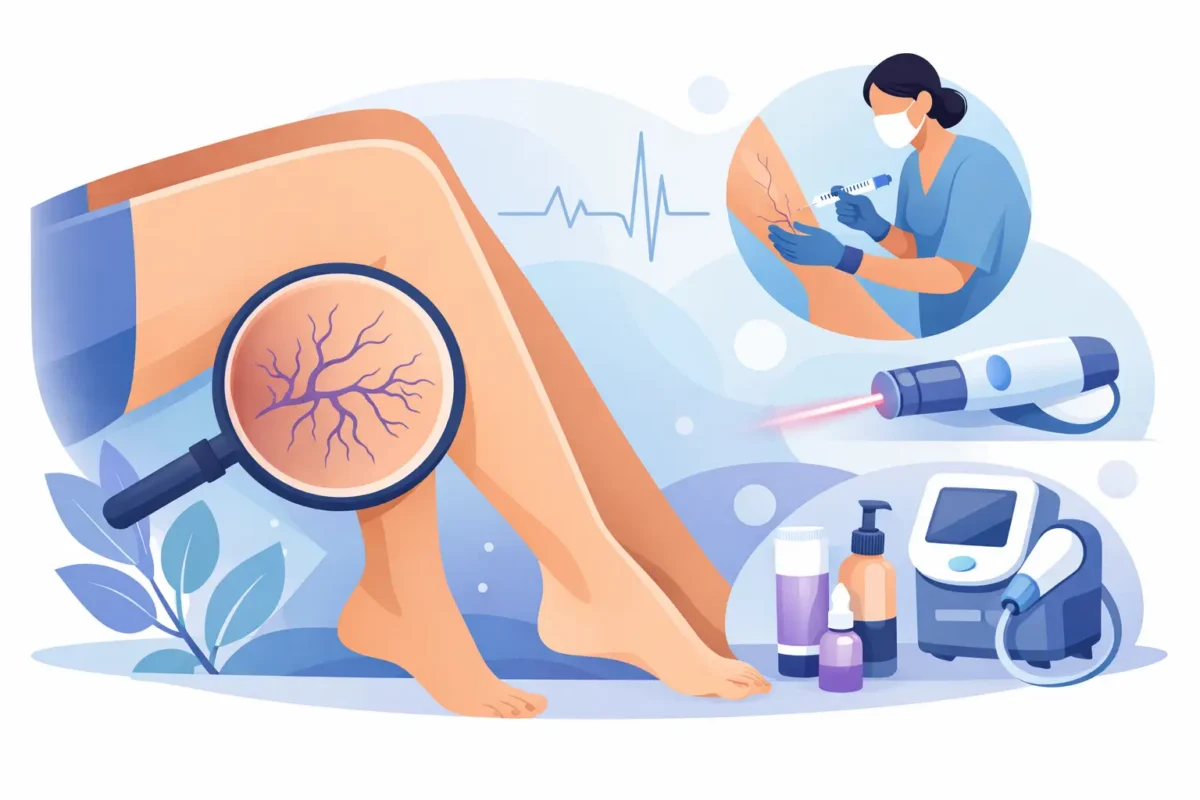
Those fine red, blue, or purple lines can make bare legs, shorts, and swimwear feel more complicated than they should. Spider veins are common, but that does not mean you have to simply live with their appearance. The best treatments for spider veins are professional procedures that target the unwanted vessels directly, with a treatment plan based on their size, depth, location, and the health of the surrounding circulation.
Spider veins are small surface blood vessels that become visible when they widen or weaken. They often appear on the legs, ankles, cheeks, or around the nose. Genetics, pregnancy, hormonal changes, prolonged standing or sitting, sun exposure, and aging can all play a role. While many are cosmetic, some visible leg veins may occur alongside symptoms that need medical evaluation, including swelling, aching, heaviness, itching, or skin changes.
Best Treatments for Spider Veins: Start With the Right Assessment
There is no single treatment that is right for every visible vein. A professional consultation is where results begin. Your provider should examine the area, ask about your health history and symptoms, and determine whether the vessels are best suited to laser treatment, sclerotherapy, or a combination approach.
This matters because spider veins on the face and spider veins on the legs often respond differently. Facial vessels tend to be smaller and closer to the surface, which can make laser-based treatment an excellent option. Leg veins may be fed by deeper veins, and treating only the visible branches without addressing an underlying circulation issue can limit the longevity of the result.
If you have sudden one-sided leg swelling, warmth, significant pain, an open sore, or a history of blood clots, seek medical care promptly rather than booking a cosmetic treatment first. A qualified provider can also advise whether a vascular assessment is appropriate before treatment.
Laser Vein Reduction for Small Facial and Leg Vessels
Laser vein reduction uses carefully selected light energy to heat the blood within a visible vessel. The vessel is damaged in a controlled way, then gradually absorbed by the body over time. The goal is to reduce the appearance of red, blue, or purple surface veins without surgery.
For small facial spider veins, laser treatment is often a preferred choice because it is precise and does not involve injections. It can be especially helpful for visible vessels around the nose, cheeks, and chin, including redness associated with rosacea. The sensation is commonly described as a quick snap of heat, and providers may use cooling measures to improve comfort.
On the legs, laser treatment may be useful for very fine vessels or areas that are difficult to inject. However, larger blue leg veins may not respond as efficiently as they would to sclerotherapy. Skin tone, vessel color, and the depth of the vein all influence the recommended laser settings and expected outcome.
After laser vein treatment, temporary redness, mild swelling, or a darkening of the treated vessel can occur. This is often part of the normal healing process. Sun protection is essential, particularly when treating facial veins, because recently treated skin is more vulnerable to pigmentation changes.
Sclerotherapy for Leg Spider Veins
Sclerotherapy has long been considered one of the most effective options for many leg spider veins. During this treatment, a trained medical provider injects a specialized solution into the targeted vein. The solution irritates the inner vein wall so it closes, allowing the body to gradually reroute blood through healthier vessels and absorb the treated vein.
The appointment is typically quick, and no surgery is required. Most clients return to normal daily activity soon afterward, although their provider may recommend walking and avoiding strenuous exercise, hot baths, or prolonged sun exposure for a short period. Compression stockings are often advised after treatment to support healing and optimize the result.
Results are not instant. Treated veins can appear darker or more noticeable before they fade, and it may take several weeks to see substantial improvement. Larger or more extensive areas often require more than one session. Sclerotherapy can provide excellent clearance, but new spider veins may develop later due to genetics, hormones, lifestyle factors, or untreated feeder veins.
Why Combination Treatment Can Deliver Better Results
Many people have more than one type of visible vessel. They may have clusters of fine red capillaries on the face, larger blue spider veins on the legs, and diffuse redness that requires a different approach. In these cases, combining treatments can be more effective than relying on one method alone.
For example, sclerotherapy may address larger leg vessels, while laser treatment refines tiny surface veins that remain. A provider may also space treatments apart to let the skin heal and accurately assess how each area is responding. This measured approach is often more cost-effective than overtreating in one appointment.
The best plan is not necessarily the fastest one. It is the plan that treats the right vessels with the right technology while protecting the health and appearance of your skin.
What About At-Home Creams and Devices?
Creams marketed for spider veins may moisturize the skin or temporarily improve its overall appearance, but they cannot close or remove established spider veins. Topical products do not reach the affected blood vessels deeply enough to produce the same result as laser therapy or sclerotherapy.
At-home light devices also come with limitations. They are usually less powerful and less precise than professional systems, and they may not be appropriate for every skin type or vein pattern. Improper use can lead to irritation, burns, or uneven pigment changes. When the goal is a visible, lasting improvement, professional evaluation is a safer investment.
Healthy habits can still support your results. Regular movement, avoiding long periods of sitting or standing when possible, elevating the legs, and wearing compression garments when recommended may help manage symptoms and reduce strain on leg veins. These measures do not erase existing spider veins, but they can be useful alongside clinical treatment.
What Results Can You Realistically Expect?
Professional spider vein treatments can significantly reduce the visibility of targeted vessels, but realistic expectations are part of a successful experience. Results develop gradually as the body clears the treated vein. Some vessels fade after one session, while others need a series of treatments for the most refined result.
No provider can promise that every vein will disappear completely or that new veins will never form. What they can offer is a personalized plan, honest guidance on likely outcomes, and technology chosen for your specific concern. Before-and-after photos, treatment history, and a clear discussion of recovery can help you make a confident decision.
At Bloom Laser Clinic, medically informed aesthetic care is designed to make advanced skin treatments feel approachable. Whether your concern is a few facial vessels or more noticeable spider veins on the legs, a professional consultation can clarify the most appropriate next step.
Clearer-looking skin is not about chasing perfection. It is about choosing care that helps you feel comfortable showing up exactly as you want to – in your favorite clothes, in your own skin, and with renewed confidence.