


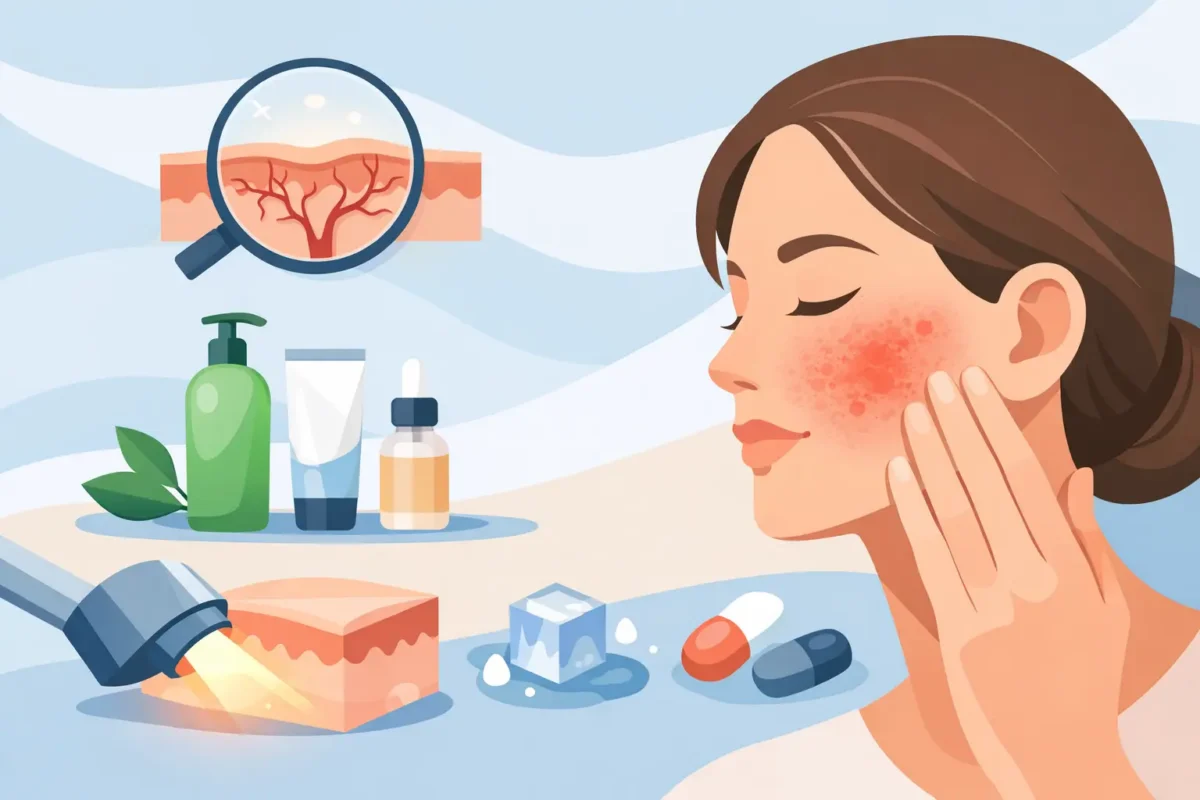
If your face seems to flare at the worst possible moments – after a workout, a glass of wine, a hot shower, or even a stressful day – rosacea redness can feel frustratingly hard to control. The best options for rosacea redness usually are not a single miracle fix. They are a smart combination of trigger management, barrier-friendly skincare, and, for many people, professional vascular treatments that target the redness more directly.
What actually helps rosacea redness?
Rosacea is not just sensitive skin. It is a chronic inflammatory condition that can show up as persistent redness, visible facial veins, flushing, bumps, and skin that reacts quickly to heat, products, or environmental changes. That matters because treatment works best when it matches the kind of rosacea you are dealing with.
For some people, the main problem is diffuse redness across the cheeks and nose. For others, it is broken capillaries, frequent flushing, or acne-like bumps on top of the redness. The right approach depends on which of those features is driving the concern. A cream that soothes irritation may help one person, while another will see the biggest change from a laser designed to reduce visible vessels.
This is where realistic expectations matter. Rosacea can be managed very successfully, but it usually needs ongoing care. The goal is calmer skin, fewer flares, and a more even-looking complexion – not pretending the condition never existed.
The best options for rosacea redness at home
Home care will not erase all redness, especially if visible vessels are already established, but it lays the foundation for every other treatment. If your skin barrier stays irritated, even excellent in-clinic treatments may not perform as well as they could.
The first priority is a gentle routine. A non-stripping cleanser, a bland moisturizer, and daily mineral sunscreen are often more helpful than a complicated shelf full of active ingredients. Rosacea-prone skin usually does better with fewer variables. Fragrance, harsh exfoliants, strong acids, scrubs, and overuse of retinoids can all make redness look worse if introduced too aggressively.
Sun protection deserves special attention. UV exposure is one of the most common rosacea triggers, and repeated exposure can keep baseline redness active. A broad-spectrum mineral sunscreen with zinc oxide is often better tolerated than more irritating formulas. If sunscreen stings, texture and ingredients matter – not all products feel the same on reactive skin.
Skincare ingredients can help, but the benefit tends to be modest compared with devices for vascular redness. Niacinamide may support the barrier and reduce visible irritation for some people. Azelaic acid is a strong option when rosacea includes bumps and inflammation, although highly reactive skin may need to start slowly. Green-tinted products can also be useful cosmetically because they neutralize the look of redness right away, even though they do not treat the underlying cause.
Trigger control is not glamorous, but it works
Many people spend more money on products than they need to because the daily triggers are still driving the problem. Rosacea tends to be highly individual, but common culprits include heat, spicy food, alcohol, hot beverages, exercise, wind, stress, and abrupt temperature shifts.
That does not mean you have to live a joyless life to keep your skin calm. It means noticing patterns. If red wine predictably causes intense flushing, reducing it may make a visible difference. If long hot showers leave your face burning, lukewarm water is the better trade-off. If exercise is a trigger, shorter sessions, cooler environments, and post-workout cooling strategies may help without giving up fitness.
The point is not perfection. It is reducing the frequency and intensity of flare cycles so your skin stays more stable over time.
Prescription options for rosacea redness
When over-the-counter care is not enough, prescription treatment may be the next step. This can be especially helpful if rosacea includes inflammatory bumps or if redness is tied to persistent inflammation.
Topical medications can reduce inflammation and calm some forms of rosacea, but they are not equally effective for all symptoms. Some prescriptions work better for papules and pustules than for background redness. Others temporarily constrict blood vessels and can reduce visible redness for part of the day. That can be appealing for events or workdays, though results vary, and some patients dislike the rebound effect they notice once the product wears off.
Oral medication may be appropriate in certain cases, particularly when rosacea is more inflamed. Still, medication is often better viewed as part of a broader plan than as the whole answer. If prominent vessels and chronic redness are your main issue, energy-based treatments often produce the more dramatic visible change.
Why lasers and light are often the most effective option
When people ask about the best options for rosacea redness, they are often really asking what can make the redness visibly fade, not just feel less irritated. This is where vascular lasers and light-based treatments stand out.
These treatments target hemoglobin in the visible blood vessels that contribute to redness and flushing. In simple terms, they are designed to focus on the vascular component of rosacea rather than only soothing the skin from the surface. That makes them especially valuable for diffuse redness, broken capillaries, and facial veins.
Not every device works exactly the same way, and not every patient needs the same treatment settings. Skin tone, severity of redness, presence of facial veins, skin sensitivity, and treatment goals all influence the plan. Some people need a series of sessions for the best result, followed by maintenance over time because rosacea is chronic and new vessels can develop.
The major advantage is visible improvement that skincare alone usually cannot deliver. The trade-off is that treatment is an investment, and there may be temporary warmth, swelling, or short-term pinkness after a session. For many patients, that is well worth it because they finally see a reduction in the persistent red tone that makeup and creams never fully covered.
A clinic with experience in treating vascular concerns can also help distinguish whether the redness is primarily rosacea, sun damage, broken capillaries, or a mix of issues. That matters because the most effective treatment plan is often more customized than patients expect.
What to avoid when your skin is already red
The wrong approach can keep rosacea active even when you are trying hard to improve it. One common mistake is over-treating the skin. If your face is constantly red, it is tempting to exfoliate, use stronger acids, or chase smoothness with multiple corrective products. For rosacea-prone skin, that usually backfires.
Another mistake is assuming that anything marketed for acne will help. Rosacea bumps can resemble acne, but they do not always respond well to traditional acne routines. Harsh cleansers, benzoyl peroxide, and aggressive exfoliation may increase irritation and prolong redness.
It is also worth being careful with DIY trends. Ice rolling, heavy essential oils, abrasive scrubs, and social media product layering can all sound appealing in theory. In practice, reactive skin usually benefits more from consistency and restraint than from experimentation.
How to choose the right option for your skin
The best treatment plan depends on what bothers you most. If your redness is mild and tends to flare only occasionally, trigger management and a carefully chosen routine may be enough to make your skin look more even. If your skin burns, stings, or develops bumps, prescription support may be the missing piece.
If the issue is persistent background redness, visible capillaries, or flushing that has become harder to hide, laser and light treatments are often the most direct path to noticeable improvement. This is where a professional consultation is worth it. Rosacea is common, but it is not one-size-fits-all.
For patients in Nova Scotia and the surrounding region, working with an experienced medical aesthetics team can make the process feel far more straightforward. At Bloom Laser Clinic, treatment planning is centered on visible results and skin-safe technology, which is exactly what rosacea-prone clients need – a plan that is measured, modern, and tailored rather than guesswork.
A realistic timeline for results
One reason people get discouraged is timing. Gentle skincare and trigger control can help within weeks, but they rarely transform persistent redness overnight. Prescription treatments may improve inflammation sooner than background redness. Laser treatments often show progressive improvement over a series, with the skin continuing to settle between visits.
That gradual change is normal. Rosacea management is usually about stacking small wins until the skin becomes less reactive, less flushed, and easier to maintain. The right plan should make your skin feel more predictable, not more complicated.
If your redness has reached the point where it affects your confidence, that is reason enough to take it seriously. Calm, clear-looking skin is not about chasing perfection. It is about choosing care that respects how reactive rosacea can be while still aiming for visible change.