


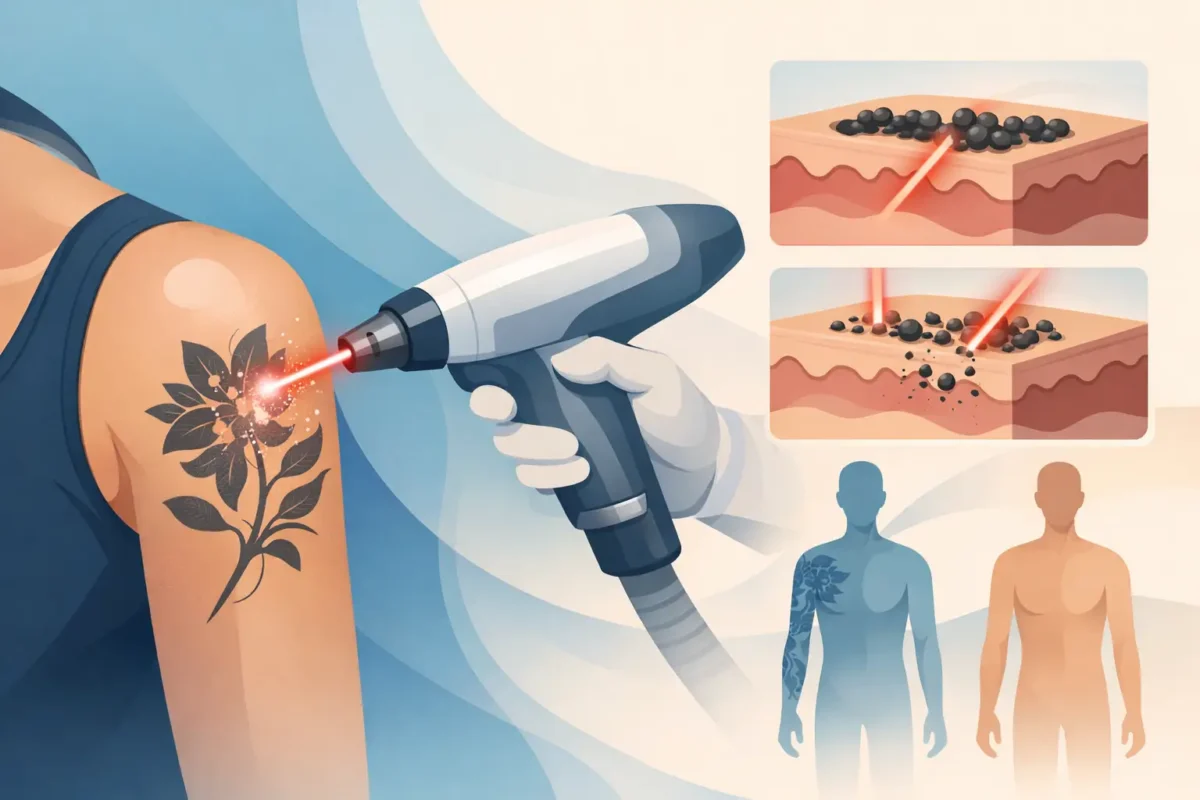
That faded name on your wrist, the design that no longer fits your style, the ink tied to a chapter you have outgrown – these are the reasons people ask, how does laser tattoo removal work? The short answer is that carefully selected laser energy targets tattoo pigment beneath the skin, breaks it into smaller particles, and allows your body to gradually clear it away. The longer answer matters, because results depend on your ink colors, skin tone, tattoo age, depth, and the technology used.
Tattoo removal is not about scraping skin or burning ink out of the body. Modern treatment is much more precise. At a medical aesthetics clinic, the goal is to fade unwanted pigment while protecting the surrounding skin as much as possible. That balance is what makes professional laser tattoo removal the gold standard for people who want visible improvement without surgery.
How does laser tattoo removal work in the skin?
A tattoo sits below the surface of the skin, where pigment particles were placed deep enough to stay. Your immune system tried to remove that ink from the start, but the particles were simply too large to clear efficiently. That is why tattoos last.
Laser tattoo removal changes that. The laser sends very short bursts of light energy into the skin. That energy is absorbed by the tattoo pigment rather than by the surrounding tissue as much as possible. Once the pigment absorbs the energy, it heats up and shatters into much smaller fragments.
After that, your body takes over. Over the following weeks, your immune system begins flushing away those fragmented ink particles through natural metabolic processes. This is also why fading is gradual instead of instant. The laser does the breaking apart, but your body does the clearing.
Different wavelengths target different ink colors. Black ink usually responds best because it absorbs a broad range of light. Dark blue often improves well too. Green, turquoise, yellow, and some reds can be more stubborn, depending on the laser system and the specific pigments used in the tattoo.
Why multiple sessions are usually necessary
One of the biggest misconceptions about tattoo removal is that a single treatment should erase the ink. In reality, most tattoos need a series of sessions. That is not a sign that something is wrong. It is simply how safe, effective removal works.
If too much energy is used too aggressively in one session, the risk of skin injury rises. A skilled provider is trying to create meaningful ink breakdown while giving the skin time to recover between treatments. Each session clears another portion of pigment, and the body continues processing that pigment in the weeks that follow.
Several factors influence how many sessions you may need. Older tattoos often fade faster than newer ones because some ink has already broken down over time. Amateur tattoos can be easier to remove than professional tattoos because they are often placed less evenly and with less dense pigment. Multicolored designs are generally more complex than black ink tattoos. Location matters too. Tattoos on areas with better circulation, such as the upper body, may respond faster than those on hands, feet, or lower legs.
For some clients, the goal is complete removal. For others, it is enough to lighten a tattoo for a cover-up. That distinction matters because cover-up preparation usually takes fewer sessions than full clearance.
What laser tattoo removal feels like
Most people want a straight answer here. Laser tattoo removal is tolerable, but it is not painless. Clients often describe the feeling as similar to a rubber band snap against the skin, mixed with heat. Small tattoos can be treated quickly, while larger pieces take longer and may feel more intense simply because of the treatment area.
Cooling methods can make the session more comfortable. The exact experience depends on the tattoo location, your pain tolerance, and the settings required for your particular ink. Areas over bone or with thinner skin tend to feel more sensitive than fleshier areas.
Right after treatment, it is common to see whitening or frosting over the tattoo. This temporary reaction happens when the laser energy interacts with the pigment and skin. Redness, swelling, and a sunburn-like sensation can follow, and these effects usually settle as the skin heals.
What happens after each session
The days after treatment are part of the process, not an afterthought. You may notice tenderness, mild swelling, pinpoint bleeding, blistering, or scabbing depending on the intensity of treatment and your skin response. These reactions can be normal, but aftercare matters.
Keeping the area clean, protected, and out of excessive sun exposure helps lower the risk of irritation and pigment changes. Picking at scabs or blisters can interfere with healing and increase the chance of scarring. Your provider should give you clear aftercare instructions based on your skin and the treatment performed.
Patience is essential here. Many clients expect dramatic fading within a few days, but the visible change usually unfolds over several weeks. In many cases, the tattoo continues to lighten long after the appointment itself.
Which tattoos are easiest – and hardest – to remove
Not all tattoos respond the same way, even when they look similar on the surface. Black ink is usually the easiest to treat because it absorbs laser energy efficiently. Dark blue can also respond well. Brighter colors can be more unpredictable and may require specialized wavelengths.
Professional tattoos often contain denser ink placed at a more consistent depth, which can make them more resistant. Cover-up tattoos are another challenge because they frequently contain multiple layers of pigment. Cosmetic tattoos, such as microblading or lip color, need special caution because some pigments can darken before they lighten.
Skin tone also plays a role. Safe treatment requires adjusting settings carefully so the laser targets the tattoo while minimizing unwanted effects on the skin’s natural pigment. This is one reason a personalized consultation matters. Good treatment is not just about having a laser. It is about using the right laser, with the right parameters, for the right candidate.
How does laser tattoo removal work for different skin types?
For different skin types, laser tattoo removal still works by targeting ink particles with light energy, but the approach has to be more precise. Skin contains melanin, and melanin can also absorb laser energy. In deeper skin tones, this means settings must be chosen carefully to reduce the risk of hyperpigmentation, hypopigmentation, or irritation.
That does not mean darker skin cannot be treated. It means experience, technology, and conservative planning matter even more. A physician-led or medically supervised clinic can assess your skin type, review your tattoo colors, and build a treatment plan that balances visible fading with skin safety.
What results can you realistically expect?
The best tattoo removal results are built on realistic expectations. Some tattoos can be removed very successfully, with little to no visible pigment left. Others may leave a faint shadow, slight textural change, or residual color even after multiple sessions. The outcome depends on the ink itself as much as the treatment.
There is also a difference between ink that remains and skin changes that become more noticeable once the tattoo fades. If the original tattooing process caused scar tissue, that texture may still be present after the ink is gone. Laser treatment removes pigment. It does not always erase every trace of the tattooing experience.
This is where honest consultation matters more than big promises. A trustworthy provider explains what is likely, what is possible, and what may be limited by the tattoo’s history.
When to book a consultation
If you are considering removal, the next step is not guessing how your tattoo will respond. It is having it assessed properly. An in-person consultation can estimate the number of sessions, explain which colors may be stubborn, review your skin type, and tell you whether your goal should be full removal or fading for a cover-up.
For clients in Nova Scotia and nearby Atlantic Canadian communities, choosing an experienced clinic means more than finding a machine. It means choosing trained professionals who understand skin response, pigment behavior, and how to deliver results responsibly. That blend of science and aesthetics is what makes treatment feel both approachable and credible.
Removing a tattoo is rarely instant, but it can be deeply worthwhile. When the process is planned well, each session moves you closer to skin that feels more aligned with who you are now.