


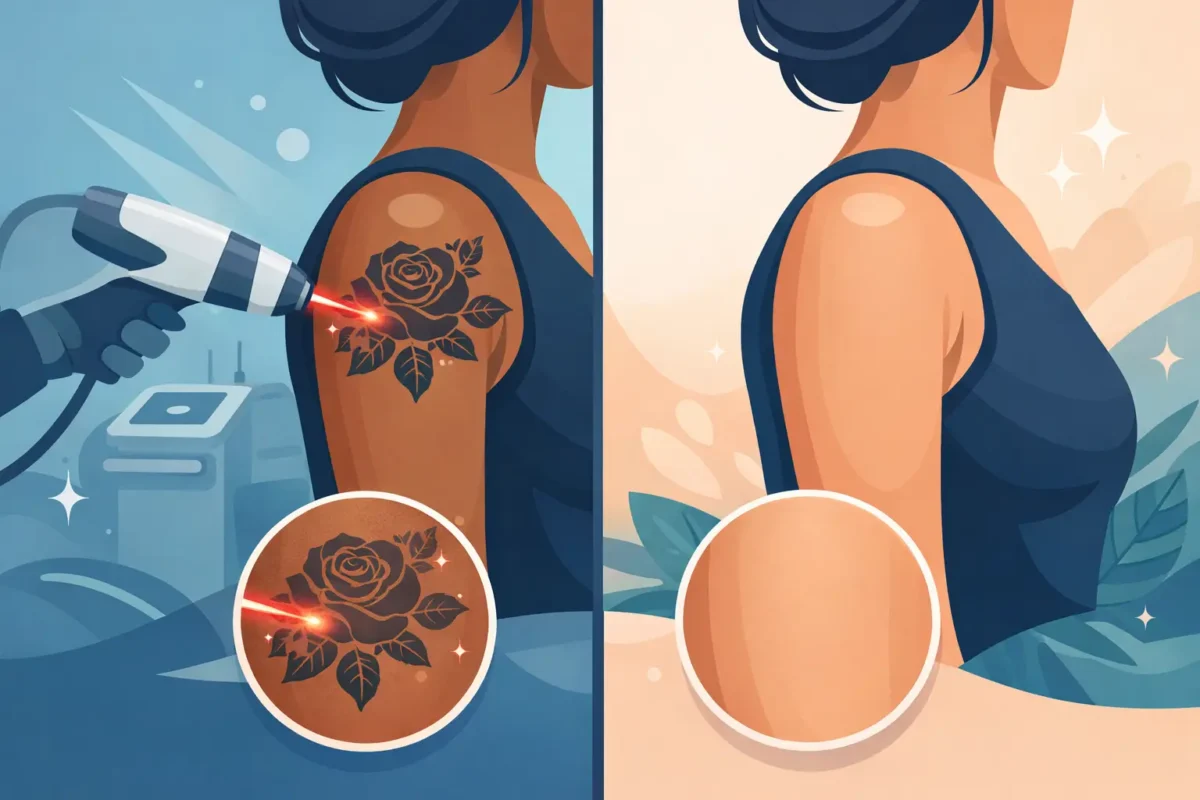
A small wrist tattoo can look dramatically lighter after two sessions, while a dense sleeve may still appear only partially faded at the same point. That is why laser tattoo removal before and after photos can be helpful, but only when you know what you are actually looking at. The real story is not just whether ink disappears. It is how the skin heals, how the pigment breaks apart, and how the result builds over time.
For most people, the biggest surprise is that removal is a process, not a single event. Improvement happens in stages. You may leave your first appointment with some whitening or redness, then notice gradual fading over the next several weeks as your body clears fragmented ink particles. If you are considering treatment, understanding that timeline makes the before-and-after journey feel far more predictable and far less intimidating.
What laser tattoo removal before and after really shows
Before-and-after images are often treated as proof of success, but they also reveal something more practical. They show the pattern of progress. Some tattoos fade evenly. Others break up in patches first, especially where the artist packed in more pigment or layered colors over time.
A strong result usually reflects three things working together: the right laser technology, an experienced provider, and a treatment plan built around your specific tattoo rather than a one-size-fits-all schedule. Professional black ink on lighter skin may respond relatively quickly. Cosmetic tattoos, multicolored designs, cover-ups, and older scarred tattoos often require more patience.
The best before-and-after comparisons are also honest about timing. An image taken six weeks after one session tells a very different story from an image taken after eight sessions over a year or more. If photos do not mention the number of treatments, the spacing between visits, or whether the skin is fully healed, they leave out the details that matter most.
Why some tattoos fade faster than others
Laser tattoo removal works by delivering energy into the ink so the pigment shatters into smaller particles. Your immune system then helps carry those particles away. That means removal depends on both the laser and your body’s ability to process the disrupted ink.
Several factors influence the before-and-after outcome. Ink color is a major one. Black and very dark pigment typically respond best because they absorb laser energy more effectively. Green, blue, yellow, and fluorescent shades can be more stubborn. Red may respond well with the right wavelength, but not every clinic uses the same technology.
Tattoo depth matters too. Professional tattoos are often placed more deeply and densely than amateur tattoos, so they can take longer to clear. Age also plays a role. Older tattoos may already be somewhat faded, which can make treatment easier, while newer tattoos can appear sharper and more saturated.
Then there is skin tone. A skilled provider will choose settings carefully to target pigment while protecting the surrounding skin. This is one reason physician-led or medically supervised treatment matters. Good results are not just about fading the tattoo. They are about doing it while minimizing avoidable skin trauma.
What to expect after your first session
The first after-photo is rarely dramatic, and that is normal. Right after treatment, the area may look white or frosted for a few minutes. Redness, swelling, and a sensation similar to a sunburn are common in the early healing phase. Some people develop pinpoint bleeding, blistering, or scabbing, depending on the tattoo and the intensity of treatment.
That immediate reaction is not the final result. The visible fading usually develops gradually over several weeks. Many clients notice that the tattoo looks only slightly different at first, then softer and lighter as healing continues. This delayed change is one reason spacing treatments properly matters. If sessions are booked too close together, the skin may not have enough recovery time, and you may not have seen the full benefit of the previous treatment.
In a clinical setting focused on visible but safe progress, the goal is not to over-treat the area just to create a dramatic same-day reaction. The goal is smart, controlled energy with skin recovery in mind.
Laser tattoo removal before and after by session count
There is no perfect number that applies to every tattoo, but session count helps set expectations. After one to three sessions, many tattoos look lighter, slightly broken up, or less crisp around the edges. This stage can be encouraging, especially for small black designs, but it is rarely the endpoint.
By four to six sessions, a meaningful before-and-after difference is often easier to see. Dense areas may have faded substantially, and some sections may appear almost gone while others still hold residual pigment. This unevenness is common and does not always mean something is wrong.
After six or more sessions, many clients see major clearance, but “complete removal” still depends on the original tattoo, the colors used, skin response, and aftercare. Some tattoos clear almost entirely. Others leave behind a faint shadow, ghost image, or subtle textural change. A trustworthy provider should explain that possibility early rather than promise perfection.
Healing matters as much as the laser
When people focus only on before-and-after photos, they can miss the role of aftercare. Healing affects comfort, skin quality, and the overall cosmetic result. Keeping the area clean, protected, and out of direct sun is essential. Picking at scabs or blisters can increase the risk of irritation, delayed healing, and unwanted texture changes.
Sun exposure is one of the biggest setbacks. Tanned or recently sun-exposed skin can affect how safely a laser can be used, and post-treatment sun can increase the risk of pigmentation changes. If the tattoo is in an exposed area like the forearm, ankle, or upper chest, this matters even more.
Hydration, general wellness, and immune health may also influence how efficiently your body clears ink particles. That does not mean you need a perfect lifestyle to get results. It does mean that good treatment outcomes are supported by consistent care between sessions.
What “good results” actually look like
A successful result is not always total erasure. Sometimes the goal is to remove enough ink for a cleaner cover-up. In those cases, before-and-after progress is measured differently. The tattoo may still be visible, but lightened enough for a tattoo artist to work with a better canvas.
For full removal, success usually means significant pigment reduction with skin that has healed well and blends naturally with the surrounding area. A slight shadow may remain in some cases, especially with heavily saturated ink or older tattoos that already have scar tissue. That does not make treatment a failure. It means expectations were aligned with what the skin and ink could realistically do.
This is where consultation matters. A provider should assess color, size, location, skin type, and tattoo age, then explain what kind of before-and-after result is realistic. The most reassuring clinics do not oversell. They build confidence by being clear.
Choosing a clinic for better before-and-after outcomes
Technology matters, but experience matters just as much. Laser tattoo removal is not a beauty trend. It is a clinical treatment that requires judgment, precision, and an understanding of how skin responds over time. Settings that are too aggressive can increase risk without improving the outcome. Settings that are too conservative may slow progress unnecessarily.
If you are comparing clinics, look for consistency in results, not just one impressive photo. Ask how many sessions the featured results took. Ask whether the tattoo was professional or amateur. Ask what kind of laser is used and how the treatment plan is adjusted for different ink colors and skin tones.
For clients in Atlantic Canada who want results-focused care without a surgical approach, a clinic such as Bloom Laser Clinic reflects what many people are looking for – modern technology, medically informed treatment, and a clear path from consultation to visible improvement.
The emotional side of before and after
Tattoo removal is often practical, but it can also be deeply personal. Some people want to move on from a relationship, a job, a phase of life, or a design that no longer fits how they see themselves. The before-and-after shift is not only physical. It can feel like reclaiming space on your skin.
That said, patience is part of the process. The most satisfying transformations usually happen over months, not days. When expectations are realistic, each session feels like progress rather than a test of whether treatment is working.
If you are thinking about laser tattoo removal, the best before-and-after mindset is simple: look for steady fading, healthy healing, and a plan tailored to your skin and tattoo. Real change tends to be gradual, but when done well, it is also visible, confidence-building, and worth the wait.