


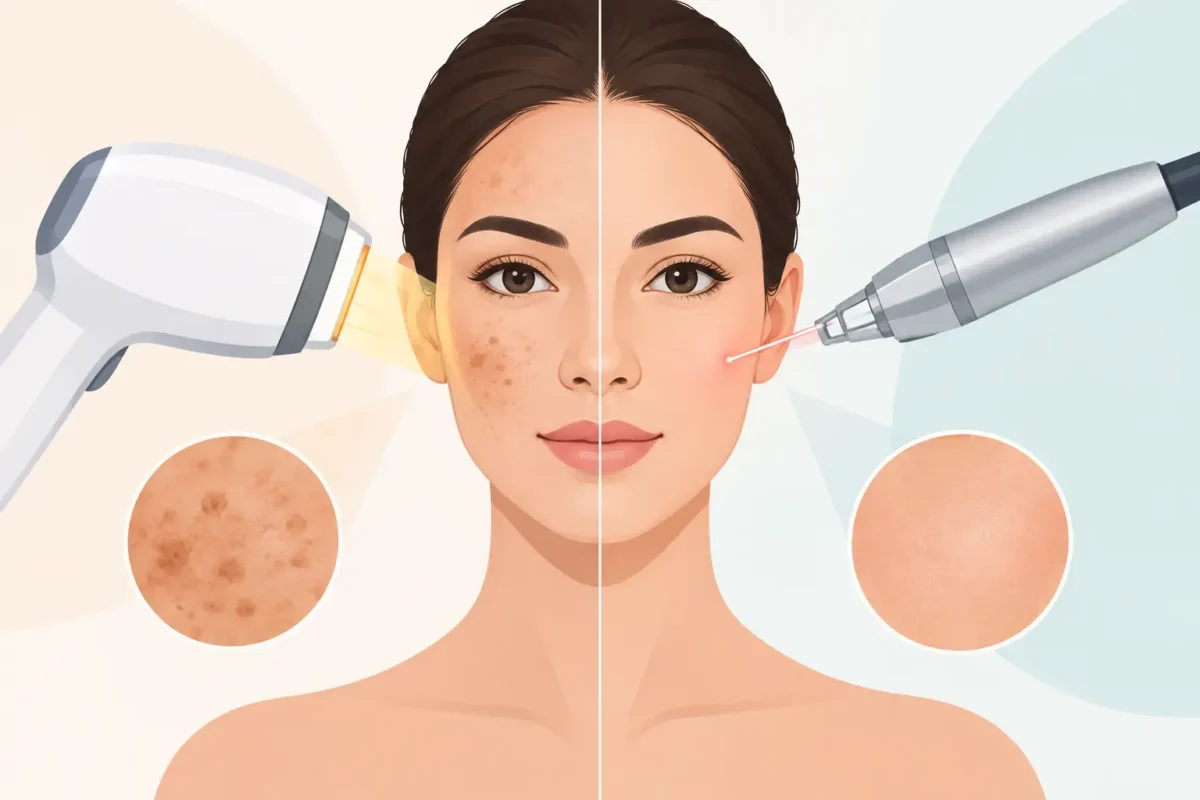
Brown spots that look harmless in winter can become far more noticeable after a sunny Nova Scotia summer. When comparing IPL versus laser pigmentation treatment, the best choice is not simply the device with the strongest reputation. It is the treatment that matches the type of pigment in your skin, its depth, your skin tone, and how your skin responds to heat and light.
Pigmentation can be frustrating because several concerns may look similar in the mirror. Sun spots, freckles, melasma, post-acne marks, and redness-related discoloration can all create uneven tone, yet they do not behave the same way. A professional assessment is the starting point for treatment that supports clearer, more even-looking skin without unnecessary irritation.
IPL Versus Laser Pigmentation: The Key Difference
IPL stands for intense pulsed light. It is not technically a laser. IPL delivers broad-spectrum light in multiple wavelengths, which can be filtered to target pigment and visible blood vessels. The light is absorbed by melanin in brown spots and by hemoglobin in redness, creating controlled heat that helps the body clear unwanted pigment over time.
A pigmentation laser uses a more focused wavelength of light. Depending on the technology and settings, it can target pigment with greater precision and at different depths in the skin. Certain lasers also deliver energy in very short pulses, breaking pigment into smaller particles that the body can gradually process.
That distinction matters. IPL can be an excellent choice for widespread, surface-level sun damage and a general brightening effect. Laser treatment is often better suited to more stubborn, deeper, or specific pigmentation concerns, particularly when a tailored wavelength and pulse duration are needed.
Neither option is automatically better for everyone. The right recommendation comes down to diagnosis, skin safety, and the result you want to see.
When IPL May Be the Right Choice
IPL is often appealing to clients who have a mix of visible concerns rather than one isolated brown spot. For example, someone with sun spots across the cheeks, scattered freckles, mild facial redness, and a dull-looking complexion may benefit from the broad rejuvenating effect IPL can provide.
After treatment, existing pigment commonly darkens temporarily before flaking or fading. This is a normal part of the process for many clients. The complexion can look clearer and more even as the skin recovers, although a series of treatments is often recommended for the most noticeable improvement.
IPL may be a strong option when pigmentation is largely caused by cumulative sun exposure and sits near the surface. It can also be useful for people seeking a single treatment approach for brown spots and redness. Downtime is usually limited, though temporary warmth, mild swelling, or a sunburn-like appearance can occur.
The trade-off is that broad-spectrum light is less selective than a laser. It may not be the preferred choice for every skin tone, every pigment condition, or every area of discoloration. An experienced provider must choose settings carefully to reduce the risk of irritation or post-inflammatory hyperpigmentation.
When a Pigmentation Laser May Be Better
Laser pigmentation treatment can be especially valuable when the concern needs a more precise strategy. This may include defined sun spots, persistent post-inflammatory hyperpigmentation after acne, certain freckles, or pigment that has not responded sufficiently to topical care or IPL.
At Bloom Laser Clinic, advanced laser-based skin treatments are selected according to the individual concern rather than offered as a one-size-fits-all solution. Technologies such as Nd:YAG-based laser treatments can be adjusted to address pigment while respecting the skin’s natural barrier and recovery process.
Laser can also be considered for clients with melasma, but this requires particular care. Melasma is not just excess pigment. It is a chronic, often hormone- and sun-sensitive condition that can flare with heat, inflammation, and aggressive treatment. For some clients, low-energy laser approaches may be part of a carefully managed plan. For others, topical skincare, sun protection, and a gentler treatment schedule may take priority.
The benefit of laser is precision. The responsibility is choosing the correct device and conservative settings for the condition being treated. More energy is not always better, especially when melasma or deeper skin tones are involved.
Pigment Depth Changes the Treatment Plan
Surface pigment is generally easier to target than pigment located deeper in the skin. Epidermal pigmentation, often seen as sun spots or freckles, may respond well to IPL or certain lasers. Dermal pigmentation can be more resistant and may require a different laser wavelength, more treatments, or the acceptance that improvement may be gradual rather than complete.
A good treatment plan should also distinguish pigment from other concerns. A brown patch may be melasma, but it could also be a sun spot that needs a different approach. Any spot that is new, changing, irregular, itchy, painful, or bleeding should be assessed by a medical professional before cosmetic treatment.
Skin Tone and Melasma: Why Personalization Matters
The safest choice in IPL versus laser pigmentation treatment often depends on your skin’s melanin activity. Skin with more natural pigment can be more prone to post-inflammatory hyperpigmentation if it is exposed to excessive heat or irritation. This does not mean laser-based care is off-limits. It means device selection, settings, preparation, and aftercare matter even more.
Melasma deserves its own level of caution. It often appears symmetrically across the cheeks, forehead, upper lip, or jawline and may deepen after sun exposure, hormonal changes, or inflammation. A treatment that produces dramatic short-term brightening can sometimes trigger a rebound if the skin is overtreated.
For melasma-prone skin, a thoughtful plan may include medical-grade skincare, strict daily sunscreen use, heat management, and conservative in-clinic treatments spaced appropriately. Results are often about control and maintenance, not a permanent one-time cure. That honest expectation helps protect both your skin and your investment.
What Treatment Feels Like and What Recovery Looks Like
Both IPL and laser treatments are typically quick, non-surgical appointments. Most clients describe brief warmth or a snapping sensation during treatment. A topical numbing option may be used for selected laser procedures, depending on the area and intensity of treatment.
With IPL, pigment can look darker or “peppered” for several days before it sheds. With laser treatment, recovery varies more widely by device and treatment depth. You may experience temporary redness, swelling, dryness, or darkening of targeted spots. More intensive laser settings can involve a longer recovery period, while gentler laser toning approaches may have minimal visible downtime.
Do not plan a pigmentation appointment immediately before a beach vacation, major event, or period of unavoidable sun exposure. Freshly treated skin needs protection. Tanning, hot yoga, harsh exfoliants, retinoids, and picking at darkened spots can interfere with healing and increase the chance of unwanted discoloration.
Results Depend on More Than the Device
A powerful device cannot outwork ongoing UV exposure. Daily broad-spectrum sunscreen is essential before and after IPL or laser treatments, even when the weather is cloudy. Reapplying sunscreen when outdoors, wearing a hat, and avoiding intentional tanning are practical habits that help preserve your results.
Skincare can also influence outcomes. Your provider may recommend pausing active ingredients before treatment or adding pigment-supporting products afterward. The right routine depends on your skin sensitivity and diagnosis. Avoid copying a friend’s plan, especially if your concern is melasma or you have a history of hyperpigmentation.
Most clients need more than one session for meaningful improvement. The number depends on the concern, treatment method, response, and desired level of correction. Some sun spots may respond quickly, while diffuse damage and melasma usually require a longer-term approach.
How to Choose Between IPL and Laser
The most useful question is not, “Which treatment is stronger?” Ask, “What exactly am I treating?” IPL can be an efficient option for broad, superficial sun damage, scattered freckles, and combined brown-and-red concerns. Laser treatment may offer greater precision for stubborn spots, deeper pigment, post-acne discoloration, and complex cases that need a more customized wavelength or delivery method.
Choose a clinic that evaluates your skin rather than promising the same treatment for every concern. Your consultation should include a discussion of your skin type, pigmentation history, current skincare, medications, sun exposure, and expectations. You should also understand the likely number of sessions, recovery period, possible side effects, and the maintenance needed to protect your results.
Clearer skin rarely comes from chasing the most aggressive treatment. It comes from a plan that respects your skin, treats the pigment you actually have, and gives your complexion the consistent care it needs to look bright, healthy, and beautifully renewed.