


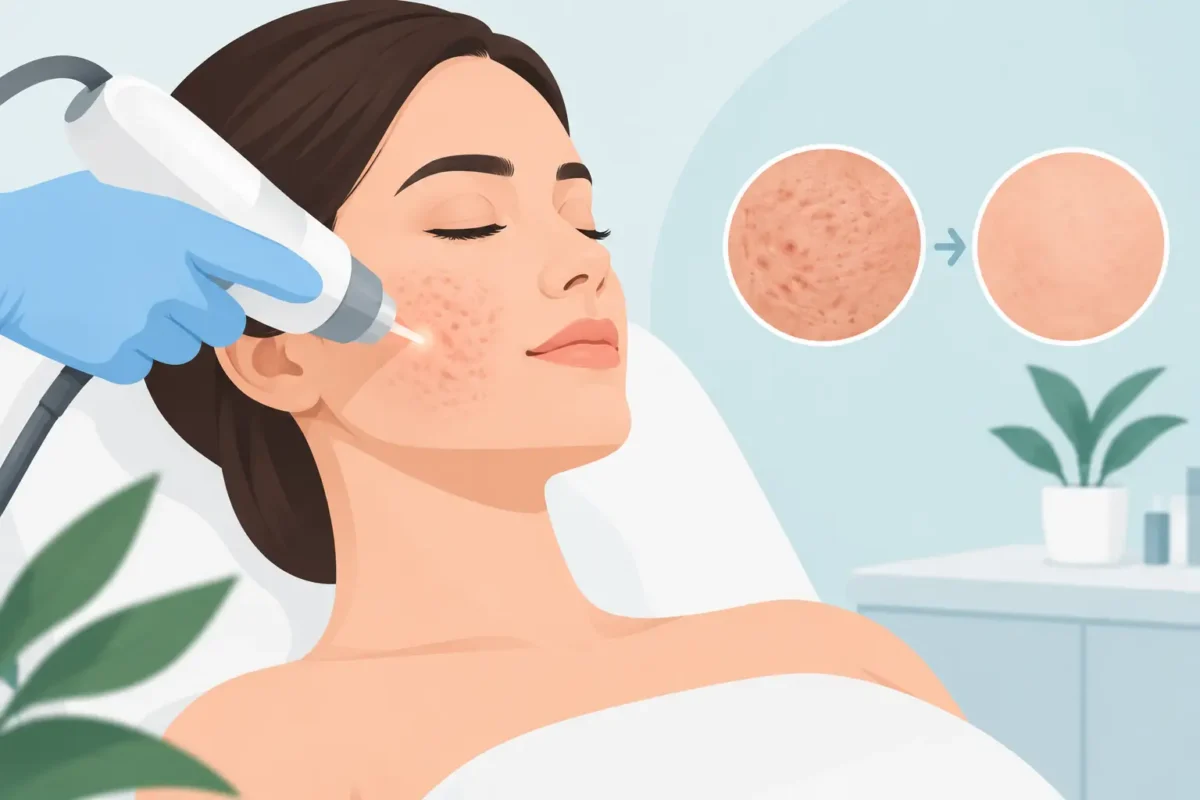
Acne may be temporary, but the texture and discoloration it leaves behind can feel much more permanent. The good news is that many scars can improve without surgery. This guide to acne scar lasers explains what laser treatment can and cannot do, why scar type matters, and how to make a confident, informed choice about your skin.
Your Guide to Acne Scar Lasers Starts With Scar Type
Not all acne scars respond to laser treatment in the same way. A professional skin assessment is essential because the best approach depends on the scar’s shape, depth, location, and your skin tone.
Depressed scars are the most common reason people seek laser resurfacing. Ice-pick scars are narrow and deep, boxcar scars have sharper edges, and rolling scars create broad, uneven texture. Lasers can stimulate new collagen and resurface damaged skin, helping soften the transition between scarred and healthy tissue. However, very deep or tightly tethered scars may need another treatment first, such as subcision, to release the fibrous bands pulling the skin downward.
Raised scars are different. Hypertrophic scars stay within the original acne area, while keloid scars can grow beyond it. These scars require careful medical evaluation because aggressive resurfacing may not be appropriate. Red or brown marks left after a breakout are also often called scars, but they are usually post-inflammatory redness or pigmentation rather than true textural scars. They may respond well to pigment- or vascular-focused laser treatments, but the treatment plan is different from collagen remodeling.
This distinction matters because visible improvement comes from treating the right concern with the right technology. A laser is not a one-size-fits-all solution, and a thoughtful plan is more valuable than the strongest possible treatment.
How Acne Scar Lasers Improve Skin Texture
Laser treatments work by delivering controlled energy into the skin. That energy can remove a precise portion of the outer skin surface, heat deeper tissue to encourage collagen production, or target pigment and redness left behind by acne.
Ablative resurfacing lasers remove microscopic columns or layers of skin while heating the tissue below. They typically produce more dramatic resurfacing and may be recommended for significant textural scarring. The trade-off is more downtime, more aftercare, and a higher need for careful patient selection.
Non-ablative fractional lasers heat deeper layers of skin without removing as much of the surface. They can support collagen renewal with less recovery time, making them an appealing option for clients who want gradual improvement with a more manageable healing period. Because they are gentler, a series of treatments is often needed.
Some laser technologies focus on residual redness, brown marks, or uneven tone. Improving color does not erase a depressed scar, but it can make the overall complexion look clearer and help scars appear less noticeable. In many cases, the most refined results come from addressing both texture and tone over time.
The goal is not to erase every trace of past acne. Even excellent treatment cannot promise poreless, perfectly uniform skin. The goal is smoother-looking texture, more even color, and scars that are less visible in everyday light, makeup, and photographs.
What Results Can You Realistically Expect?
Laser treatment is a process, not a single before-and-after moment. Collagen remodeling continues for weeks and months after each session, so results tend to develop gradually. Many clients begin to notice a fresher surface texture after healing, then see further refinement as new collagen forms.
The level of improvement depends on several factors: the type and depth of scarring, active acne control, skin tone, the technology selected, and whether combination treatments are recommended. Shallow rolling scars may respond very well to fractional resurfacing. Deep ice-pick scars may improve, but they often need targeted treatments in addition to laser work.
A consultation should include a candid discussion of your starting point and the number of treatments likely to be recommended. Be cautious of anyone who promises complete scar removal in one appointment. Experienced providers focus on measurable improvement, skin safety, and a plan that respects your schedule and budget.
Preparing for Treatment
The skin should be calm and free from active infection before laser treatment. If you still have frequent inflammatory breakouts, acne management may need to come first. Treating active acne and scarring at the same time is possible in some situations, but timing matters.
Before your appointment, disclose medications, supplements, a history of cold sores, previous scar treatments, and any tendency to develop dark marks after inflammation. Certain medications and recent sun exposure can affect whether treatment should be postponed. If you have a history of cold sores around the mouth, preventive antiviral medication may be considered before resurfacing.
Avoid tanning and use broad-spectrum sunscreen consistently in the weeks leading up to treatment. Tanned or recently sun-exposed skin has a higher risk of uneven pigmentation after laser procedures. Your provider may also recommend pausing retinoids, exfoliating acids, or other active skincare ingredients for a specific period before treatment.
For clients with medium to deep skin tones, provider experience is particularly important. Laser settings and pre-treatment skincare may need to be adjusted to reduce the risk of post-inflammatory hyperpigmentation. Safe treatment is never about using maximum energy. It is about choosing parameters that support your skin’s healing response.
Recovery: What the First Days Can Look Like
Recovery varies significantly by laser type. After a gentler fractional treatment, skin may look pink or feel warm for a day or two, followed by mild dryness or a sandpaper-like texture. More intensive resurfacing can involve several days of redness, swelling, peeling, and crusting.
Your aftercare instructions should be specific to your treatment. In general, protect the skin from sun exposure, avoid picking or scrubbing flaking areas, use the recommended gentle cleanser and moisturizer, and pause potentially irritating skincare until your provider advises otherwise. Makeup may need to wait until the skin barrier has recovered.
Plan around real life. If you have an event, wedding, vacation, or professional photos coming up, give your skin adequate time to heal. The best time for a stronger treatment is not necessarily the earliest available appointment. It is the time when you can follow aftercare carefully and allow your results to develop without pressure.
Risks and When to Pause
When performed by trained professionals with appropriate technology and protocols, laser acne scar treatment can be a highly effective option. Still, every aesthetic procedure carries some risk. Temporary redness, swelling, dryness, and sensitivity are expected parts of healing. Less common risks include prolonged redness, infection, acne flare-ups, scarring, or changes in pigmentation.
The risk profile changes with skin type, laser type, treatment intensity, and aftercare. A clinician should also evaluate whether pregnancy, certain medications, active skin infections, recent isotretinoin use, or a history of keloid scarring could affect your candidacy.
This is why consultation matters. The right provider will ask detailed questions, examine your skin in person, explain the expected recovery honestly, and adjust the plan when needed. A treatment that is appropriate for a friend or social media creator may not be the safest or most effective choice for your skin.
Why Combination Treatment Often Delivers Better Results
Acne scars are rarely all the same. One area may have rolling scars, another may have boxcar scars, and the cheeks may also show redness or enlarged pores. Combining techniques can address these layers more effectively than relying on one procedure alone.
For example, subcision can release tethered scars before laser resurfacing supports collagen remodeling. Targeted spot treatments may be considered for deeper narrow scars, while laser treatment improves the overall texture around them. Chemical peels, medical-grade skincare, and pigment-focused treatments may also play a role when uneven tone is part of the concern.
At Bloom Laser Clinic, an individualized approach helps keep treatment focused on visible goals rather than a generic package. Your plan should be based on what your skin needs now, with room to reassess as it responds.
Clearer, smoother-looking skin is often built one carefully chosen treatment at a time. Start with a professional consultation, bring your questions and skincare history, and give yourself permission to pursue improvement on a timeline that feels right for you.