


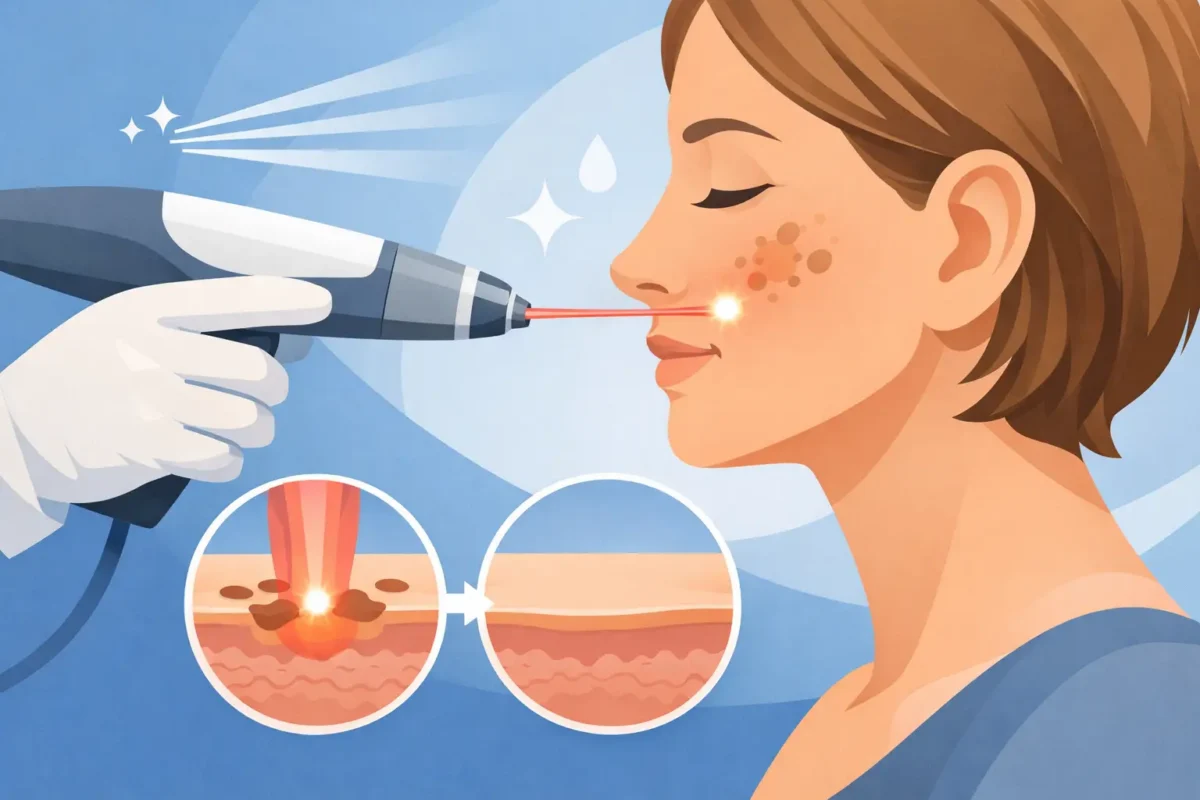
A few dark spots can change the way your whole complexion looks. They often show up after years of sun exposure, then suddenly seem impossible to ignore in bright bathroom lighting, photos, or without makeup. If you have been asking, can laser remove age spots, the short answer is yes – in many cases, laser treatment can significantly reduce or clear them. The better question is whether your spots are true age spots, whether your skin is a good candidate, and which laser approach is most likely to give you visible, even-looking results.
Can laser remove age spots effectively?
Laser treatment is one of the most effective options for age spots because it targets pigment directly. Age spots, also called sun spots or solar lentigines, develop when UV exposure triggers extra melanin production in certain areas of the skin. Instead of treating the surface alone, a laser can focus energy into the pigmented area so the excess pigment breaks apart and is gradually cleared by the body.
That is why many clients see better results from laser than from over-the-counter brightening products. Creams may help soften mild discoloration over time, but they usually work slowly and unevenly. Laser treatment can produce a more noticeable change, often in fewer sessions, especially when the spots are well-defined and caused by sun damage rather than a deeper pigment condition.
Still, not every brown mark is an age spot. Melasma, post-inflammatory hyperpigmentation, freckles, and certain benign lesions can look similar at first glance. That is where a professional assessment matters. Treating the wrong type of pigment with the wrong device can lead to frustration and, in some cases, make discoloration worse.
How laser treatment works on pigment
Lasers for pigmentation are designed to seek out darker pigment in the skin while minimizing damage to the surrounding tissue. The energy is absorbed by melanin, which heats up and shatters into smaller particles. Your body then clears those particles naturally over the following days or weeks.
In practical terms, treated spots often get darker before they get lighter. This is normal. The pigment may rise to the surface, crust slightly, and then flake away as the skin renews itself. For many people, that stage is actually reassuring because it shows the pigment is responding.
Different devices work in different ways. Some lasers are better for isolated sun spots, while others are chosen when the skin also has redness, uneven tone, or signs of aging. A clinic that offers multiple technologies can tailor the treatment rather than forcing every skin concern into the same plan.
What kinds of age spots respond best?
Flat, clearly defined brown spots caused by cumulative sun exposure tend to respond very well. These are common on the face, chest, shoulders, hands, and arms. If the contrast between the spot and your natural skin tone is easy to see, laser treatment often has a clearer target.
Results can be less straightforward when pigmentation is patchy, hormonally influenced, or mixed with inflammation. For example, melasma may improve with the right laser settings and treatment plan, but it usually needs a more cautious approach and stronger maintenance habits. If your pigment is triggered by heat, hormones, or irritation as much as by sun, laser is not always a one-and-done solution.
Who is a good candidate for laser age spot removal?
Good candidates are usually healthy adults with visible sun spots who want a non-surgical way to improve skin clarity. If you want a brighter, more even complexion and you are realistic about the possibility of needing more than one session, laser can be an excellent option.
Your skin tone matters too. People with lighter skin tones often have a lower risk of post-treatment pigmentation changes, but that does not mean deeper skin tones cannot be treated. It means the laser choice, settings, and provider expertise matter even more. Safe treatment starts with understanding how your skin reacts to heat and pigment-targeting energy.
You may be asked about recent sun exposure, tanning, skincare products, medications, and any history of cold sores or pigment issues. This is not just clinic paperwork. It helps your provider lower the risk of irritation, delayed healing, or rebound pigmentation.
When laser may not be the first choice
If your skin is freshly tanned, highly sensitive, actively irritated, or prone to certain pigment complications, your provider may recommend waiting or starting with another treatment. Some cases do better with a pigment-correcting skincare plan, chemical peels, or a combination approach before laser is used.
There is also the question of expectations. Laser can dramatically improve age spots, but it does not stop your skin from making new pigment in the future. If daily sunscreen is not part of the plan, even beautiful results can fade under continued UV exposure.
What to expect during treatment
Most laser sessions for age spots are quick. You may feel a snapping or warming sensation as the laser passes over the pigmented areas. Some clients compare it to a rubber band flick, while others find it very manageable without much discomfort. The exact experience depends on the device being used, the treatment area, and your personal sensitivity.
After treatment, the skin may look pink or slightly swollen, and the spots themselves can darken temporarily. That darkening is often part of the process, not a sign that the treatment failed. Over the next several days, the pigment lifts and the skin tone begins to look clearer.
Downtime is usually limited, but that does not mean aftercare is optional. Gentle skincare, sun protection, and avoiding unnecessary heat or irritation give your skin the best chance to heal evenly.
How many sessions do you need?
Some age spots respond after one treatment, especially when they are small, superficial, and clearly caused by sun damage. Others need a short series of sessions to reach the desired result. The number depends on how dark the spots are, how long they have been there, your skin type, and which laser is used.
This is one of the biggest reasons consultations matter. A trustworthy provider should tell you whether your pigment looks like a quick fix or a more gradual correction. Promising perfect skin in one session sounds appealing, but it is not always realistic.
For many clients, the real win is not absolute perfection. It is looking in the mirror and seeing smoother, brighter, more even skin that feels fresher and easier to manage.
Risks, trade-offs, and realistic results
Laser treatment is effective, but it is still a medical aesthetic procedure. Common short-term effects include redness, mild swelling, temporary darkening of the spots, and light flaking. Less commonly, there can be blistering, irritation, or unwanted pigment changes, especially if the skin is not properly prepped or protected afterward.
The biggest trade-off is that stronger treatment is not always better treatment. Aggressive settings may seem appealing if you want fast results, but more intensity can raise the risk of complications. Skilled providers focus on precision, not excess.
There is also a maintenance reality. Age spots are caused largely by sun exposure over time. If you spend years building the damage, one laser session cannot outwork unprotected daily UV exposure. Broad-spectrum sunscreen, hats, and smart sun habits are part of protecting your investment.
Laser vs other age spot treatments
Topical lightening products can help, but they are slower and often less dramatic. Chemical peels may improve surface discoloration and texture, especially when age spots are mild or part of a broader dullness issue. IPL is another popular option for sun damage, though it is technically not the same as a laser and may be more suitable in some cases than others.
What matters most is matching the treatment to the pigment. A polished consultation should not feel like a sales pitch for one machine. It should feel like a plan built around your skin, your goals, and your tolerance for downtime.
That is where an experienced clinic makes a difference. At Bloom Laser Clinic, the focus is not just removing a spot. It is improving the overall quality and confidence of your skin with technology-driven care that feels approachable, informed, and results-focused.
Questions to ask before booking
Before you move forward, ask what type of pigmentation you have, which device is being recommended, how many sessions are likely, and what aftercare will look like. You should also ask about risks for your skin tone and whether there are alternatives if laser is not the best first step.
A good consultation leaves you feeling informed, not pressured. You should understand what is possible, what is less predictable, and what you can do to maintain your results once the spots fade.
Age spots can make skin look older than it feels, but they do not have to be something you simply live with. The right laser treatment can be a smart, effective way to clear visible sun damage and bring back a more even, refreshed look – especially when the plan is built around your skin, not just the device.