


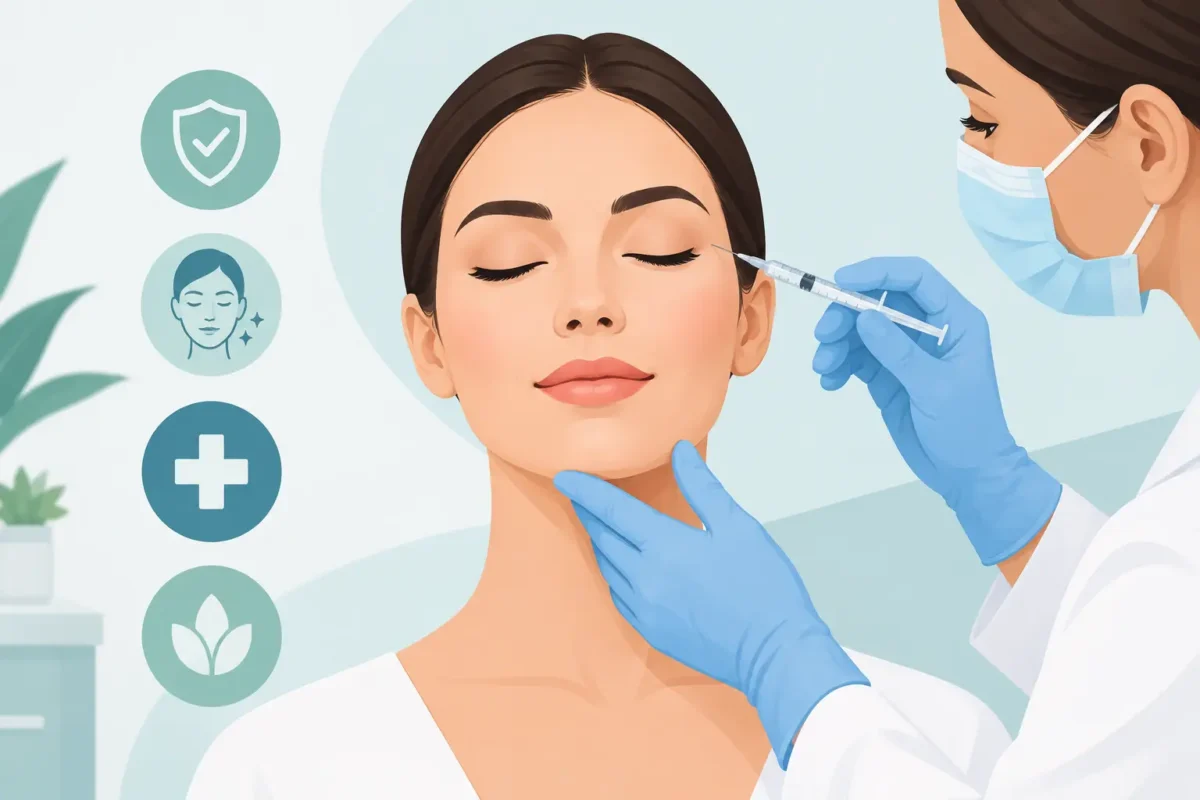
A smoother forehead or softer frown lines should never come at the expense of your health. This Botox safety guide explains what a well-managed treatment looks like, from choosing the right injector to knowing which symptoms deserve immediate attention. Botox can be an effective, non-surgical option for facial rejuvenation when it is prescribed thoughtfully, administered by a qualified medical professional, and tailored to your anatomy and goals.
Botox Safety Starts Before Your Appointment
Botox is a prescription neuromodulator made from botulinum toxin type A. In cosmetic care, carefully placed injections temporarily relax selected muscles that contribute to expression lines, such as forehead lines, frown lines, and crow’s feet. The result should look refreshed, not frozen.
The product itself is only one part of safe treatment. Your provider’s training, assessment, injection technique, product handling, and follow-up guidance matter just as much. A lower price is not automatically a warning sign, but treatment that feels rushed, lacks a consultation, or comes with vague answers about the product and injector should give you pause.
A reputable clinic should make you feel comfortable asking direct questions. You deserve clear answers about who will perform the treatment, what product will be used, what it is intended to improve, and what your realistic result may be.
Choose Medical Expertise Over a Trend
Botox is commonly discussed like a quick beauty appointment, but it remains a medical treatment. Look for an appropriately licensed, trained injector working within a professional medical setting and under required medical oversight. Experience with facial anatomy is especially important because every face has different muscle strength, brow shape, eyelid position, and asymmetry.
A skilled provider does not simply copy a dose or placement pattern from social media. They assess how your face moves, listen to the amount of movement you want to retain, and create a plan that supports a natural-looking result. More units do not always mean better results. In some areas, over-treating can create heaviness, an unnatural brow position, or an expression that does not feel like you.
Ask whether the product is obtained through authorized medical channels and stored according to manufacturer instructions. Authentic, properly handled product and accurate documentation are basic standards of care.
Who Should Wait or Seek Extra Medical Guidance?
A thorough consultation is designed to identify when Botox may not be appropriate or when it requires additional medical consideration. Tell your provider about your complete health history, even if it seems unrelated to cosmetic treatment.
You may need to postpone treatment if you have an active skin infection, rash, cold sore outbreak, or irritation at the planned injection site. Treatment is also generally avoided during pregnancy or breastfeeding because safety in these circumstances has not been established for cosmetic use.
Extra caution is needed for people with certain neuromuscular conditions, previous allergic reactions to botulinum toxin products or their ingredients, swallowing or breathing difficulties, or significant eyelid drooping. Your injector should also know about all medications and supplements you take. Blood thinners, medications that affect nerve or muscle function, and some supplements may change your bruising risk or require coordination with your prescribing clinician.
Do not stop a prescribed medication simply to receive Botox. Your medical provider should guide that decision.
Bring Up Past Treatments and Facial Surgery
Previous Botox, fillers, laser treatments, facial surgery, and even recent dental work can influence timing and treatment planning. Mention any history of uneven results, eyelid ptosis, prolonged bruising, or sensitivity after injections. This information helps your provider adjust the approach rather than repeating a plan that did not work well for you.
If you are considering Botox for the first time, conservative treatment is often the most comfortable starting point. You can assess your response after the product has had time to settle and decide whether a small adjustment is appropriate.
What Side Effects Are Normal After Botox?
Most clients return to regular daily activities immediately after treatment. Mild, temporary effects can include pinpoint redness, swelling, tenderness, headache, or bruising at injection sites. These effects typically resolve within hours to several days.
Bruising is more likely if you are prone to it, use certain medications or supplements, or have treatment near delicate areas. A qualified provider can discuss ways to reduce the likelihood, but no injector can promise that bruising will never happen.
Less common cosmetic effects include temporary asymmetry, a heavy feeling in the forehead, an elevated or uneven brow, or eyelid drooping. These outcomes can occur when the product affects a nearby muscle or when your individual anatomy responds differently than expected. They are usually temporary, but they can be frustrating. This is one reason precise assessment and thoughtful dosing are worth prioritizing.
Botox does not work instantly. Many people begin to notice a change within several days, while the final effect often develops over about two weeks. Booking an evaluation too soon can lead to unnecessary concern or premature adjustments.
Botox Aftercare: Keep It Simple and Follow Your Plan
Your provider’s instructions should always come first because aftercare can vary according to treatment areas and your medical history. In general, avoid pressing, rubbing, or massaging the treated areas unless your injector specifically directs you to do so. This includes aggressive facial massage and tightly fitted headwear that puts pressure on freshly treated sites.
Many clinics also recommend postponing strenuous exercise, high heat exposure, and alcohol for the rest of the day or roughly 24 hours, particularly if you are concerned about swelling or bruising. Keep makeup application gentle, and use clean hands if you need to touch your face.
There is no need to overcomplicate recovery. Plan your appointment on a day when you can avoid a major event if possible, especially if even a small bruise would be inconvenient. If you have questions after leaving the clinic, contact the treatment team rather than relying on online advice that may not fit your situation.
Know the Signs That Need Prompt Medical Care
Serious reactions to cosmetic Botox are uncommon, but knowing the warning signs is part of making an informed decision. Contact your provider promptly if you experience concerning or worsening symptoms after treatment, including pronounced weakness, vision changes, a drooping eyelid, or a reaction that feels outside the side effects you were counseled to expect.
Seek emergency medical help right away for difficulty breathing, swallowing, or speaking; widespread muscle weakness; hives or severe swelling; fainting; or any signs of a severe allergic reaction. These symptoms require urgent assessment, whether or not you believe they are related to treatment.
Do not wait for a scheduled follow-up if something feels seriously wrong. Your safety comes before the cosmetic outcome.
Set Expectations for Results, Cost, and Maintenance
For most cosmetic areas, Botox results commonly last around three to four months, although metabolism, muscle strength, treatment area, dose, and individual response all play a role. Some people notice that regular, appropriately spaced treatment helps them maintain a softer appearance over time, while others prefer occasional treatment before a milestone or event.
Be cautious about comparing prices by unit alone. Different botulinum toxin products are measured differently, and unit amounts are not interchangeable across brands. What matters is whether your plan is appropriate for your facial anatomy and whether the clinic is transparent about what is included, including any follow-up assessment.
At Bloom Laser Clinic, the goal is never to make you look like someone else. It is to help you feel polished, rested, and confident with care that respects both your features and your safety. A good Botox decision starts with a conversation where you feel heard, informed, and never pressured.