


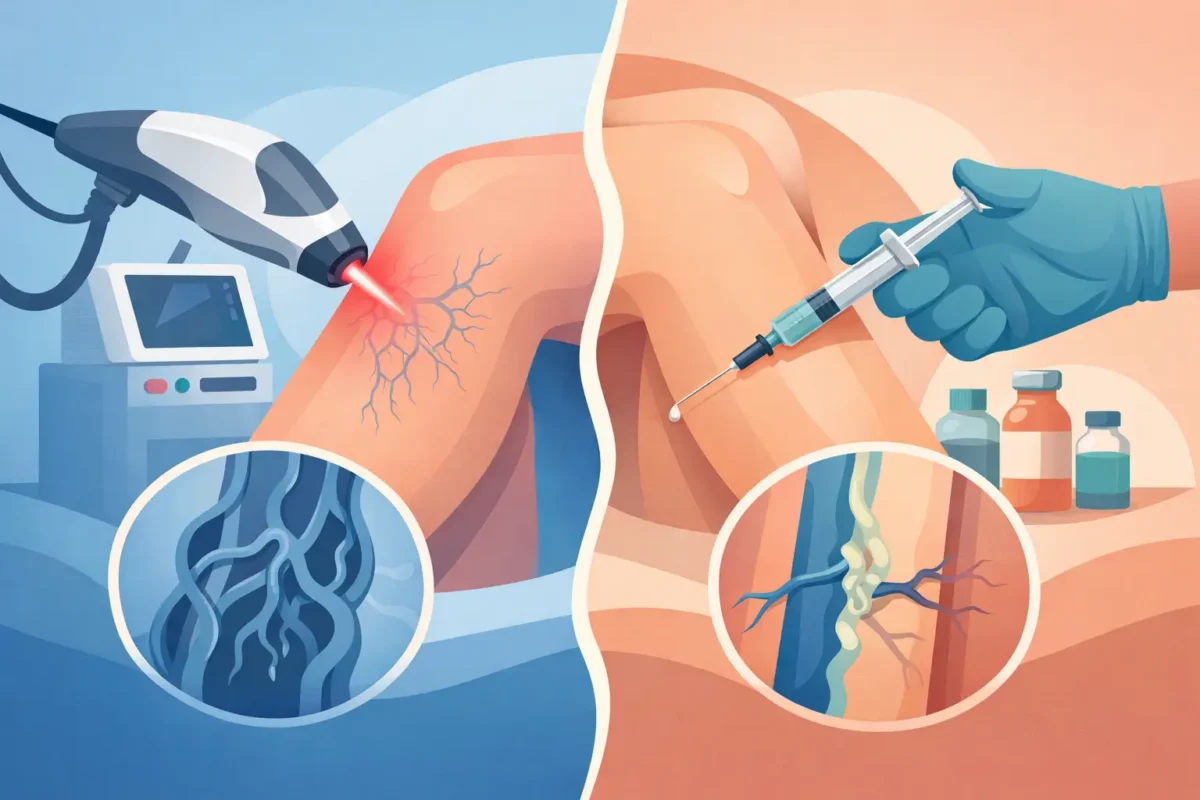
Those fine red, purple, or blue veins can make shorts, skirts, and sleeveless tops feel more complicated than they should. When comparing laser vein treatment versus sclerotherapy, the best choice is rarely about which treatment is “better” overall. It is about the size, color, location, and pattern of your visible veins – and the outcome you want to see.
Both treatments can reduce the appearance of unwanted spider veins without surgery. The difference is in how they work and which vessels they treat most effectively. A professional consultation helps turn a frustrating cosmetic concern into a clear, personalized treatment plan.
Laser Vein Treatment Versus Sclerotherapy: The Core Difference
Laser vein treatment uses precisely targeted light energy to heat the blood within a visible vessel. That heat causes the vessel walls to collapse and seal. Over the following weeks, the body gradually clears the treated vessel, allowing the area to look clearer and more even-toned.
Sclerotherapy works from inside the vein. A trained practitioner uses a very fine needle to inject a solution called a sclerosant into the vessel. The solution irritates the lining of the vein, causing it to close. Blood is naturally rerouted through healthier veins, and the treated vessel slowly fades from view.
Both approaches are minimally invasive, performed in an outpatient setting, and designed to improve the appearance of superficial veins. Neither treatment removes the need to assess circulation concerns when veins are painful, swollen, bulging, or accompanied by skin changes.
When Laser Treatment May Be the Better Fit
Laser treatment is often especially useful for very fine facial veins, including the small red vessels that can appear around the nose, cheeks, and chin. These vessels may be linked to rosacea, sun exposure, genetics, or natural changes in the skin over time. Because the treatment is non-injectable, it can be an appealing option for clients who are uncomfortable with needles.
It may also be a good choice for tiny spider veins in areas where injection is less practical. The handpiece is placed over the skin, and short pulses of energy target the visible vessel beneath the surface. Most people describe the sensation as a quick snap or brief warmth rather than significant pain.
After treatment, the skin can look pink or feel warm for a short period. Some vessels darken temporarily before fading, which is often part of the normal healing process. Facial veins may respond relatively quickly, while leg veins can require more patience because circulation, vein depth, and vessel size all influence the timeline.
Laser treatment is not always the first choice for larger, darker blue leg veins. Light energy must reach and be absorbed by the vessel effectively, so deeper or wider veins may respond more predictably to another approach.
What laser treatment does well
Laser vein treatment can be an excellent option for delicate facial capillaries, scattered red vessels, and clients seeking a no-needle experience. It also pairs naturally with a broader skin-renewal plan when redness, sun damage, pigmentation, or uneven texture are part of the same concern.
The trade-off is that multiple sessions may be needed, particularly when there are many small vessels or when the veins are on the legs. Results develop gradually, not overnight.
When Sclerotherapy May Be the Better Fit
Sclerotherapy is widely considered a leading treatment for many leg spider veins and small reticular veins. Reticular veins are the somewhat larger blue or greenish feeder veins that may sit beneath a web of finer spider veins. Treating these feeder vessels can make a meaningful difference in the overall appearance of an area.
During the procedure, the practitioner identifies the veins to be treated and performs a series of small injections. The number of injections depends on the size of the treatment area and the complexity of the vessels. The appointment is typically efficient, although treatment plans vary from person to person.
Compression stockings may be recommended after sclerotherapy, especially for leg veins. They can support healing and may help the treated veins close effectively. Your practitioner will provide specific instructions about exercise, sun exposure, compression, and when to resume your usual activities.
Bruising, mild tenderness, and temporary discoloration can occur after injections. Some veins may look more noticeable before they fade. This is one reason realistic expectations matter: visible improvement is the goal, but the body needs time to process the treated vessels.
What sclerotherapy does well
For clusters of leg spider veins and larger superficial blue veins, sclerotherapy can treat a greater amount of visible vessel network in one visit than laser treatment alone. It is often the more efficient option when the concern is concentrated on the thighs, calves, or around the knees.
The trade-off is the use of injections and the possibility of temporary bruising or pigmentation changes. Not every vein is appropriate for injection, and a practitioner should assess your medical history before treatment.
Comparing Comfort, Downtime, and Results
Comfort is personal. Laser treatment involves no needles, but the heat sensation can be sharp in sensitive areas. Sclerotherapy uses needles, yet the injections are very small and brief. Topical comfort measures and an experienced practitioner can make either appointment feel manageable.
Downtime is generally limited with both options. Many clients return to work and normal daily routines promptly. However, “minimal downtime” does not mean no aftercare. Avoiding intense heat, protecting the area from sun exposure, following compression guidance when given, and keeping active as instructed can all support a smoother recovery.
Neither treatment guarantees that new veins will never appear. Spider veins can be influenced by genetics, hormones, pregnancy, prolonged standing, aging, sun exposure, and underlying vein tendencies. Treating current veins can create a visible improvement, while maintenance sessions may be helpful over time.
Results also take time. Small facial vessels treated with laser energy may fade over several weeks. Leg veins treated with laser or sclerotherapy can take weeks to months to clear fully, especially when larger vessels are involved. A consultation should include discussion of the likely number of sessions and the expected treatment timeline for your skin and vein type.
Why an Assessment Matters Before Treatment
Visible veins are often cosmetic, but certain symptoms deserve medical evaluation before aesthetic treatment. Bulging veins, leg heaviness, aching, swelling, warmth, skin discoloration, sores, or sudden changes in one leg can point to an underlying venous condition. In these situations, treating surface veins alone may not address the cause.
A qualified provider should also review factors such as pregnancy or breastfeeding, blood clot history, medications, allergies, skin tone, previous vein treatments, and recent sun exposure. This protects your safety and helps determine whether laser treatment, sclerotherapy, a combined plan, or a referral is most appropriate.
At Bloom Laser Clinic, the goal is not to push one device or procedure for every concern. It is to match advanced, non-surgical care to the visible result you want and the clinical details that matter.
How to Choose Between the Two
If your concern is fine red facial veins, laser treatment is often a natural place to start. If you have blue or purple spider veins across the legs, particularly with larger feeder veins, sclerotherapy may offer a more direct solution. Some clients benefit from both: sclerotherapy for the larger leg vessels and laser treatment for stubborn fine veins that remain.
The right treatment should feel medically informed and realistic. Ask what type of veins you have, how many sessions may be needed, what aftercare is expected, and when you can reasonably expect to see change. Clear answers make it easier to choose with confidence.
Clearer-looking skin is not about chasing perfection. It is about having options that let you feel more comfortable showing the skin you are in – with a treatment plan built around your needs, not a one-size-fits-all promise.