


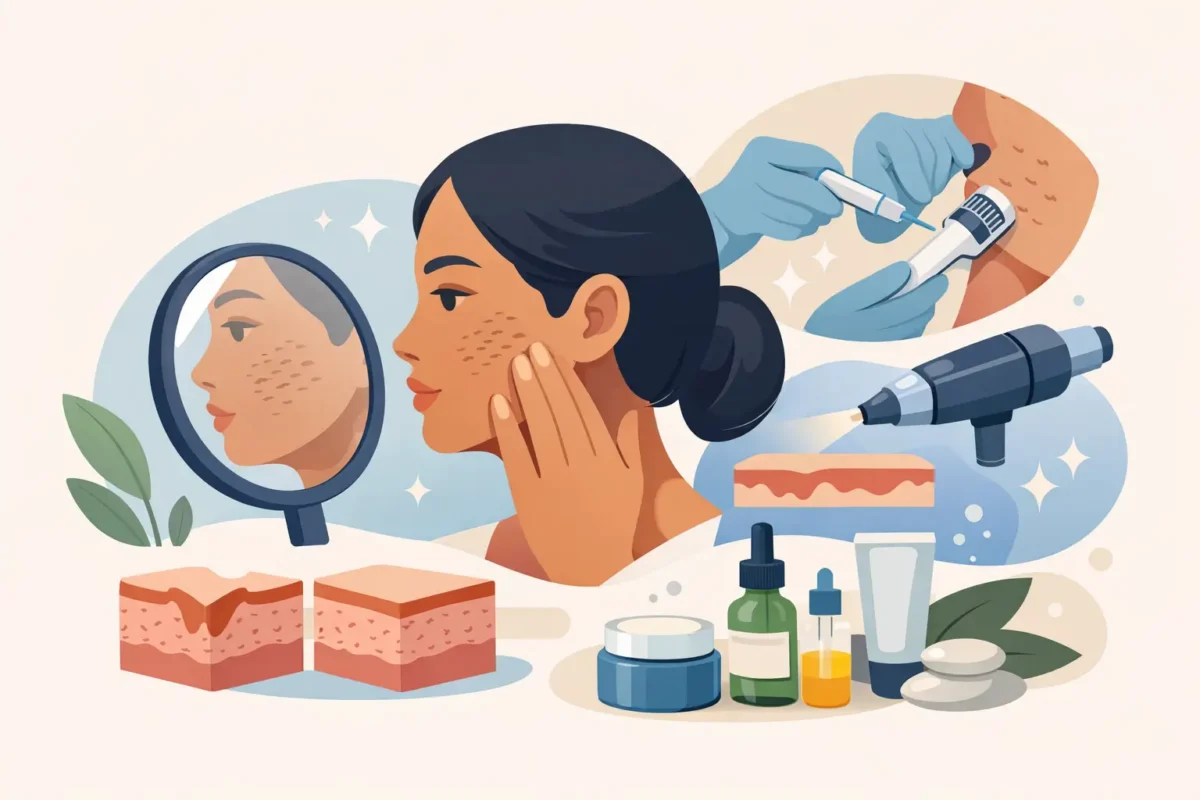
Acne may be temporary, but the marks it leaves behind can stay in the mirror far longer than anyone wants. When people search for the best treatments for acne scars, what they usually want is not hype – they want clear skin options that actually make a visible difference, with realistic expectations about time, cost, and results.
The truth is that acne scars are not all the same, and that is why no single treatment is the right answer for everyone. Some scars are shallow and respond well to resurfacing. Others are deeper, tethered, or raised, which means they need a more targeted approach. The most effective treatment plan starts with identifying the type of scar, the depth of skin damage, your skin tone, and how much downtime you are comfortable with.
What makes acne scars hard to treat
Acne scars form when inflammation damages collagen in the skin. If too little collagen is produced during healing, the result is a depressed or indented scar. If too much collagen develops, the scar can become raised. That difference matters because treatments that smooth one kind of scar may do very little for another.
There is also a common mix-up between true acne scars and post-acne marks. Red or brown spots left after breakouts are changes in pigment, not structural scars. Pigment can often improve faster than pitted scarring, but many people have both at the same time. In that case, your provider may recommend combining treatments rather than trying to solve everything with one procedure.
Best treatments for acne scars by scar type
If your skin has rolling, boxcar, or ice pick scars, treatment usually focuses on rebuilding collagen and improving texture. If your scars are raised, treatment has to calm excess tissue instead. This is why a consultation matters so much in a medical aesthetics setting.
Laser resurfacing for texture and collagen renewal
Laser treatment is one of the most effective choices for atrophic acne scars, especially when texture is uneven and the skin needs more than surface exfoliation. Resurfacing works by creating controlled injury in the skin, which triggers collagen remodeling over time. As new collagen forms, the skin can look smoother, firmer, and more even.
Not every laser works the same way. Some treatments focus on deeper remodeling with more dramatic improvement and more downtime. Others are gentler and better suited to people who want gradual results with less interruption to daily life. For many patients, laser is appealing because it can improve multiple concerns at once, including pores, lingering discoloration, and overall skin quality.
The trade-off is that laser resurfacing usually requires a series for best results, and deeper scars may still need combination care. Skin tone also matters. Patients with more melanin need a provider who understands how to choose settings carefully to reduce the risk of post-inflammatory pigmentation.
Microneedling for gradual scar softening
Microneedling is another strong option for indented acne scars. It uses tiny controlled punctures to stimulate the skin’s natural healing response and encourage fresh collagen production. The improvement is usually not instant, but a series of treatments can soften shallow to moderate scars and improve overall texture.
This option is often popular with patients who want less downtime than aggressive resurfacing. Skin usually looks pink for a short period after treatment, but recovery is generally manageable. Microneedling can also be a smart choice for people who are not ideal candidates for stronger laser procedures.
Results depend on consistency. One session rarely tells the full story. Most people need several appointments spaced over time, and deeper scars often respond best when microneedling is paired with other treatments.
Chemical peels for surface irregularity and tone
Chemical peels can help when acne scars are mild or when discoloration is part of the concern. By removing damaged outer layers of skin and encouraging turnover, peels can improve brightness, smoothness, and the look of superficial textural changes.
They are less effective for deep pitted scars on their own, which is an important distinction. A peel may leave skin looking fresher and more even, but it will not fully release deep tethering or rebuild major volume loss. Still, in the right plan, peels can be a valuable supporting treatment. They are especially helpful for patients dealing with both acne history and dull, congested skin.
Subcision for tethered rolling scars
Some rolling acne scars are pulled downward by fibrous bands under the skin. In those cases, resurfacing alone may not be enough because the scar is physically anchored. Subcision is a technique that releases those bands so the skin can lift and heal in a smoother position.
This is often one of the most overlooked treatments, yet it can make a major difference for the right patient. It is especially useful when scars create shadowing or a wavy texture. After subcision, providers may combine collagen-stimulating treatments to support better long-term improvement.
Dermal filler for selected depressed scars
For certain indented scars, filler can provide immediate improvement by lifting the depression and creating a smoother contour. This approach is not right for every scar type, and results may be temporary depending on the product used, but it can be an excellent option when volume loss is a key part of the problem.
This is where treatment planning becomes very individualized. Some patients want the fastest visible change possible for an event or a confidence boost, while others prefer treatments that build results slowly over time. There is no wrong goal, but the strategy should match it.
Steroid injections for raised scars
Raised acne scars, including hypertrophic scars and some keloids, need a different approach than pitted scars. In these cases, steroid injections may help flatten thickened tissue and reduce the scar’s prominence. Laser may also be used in some cases to improve redness or texture, but raised scars should never be treated as if they are simply depressed scars in reverse.
Why combination treatment often works best
When people ask about the best treatments for acne scars, the most honest answer is often a combination approach. A patient may have rolling scars on the cheeks, pigmentation near the jawline, and enlarged pores across the T-zone. One treatment can improve part of the picture, but layered care tends to produce the most balanced result.
For example, someone might start with subcision for tethered scars, continue with laser or microneedling to stimulate collagen, and use peels to refine tone and surface clarity. This kind of plan is more strategic than chasing a miracle treatment. It respects how skin heals and how different technologies solve different problems.
How to choose the right acne scar treatment
The right starting point depends on your scar type, skin tone, budget, and downtime tolerance. If your scars are mild and your main concern is uneven texture with post-acne marks, peels or lighter resurfacing may be enough. If your scars are deep and pitted, collagen-focused treatments such as laser, microneedling, or subcision are usually more effective.
It is also worth thinking beyond the procedure itself. Provider skill matters. Acne scar treatment is not just about owning advanced technology. It is about understanding when to use it, when to combine it, and when to hold back. A physician-led or medically supervised clinic with experience in scar revision can help you avoid wasting time on treatments that are too superficial for your skin concerns.
Patients in Nova Scotia, Prince Edward Island, and New Brunswick often want results that feel advanced but still approachable, and that is where modern non-surgical care shines. At Bloom Laser Clinic, treatment planning is built around visible improvement, skin safety, and realistic guidance, not one-size-fits-all promises.
What kind of results should you expect?
Good acne scar treatment improves skin. It rarely erases every scar completely. That may sound conservative, but it is actually the standard of honest care. The goal is smoother texture, softer edges, less shadowing, and stronger confidence without overpromising perfection.
Some patients see noticeable change after a few sessions, while others need a longer timeline. Collagen remodeling takes time, especially with non-surgical treatments. Photos taken several months apart often show progress more clearly than day-to-day mirror checks.
If you are deciding where to begin, focus less on finding a single magic fix and more on finding the right clinical strategy for your skin. Acne scars can be stubborn, but they are far more treatable than many people realize when the plan matches the problem.